The Downtown French Wave
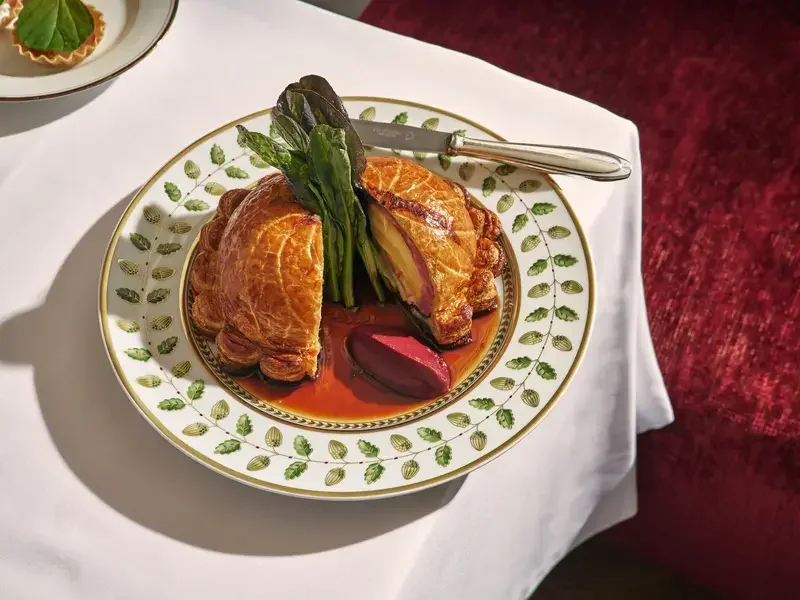
It is impossible to talk about the latest wave of French restaurants without mentioning Riad Nasr and Lee Hanson, who met while working at Balthazar. They opened their first venture, Frenchette, in 2018, and have since expanded with Le Rock, the relaunch of Le Veau D’Or, and their most recent opening, Wild Cherry. While all of their restaurants serve French food, each operates with a distinct identity. Frenchette is a lively Paris-meets-downtown-New York brasserie, while Le Rock brings a similar approach to Midtown with a more business-minded tone. The revival of Le Veau D’Or preserves the city’s longest continually running French restaurant while shedding much of its former formality, helping make it one of the hardest reservations to secure in the city. When Wild Cherry opened late last year inside a West Village theater backed by production company A24, it introduced a Moulin Rouge–inspired take on the American supper club, with nostalgic dishes like a seafood cocktail, croque monsieur, and frog legs Kiev.
In fact, Wild Cherry is only the most recent French eatery to open in the West Village, which has become the epicenter of this latest wave. Nearby are Le Chêne, Zimmi’s, Libertine, and its sister spot Chateau Royale—restaurants that channel French authenticity not just through their menus, but through atmosphere and design. Libertine, which helped define the neighborhood’s current momentum, is slated to close in May, a reminder of how quickly even the most compelling expressions of this revival can shift.
Many New York restaurants claim to be a French bistro, but few actually are, says Cody Pruitt, co-owner of Libertine and Chateau Royale. He opened Libertine in 2023 as a lively French bistro, with details like a worn tiled floor, large gilded mirrors behind the bar, café tables and chairs, and a chalkboard menu.
Pruitt, who spent summers and other vacations in Normandy and Burgundy, had long lamented the lack of authentic bistros in the city. He recalls eating at a “French” restaurant in Manhattan at age 12, scanning the menu and seeing “Le Burger” and “Les Pastas.” He remembers saying to his mother, “This isn’t a French restaurant. This is an American restaurant with a French accent.”
That frustration stayed with him into adulthood, and by the pandemic, he found himself fixated on what his ideal French restaurant in New York could be. He landed on the idea of a bistro, a term he says had been bastardized to mean “any French restaurant that didn’t have a tablecloth.”
“A true bistro is its own kind of restaurant, it’s much more grandmotherly in terms of its food. It’s hyper regional and it well predates farm-to-table,” Pruitt says. He believes French restaurants in New York rely too heavily on what Americans think of as classic French dishes, like escargot, French fries, and French onion soup.
At Libertine, he instead focuses on hyper-regional dishes like saucisse purée (Morteau or Toulouse sausage with mashed potatoes), lamb à la moutarde (leg of lamb in a mustard sauce), and jambon persillé (ham terrine with a parsley aspic).
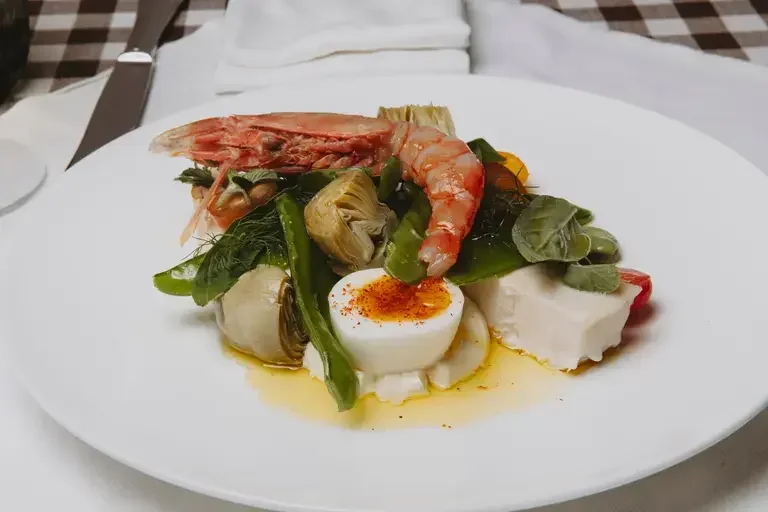
Zimmi’s, which opened in December 2024, focuses on country cooking from the South of France. Chef Maxime Pradie, a New Yorker who spent summers with his grandmother in Provence, draws heavily from that background. His menu reflects that heritage, with dishes like artichoke soup with foie gras, oeuf mimosa with pickled mussels, and agneau en saupique, a lamb stew with olives served over pommes purée.
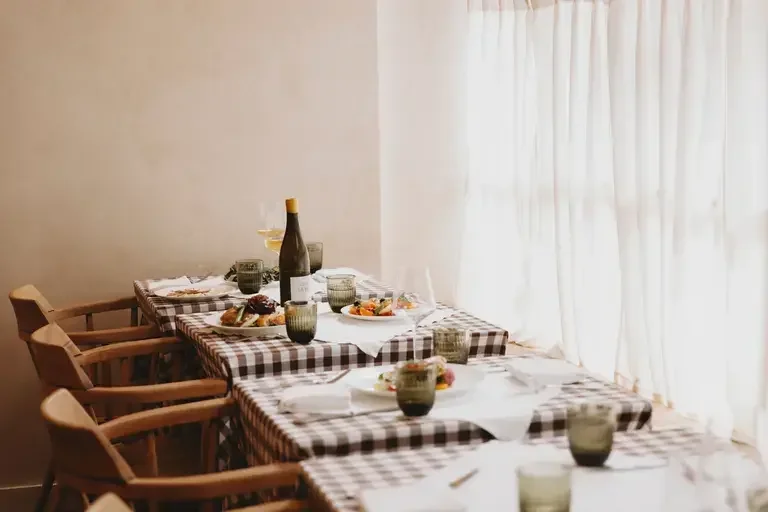
He practices whole-animal butchery, a discipline shaped in part by his father, who owned a charcuterie in New York. Offal, terrines, and rillettes regularly appear on the menu. As regional as the cooking is, the décor reinforces the sense of place, evoking a cozy countryside inn with sheer half-curtains, brown-and-white checkered tablecloths, and softly glowing sconces. The only departure is the energy of the room, which fills nightly with a lively, crowded buzz.
The design is courtesy of Zimmi’s owner Jenni Guizio, who was previously the wine and beverage director for Danny Meyer’s Union Square Hospitality Group. She wanted the space to feel cozy and Old World without tipping into cliché. “We really wanted to remain approachable and accessible—we still want to be a destination restaurant for people, but also a place for our neighbors to go,” she says.
Guizio’s restaurant background is primarily in Italian restaurants, which makes her pivot to a French concept notable. Rather than impose a direction, she allowed her chef to shape the restaurant’s identity.
“I was actually very much drawn to the fact that [Pradie] had such a point of view, had such a passion about this one specific part of France,” says Guizio. “That to me was more interesting than me going to a chef and saying, I want to do this kind of a restaurant.” After he cooked for her, the deal was sealed, and she gave Pradie free rein on the menu. That decision ultimately became what sets Zimmi’s apart.
“Zimmi’s is not a typical French bistro. It’s not a brasserie. It’s very distinctly Southern French, home cooking,” says Guizio. “It does differentiate us a bit from what a lot of the other restaurants are doing.”