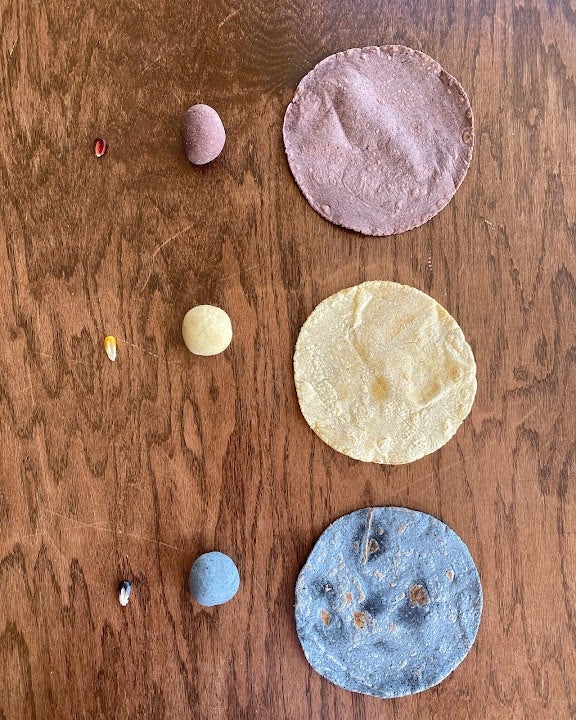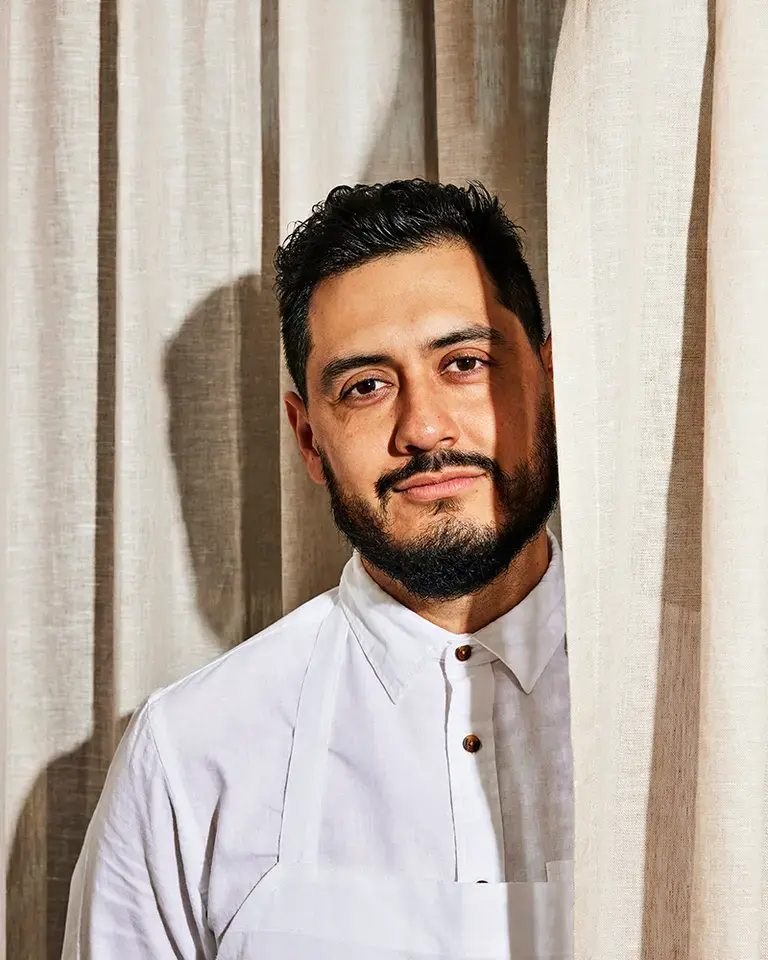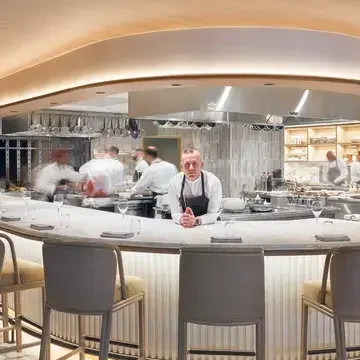
If any dining establishment can teach us not to judge a restaurant by its exterior, it is Tatemó, an 18-seat BYOB Mexican restaurant hidden in a desolate Houston strip mall. Despite its facade, few were surprised when the Michelin Guide arrived in Texas and awarded it a star. With an eight-course tasting menu featuring Mexico’s native maize varieties, Tatemó books out months in advance, and chef Emmanuel Chavez has risen to prominence for his nixtamalized tortillas.
Spanish for “little cake,” the tortilla has been around for thousands of years and stands among the Americas’ simplest and most cherished foods. Today, however, many consumers know only the heavily processed version. Indigenous peoples made tortillas from wild corn and later from corn they domesticated, with the earliest evidence of domestication tracing back 8,700 years to what is now South-Central Mexico. They used a process called nixtamalization, treating the corn with limewater before grinding it into masa. The Maya, the Aztecs, and others considered corn sacred.
Then came the Spaniards and their wheat, then flour, and eventually industrialized food processing. Genetically modified corn followed, and supermarket shelves soon filled with preservative-loaded tortillas wrapped in polyethylene plastic bags.
Born in Mexico City, Chavez immigrated to Houston with his family at age 11, and after school bused tables and washed dishes in his parents’ Tex-Mex restaurant. It was not until his mid-20s, while working as a sous chef in Seattle, that his mentor, chef Eric Rivera, taught him about the evolution, or devolution, of the tortilla.
“He was the first person to put me on the path,” Chavez says. “I was embarrassed because he was Puerto Rican and knew more about my culture than I did. So I searched ‘how to make a tortilla’ and went down a Reddit rabbit hole. I was 13 years into cooking and I re-fell in love with food and dining. I was curious again, instead of burnt out. I was starting from scratch.”
Chavez learned how to nixtamalize corn. The ingredients are simple, water, calcium, and corn, but the process, which can involve measuring starch content to determine the precise amount of calcium chloride, simmering the kernels, and steeping them for eight to ten hours, is time-consuming and therefore expensive. As a result, nixtamalization is rare in restaurants, although in the last few years it has gained traction. Chavez imports heritage corn from small farmers in Mexico and uses his nixtamalized tortillas as bases and vessels for the dishes on Tatemó’s ever-changing eight-course tasting menu.