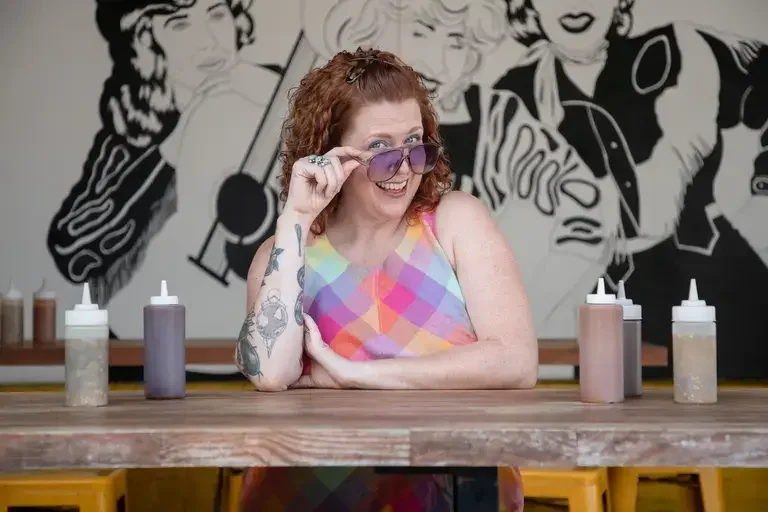
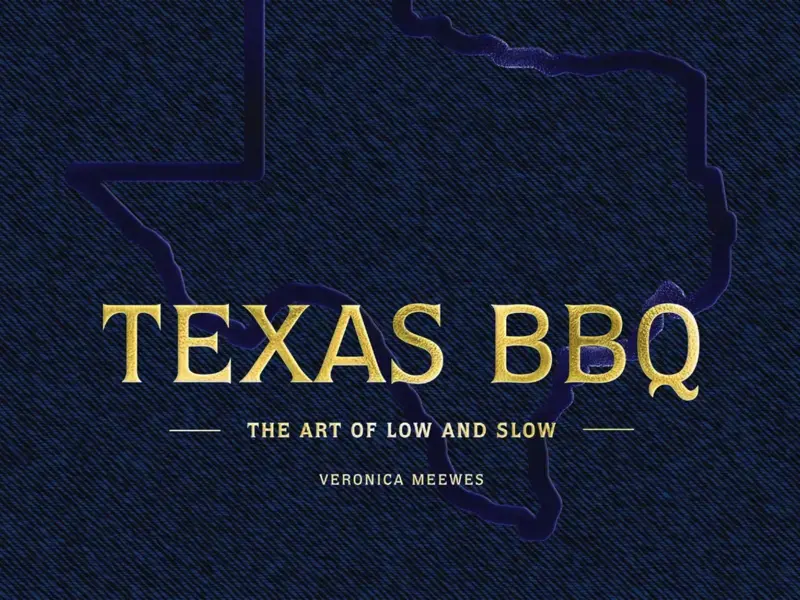
Perhaps the most remarkable move that Austin, Texas-based food writer Veronica Meewes makes in her fifth book, Texas BBQ: The Art of Low and Slow, is highlighting a cuisine that many consider simple and demonstrating that it is in fact incredibly complex, all while relaying that complexity in an accessible, engaging way. In other words, Meewes dismantles the notion that Texas barbecue is straightforward.
Sure, it does not look like much, the white butcher paper spread over the picnic table, brisket and sausage delivered in cardboard boats, the cornbread and mac and cheese of it all, but Texas barbecue, Meewes points out, has deep roots: “It began as a way to utilize available resources, the wood from drought-stricken trees, remaining cuts from local animals…”
Moreover, the contemporary execution of Texas barbecue, especially given the cutthroat competition throughout the state and beyond (the book also highlights Texas barbecue joints in California, Mexico, and elsewhere), requires patience, technical skill, years of craft-honing, and expensive equipment.
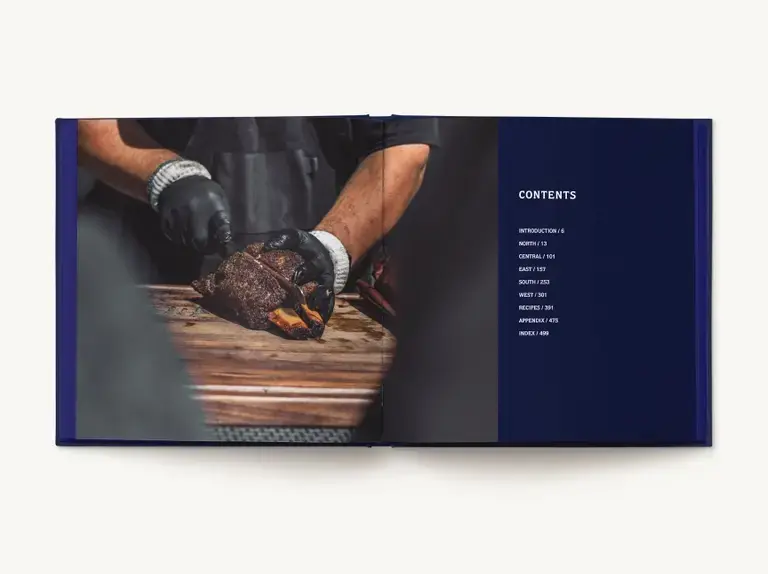
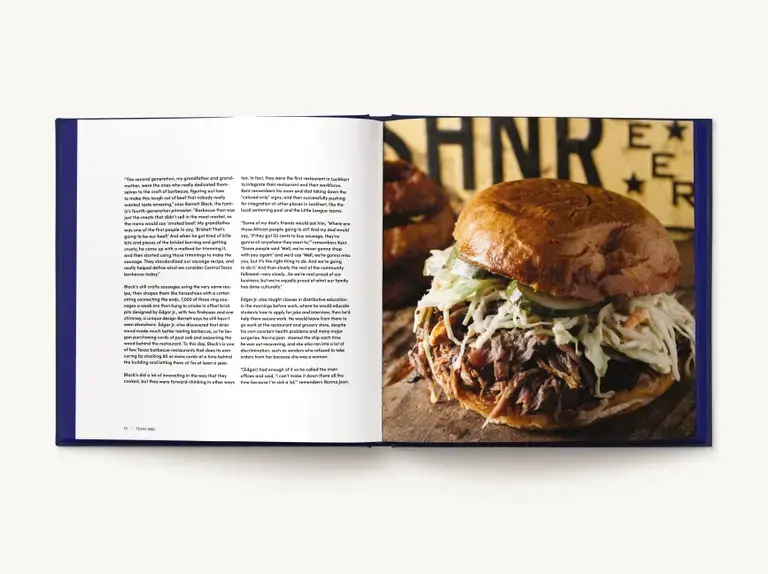
Texas BBQ is a coffee table book of 500 glossy pages, complete with striking photography, made up of food magazine-style stories divided into five geographic sections: North Texas, East Texas, Central Texas, South Texas, and West Texas. These divisions nod to each region’s unique barbecue style. The result is a mosaic of the people and culinary developments that define the last decade’s Texas barbecue renaissance.
That renaissance includes lines wrapped around the block at barbecue joints throughout Texas. It includes fine wine and craft beer pairings for hot links. It includes a figure known as the Sausage Sensei who makes peach cobbler dessert sausages and serves Thanksgiving turkey in sausage casing. It also includes deviations from classic barbecue, such as Tex-Mex, soul food, Korean, Creole, and Egyptian fusion recipes. The book’s subtitle, The Art of Low and Slow, refers to a common Texas barbecue cooking style. Pitmasters cook meat at low temperatures, often using a separated, also known as offset, heat source, for many hours to break down the collagen and infuse the meat with flavor.
Primarily, the stories in Texas BBQ feature the barbecue joints themselves, but some profile key figures in the Texas barbecue world, including Franklin Barbecue’s Aaron Franklin, Texas Monthly’s barbecue editor Daniel Vaughn, and Matt and Caleb Johnson, brothers who, at Mill Scale Metalworks, craft what they call “the Ferrari of smokers.” A few stories, such as those about Camp Brisket and Barbecue Summer Camp, programs that essentially grant a degree in barbecue, demonstrate how significant and far-reaching the Texas barbecue world has become.
The stories introduce readers to the people behind the smokers, showcasing the Texas barbecue world in all its diversity. We meet Armando Vera who, at Vera’s Backyard Bar-B-Que in Brownsville on the Texas–Mexico border, sells fresh tortillas alongside his brisket. We meet Australian television personality Jess Pryles, the “Hardcore Carnivore,” who has a graduate degree in meat science. We also meet Pakistani-Texan Zain Shafi of Sabar BBQ in Fort Worth, whose food is pork-free and whose spices pay homage to his heritage.