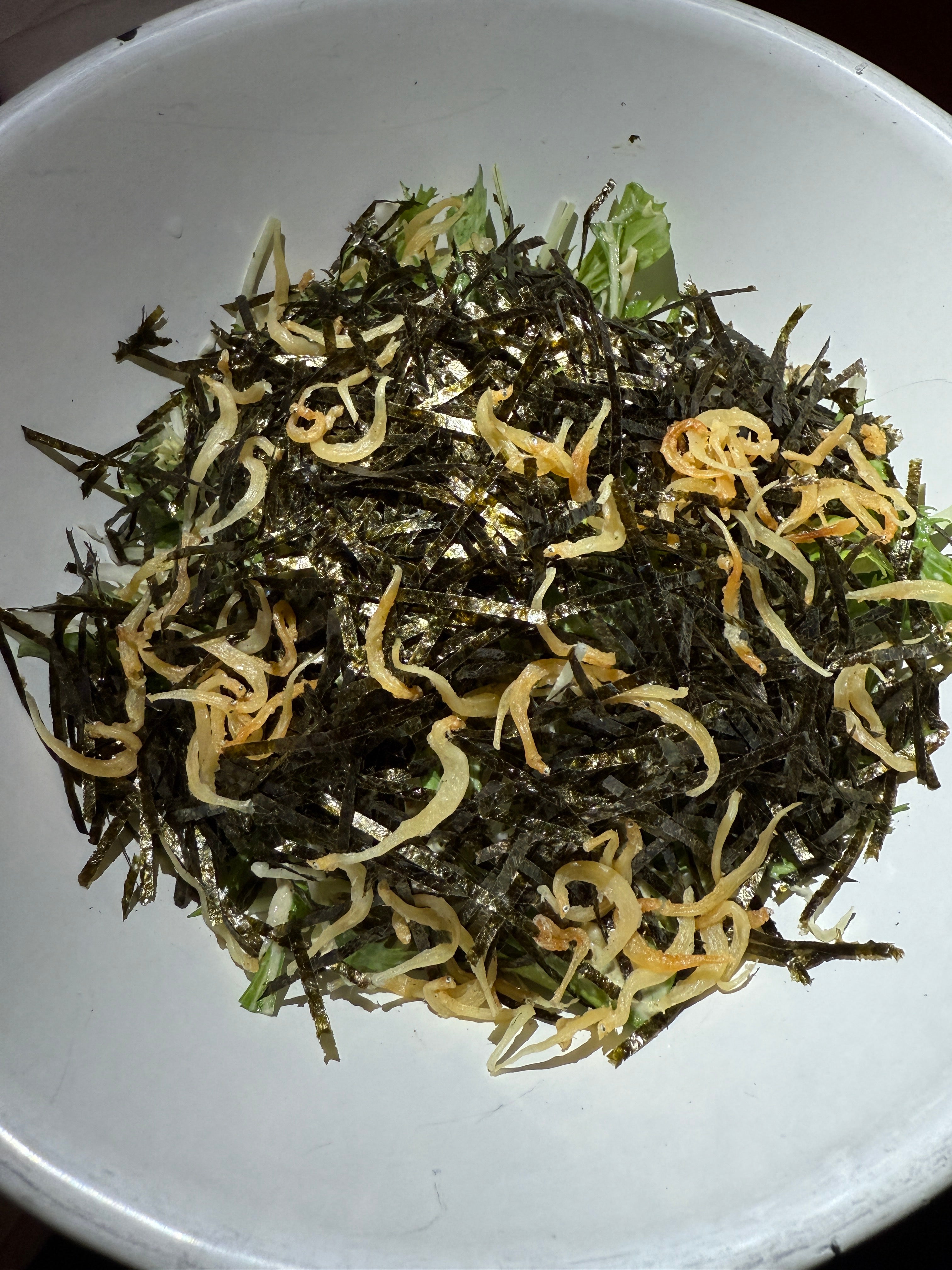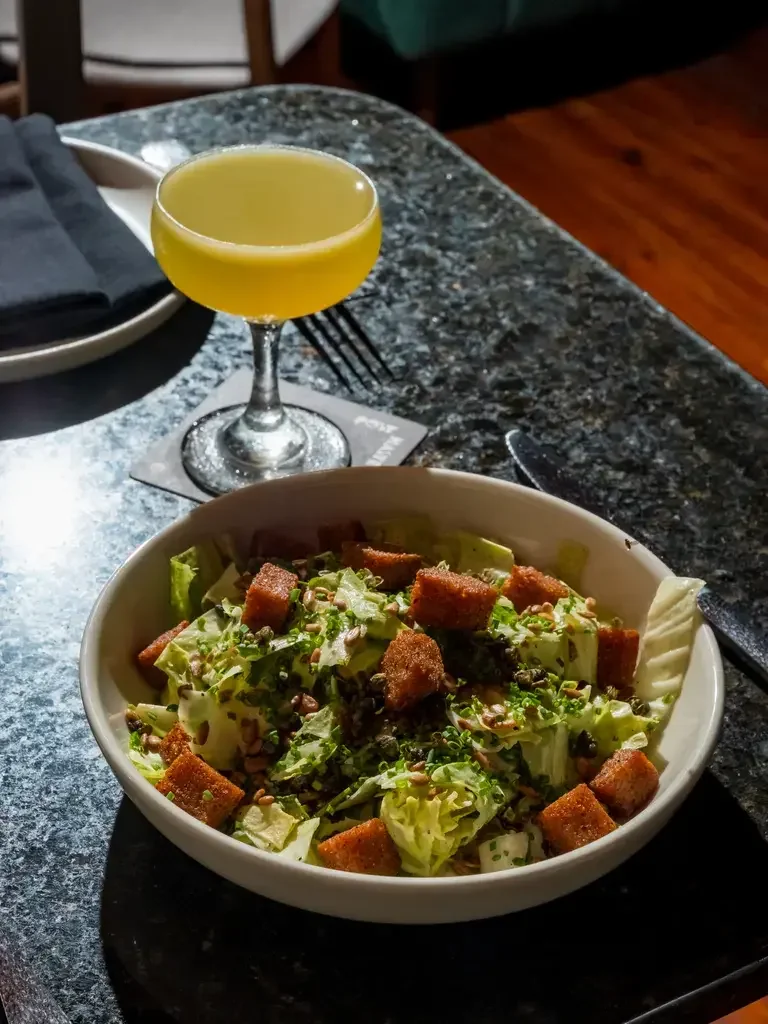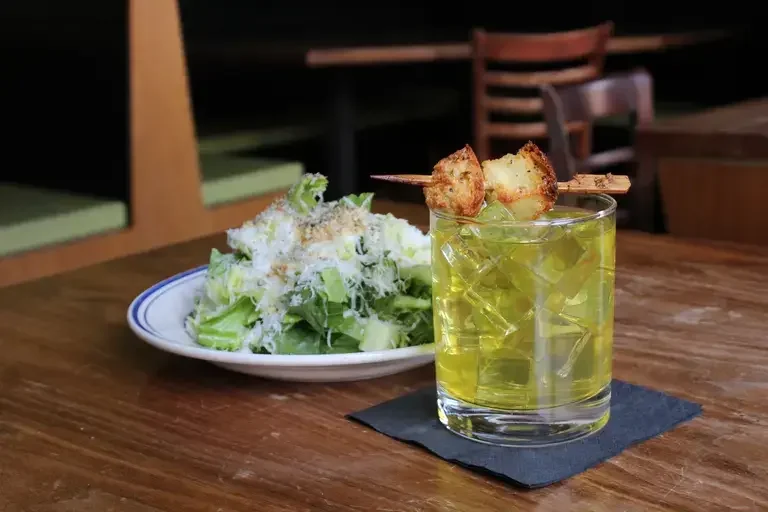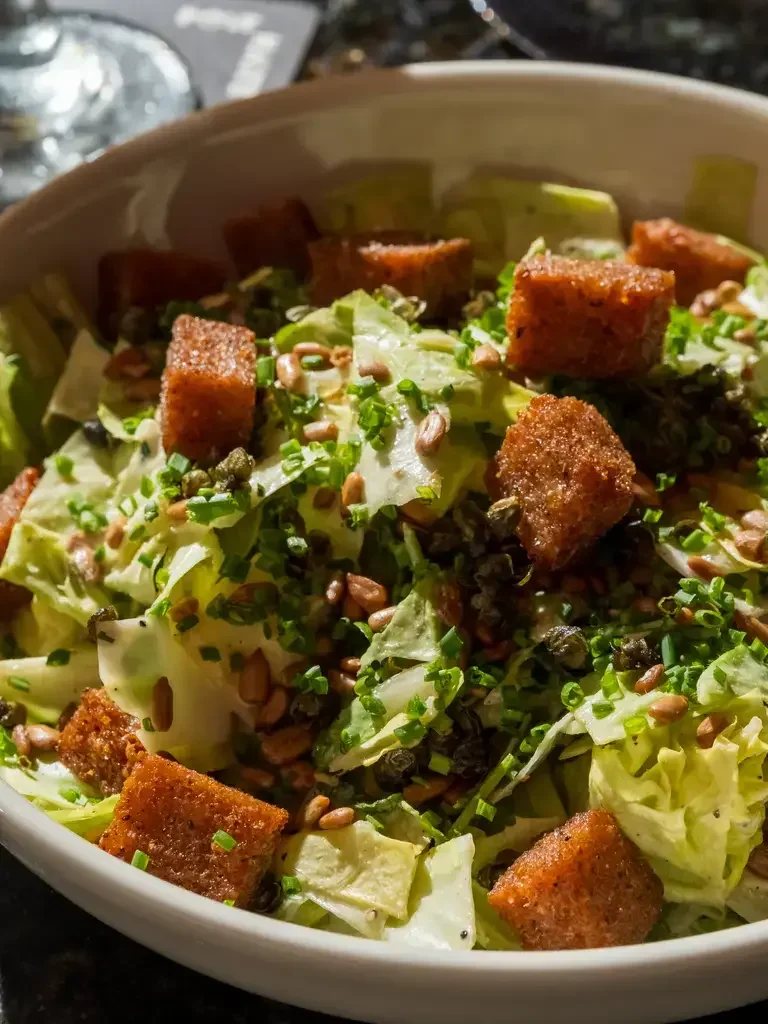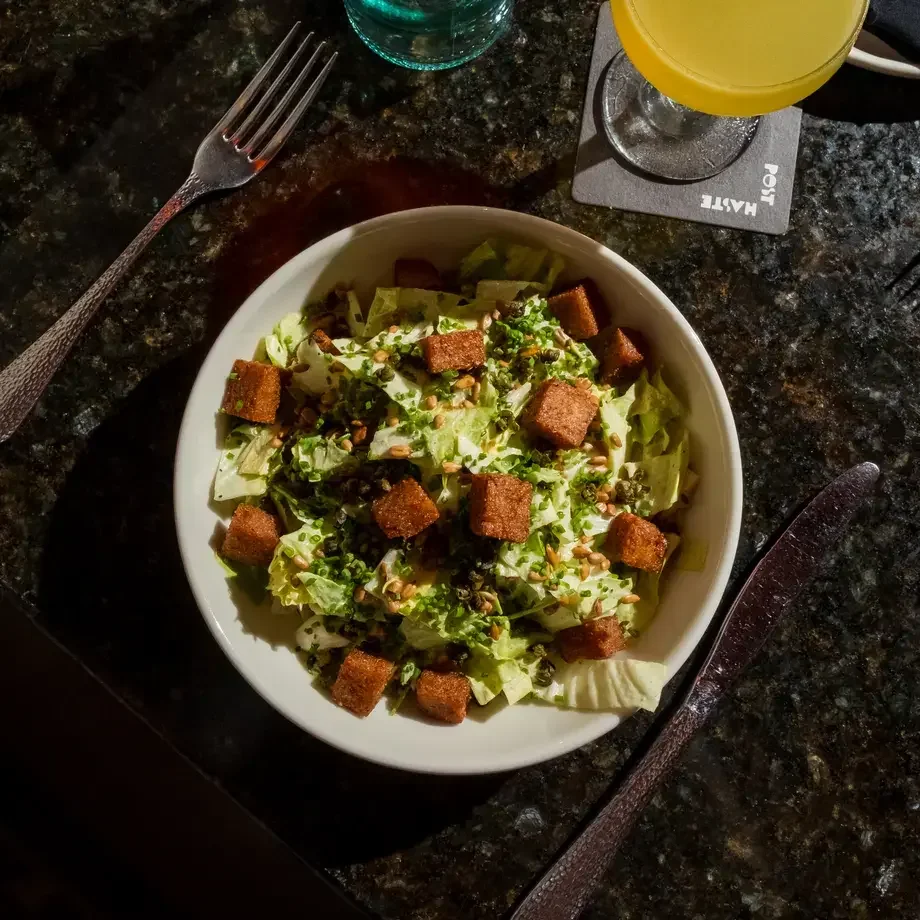
As I stabbed my fork into the Caesar salad at Yardbird in Hong Kong last month, through its layers of shredded nori, tiny crunchy fried whitebait, and mizuna dressed with a miso-anchovy vinaigrette, it occurred to me how far the Caesar salad has traveled.
In 1924, the Caesar salad was born in Tijuana, a lightly funky marriage of romaine and croutons with a sauce of olive oil, eggs, Worcestershire, mustard, anchovies, garlic, black pepper, and Parmesan, concocted by Italian restaurateur Caesar Cardini. Over the past century, Caesar’s salad has been embraced by the most basic American restaurants, often made tableside with an air of throwback steakhouse charm, its dressing emulsified in front of witnesses—diners—watching the magic gel together. Drew Nieporent, whom I interviewed last month, describes the process as it should be performed by restaurant captains in his memoir: “Put an anchovy in a wooden bowl with a tiny bit of garlic and mash it around. Put the greens on top, add a little olive oil and lemon juice, plus a coddled egg. With two spoons, mix it all up, add the cheese and croutons, plus a touch of black pepper, and present it with a flourish.”
Omit the anchovies (most of the time), and plastic clamshells of Caesar salad fill the cold cases of airport grab-and-gos and are tossed aggressively with tongs at your local Sweetgreen.
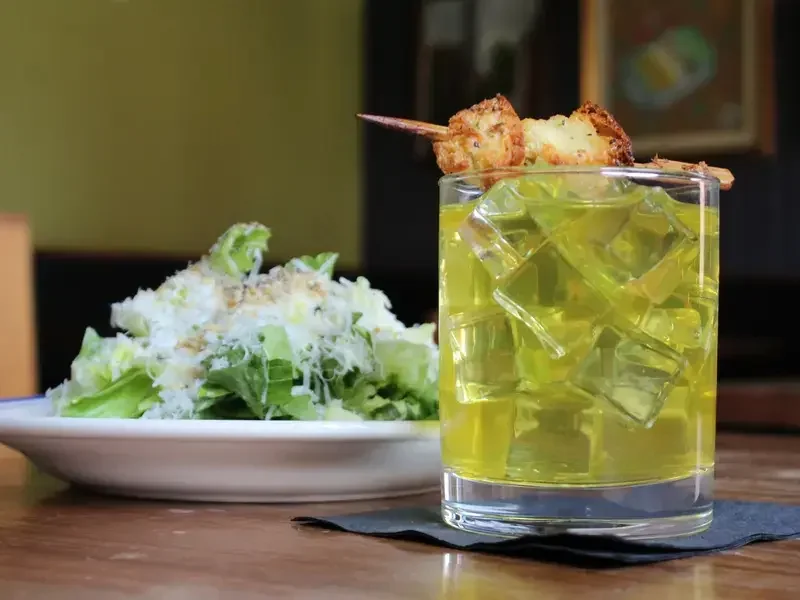
Once upon a time, the Caesar salad was definitely just a salad, but that time is no longer. Chefs and even bartenders across America are turning it into everything but a salad—including, with varying degrees of success, cocktails—probably to the chagrin of many Canadians, to whom a Caesar is already a cocktail that has nothing to do with salad. We’ve reached a new era for the Caesar, and it’s being adopted and adapted by virtually every cuisine.
“The salad part of Caesar salad has become optional,” said Margaret Eby, author of the cookbook You Gotta Eat, which contains no recipes, only suggestions on how to feed oneself while in the depths of despair.