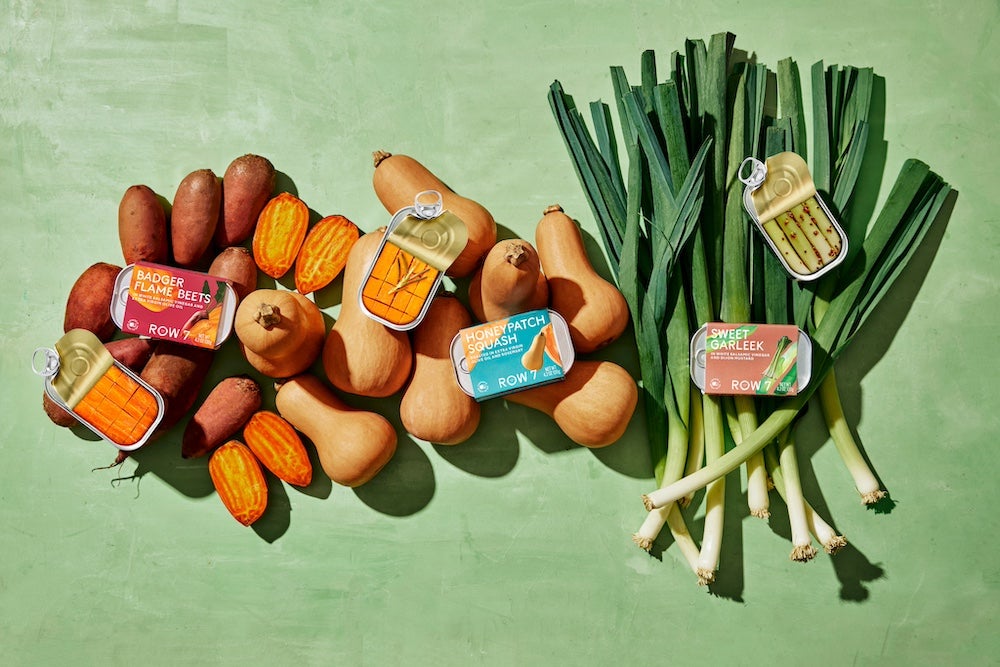
Tugging the tabs back on the silver tins revealed perfectly ordered rows of evenly diced vegetables, jigsawed into edible mosaics. With chopsticks, I lifted cubes of Row 7’s Honeypatch Squash and Badger Flame Beets—glossy in extra-virgin olive oil, labeled as designer vegetables—from their tins. I teased apart the stems and leaves of Sweet Garleek, bathed in white balsamic vinegar and Dijon mustard, each one packed with such precision it felt impossible they weren’t arranged by hand. Without their paper sleeves, I might have mistaken them for any of the tinned fish in my pantry.
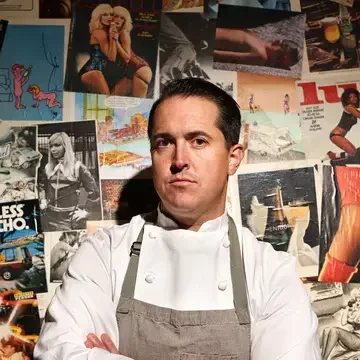
“They’re outrageously tasty,” declared my husband, chef Ari Miller, who uses all of these vegetables in his kitchen in their fresh form. They aren’t just beautiful and flavorful—they feel new. For a moment, we looked at each other, confused. When had vegetables ever been processed like this? And then, of course, the realization: change the shape of the tin and we all grew up with canned beans, pumpkin, corn, and other vegetables. But these taste nothing like those.
Could this be how the world evolves from tinned-fish madness?
From Pantry Aisles to Restaurant Plates
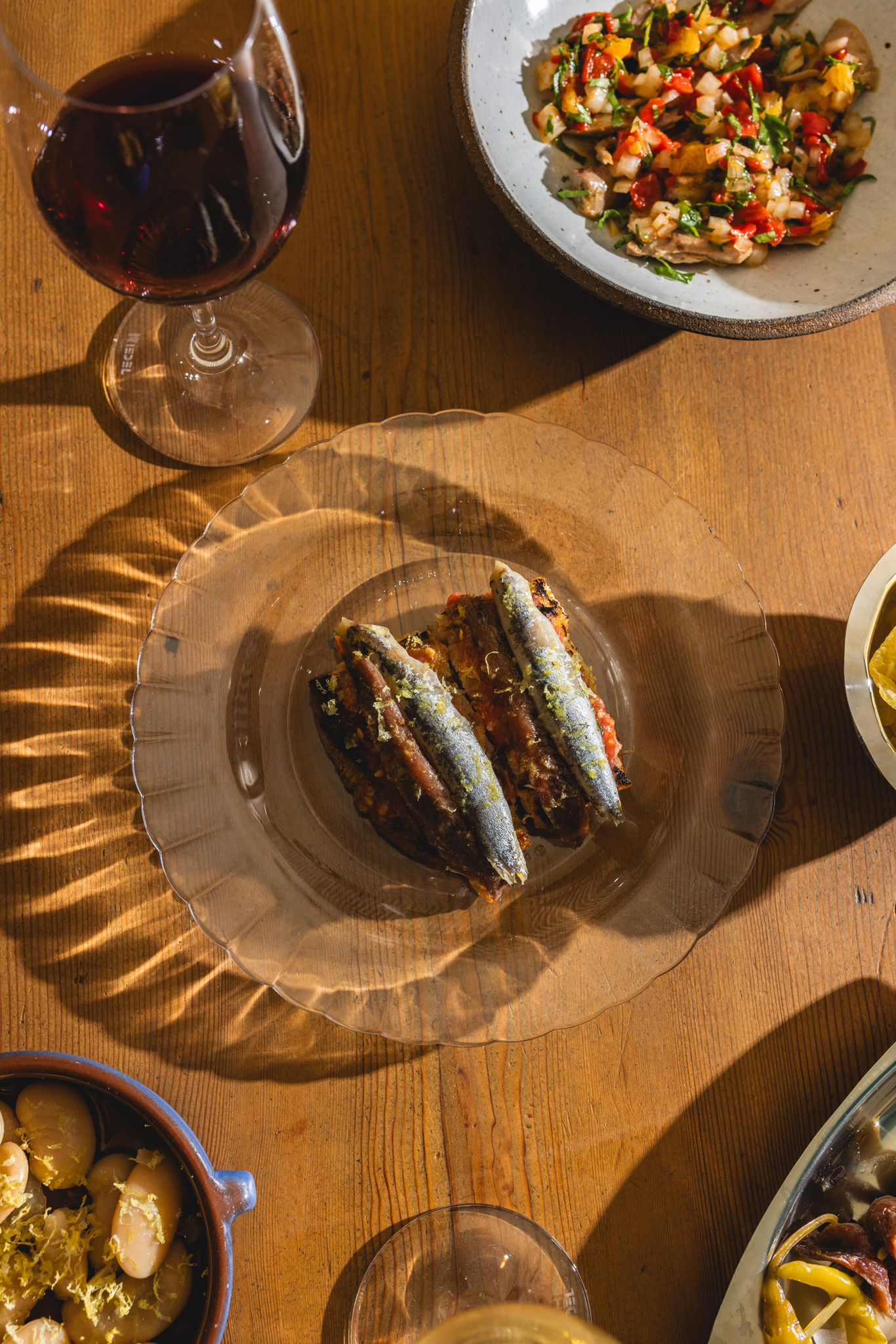
Over twenty-five years ago, when Gabrielle Hamilton put tinned sardines and Triscuits on the menu at her New York restaurant, Prune, it did the equivalent of breaking the internet—had the internet been as robust back then. I first read about that not-quite-a-dish in 2012, in Hamilton’s memoir Blood, Bones & Butter, a few years before I became a chef, and I remember thinking: How could you possibly charge money, in a restaurant, for something anyone could buy in a store? You’re not doing anything to it.
The lack of manipulation has both irked and fascinated me ever since. It made me question what qualifies as “chef work”—what earns a place on a menu.
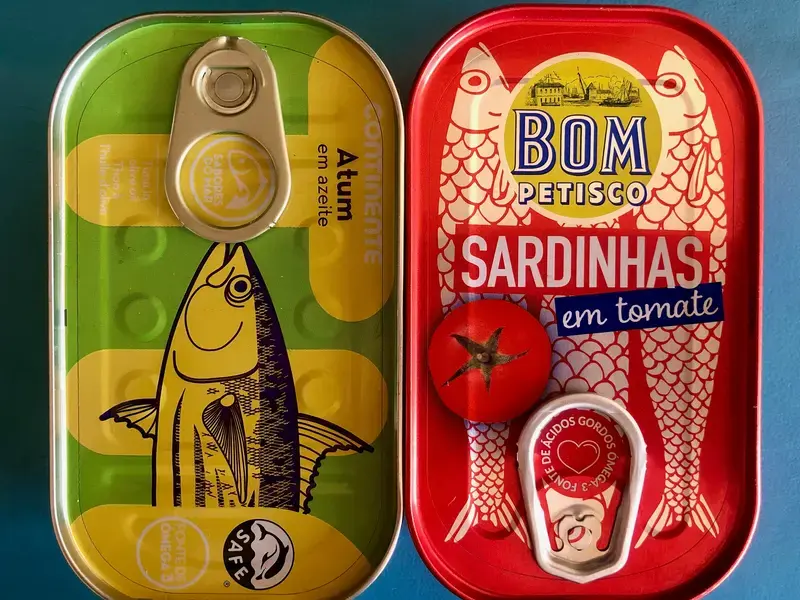
Tinned fish, or conservas—and even the beloved Spam musubi of my childhood and my former restaurant, Poi Dog—have always been here, quietly providing nonperishable nourishment. The recent mania for conservas is a convergence of circumstances: the pandemic (when we were all stocking our pantries), the boom in travel to Portugal (I’m writing this still jet-lagged from Lisbon), and the irresistible aesthetics of brands like Fishwife, the gateway drug that turned countless Americans into sardine eaters.
You can’t escape tinned fish now. It’s as pervasive as a Staud beaded handbag on Instagram—part fashion statement, part culinary affectation—and the tins themselves have become cultural currency. The New York Times’ Wirecutter, Bon Appétit, and countless others (including this publication) have breathlessly ranked the best of them. Fancy Portuguese tins have even made their way into the vending machine at Philadelphia cocktail bar Next of Kin, and appear alongside charcuterie at cafés like Musette.
I’m not writing about tinned fish to beat you over the head with this inescapable trend, but to ask: where do we go from here, if “here” is peak tinned fish?