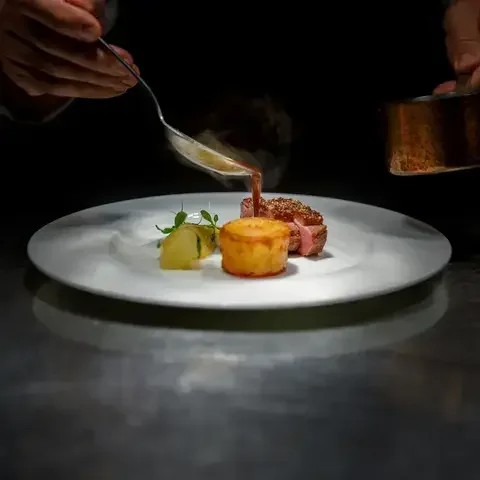

Fresh venison from upstate New York and pale, glittering snail caviar from Long Island. Monochrome dishes built around Dutch black caviar, coffee, juniper, and coriander. Sauces grounded in classical French cuisine but shaped by ingredients sourced from Headhouse Farmers’ Market just outside Provenance’s doorstep on Sundays, alongside a now-legendary Korean pantry.
Each meal opens with a succession of tiny, jewel-like snacks, served on custom Felt and Fat dishes. Just over a year after opening, Provenance appears to have found its stride, its own style, and these are its markers.
“Our measure of success or profitability is different from others. I can expose my cooks and my team to things they wouldn’t otherwise use, like our venison, which arrived ten minutes ago after being harvested three days ago. This exposes everyone to something more special,” Bazik says.
Provenance has become the pinnacle of very fine dining in Philadelphia, without relying entirely on truffles, caviar, or gold leaf. Are they still luxuries if you can get them everywhere? On my first visit, the cocktail menu alone signaled a different point of view, peppered with ingredients I had never encountered before, like balloon flower, which I sheepishly Googled instead of asking a server.
“We, at this restaurant, are perceived as very expensive. But when you do side by side comparisons of us and other restaurants, we’re relatively more affordable, places where they may be making more money off of you at a lower cost to you,” Bazik says, beginning to explain his philosophy around sourcing.
“A chef is only as good as the people who are working with them. Anyone can make a commodity piece of chicken taste great, using salt, acid, fat or whatever. You can make anything taste great,” Bazik says, acknowledging the role his team plays in realizing his vision of impeccable sourcing. “But that’s not the ethos of the restaurant, or [anything like] the sourcing of a great chicken. If you’re just coming in off the street and judging the chicken by how good it tastes, it doesn’t really matter where it comes from. But if you begin to care about where it comes from, then [everything else] starts to matter.”