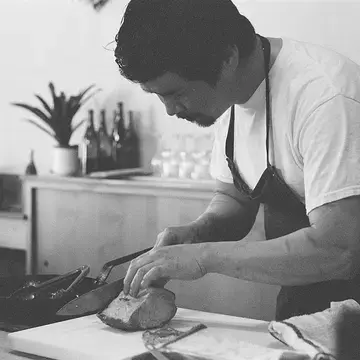
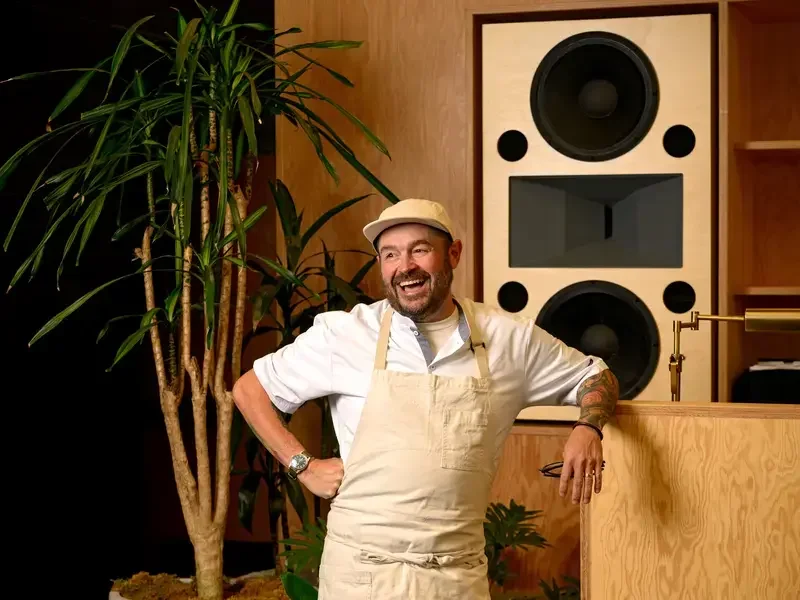
For Sean Brock, the true flavor of a place is found in its trees. “The bacon, the smoked country hams, the barbecue, the backyard grilling of a place taste and smell like the trees they have the most of—whatever is most abundant,” he says. Breathe in a sky, dyed heavily with white oak smoke, and you’re in North Carolina. Pull a piece of hog from the bone to a deep note of warm, hickory-scented fat and it’s Tennessee. “So when you grow up in the South, or anywhere that has a history with live-fire cooking, you just associate these certain smells and flavors with different places.”
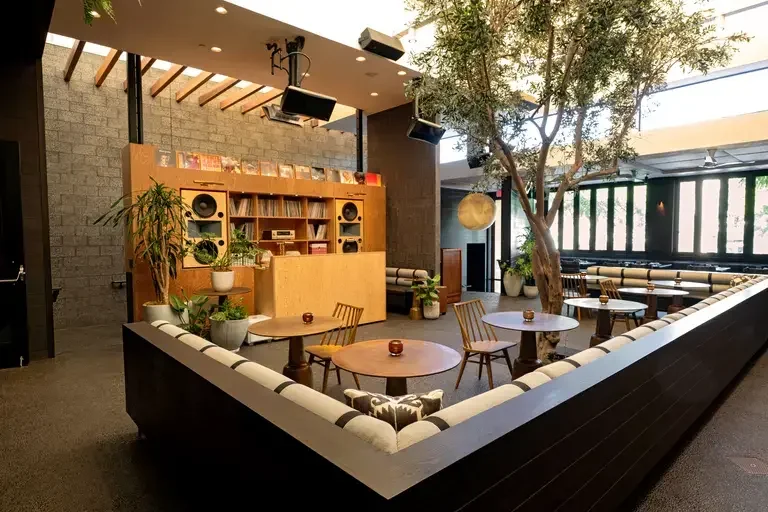
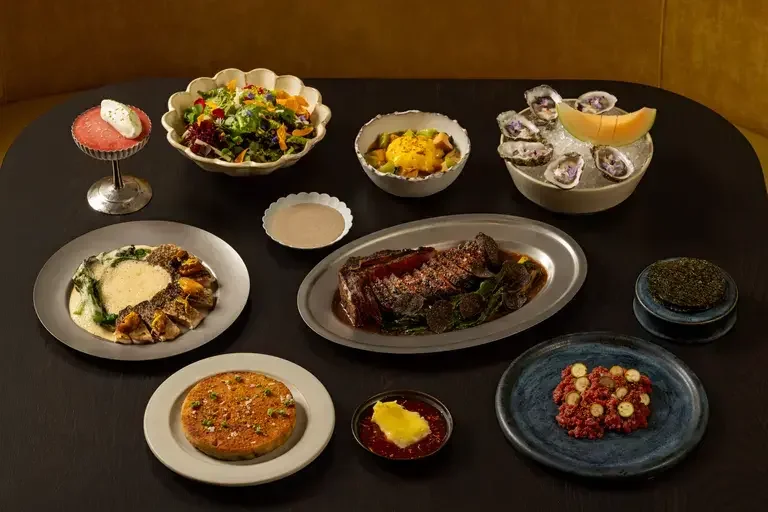
At his new Los Angeles restaurant, darling, Brock saps the flavor of Southern California from the arms of orange and walnut trees. “I’d never really used any of these woods, so there were all these brand-new flavors and aromas for me. I saw that as an opportunity to explore this theory: it’s like food-and-wine pairing, but it’s food-and-wood pairing. It’s so nerdy. So if I’m cooking a New York strip, I’m not just obsessed with the breed of the animal, how it was aged, processed, and handled; I’m also obsessing over which of these 20 types of wood taste the best for this particular thing that I’m cooking. And that, to me, just helps feed my curiosity and my obsession with understanding why places taste the way they taste.”
At darling, curiosity and obsession are Brock’s familiar throughlines. It’s not a Southern restaurant, despite two decades of Brock becoming synonymous with Southern food—first as its preservationist, then as its interpreter, and eventually as the restless mind trying to transcend it. “My cooking has gone through so many different phases, and I hope that never ends,” he says. Darling marks the latest turn in that evolution, and at a glance, it may seem like a departure from everything Brock has built as a chef, one who is, for better or worse, an arbiter of Southern cooking.