Spora: Rethinking the Fundamentals
If the symposium provided the intellectual backbone of Convergence, the sessions at Spora offered something more intimate, early-morning conversations where chefs, industry leaders, and members of the media gathered to test ideas at close range.
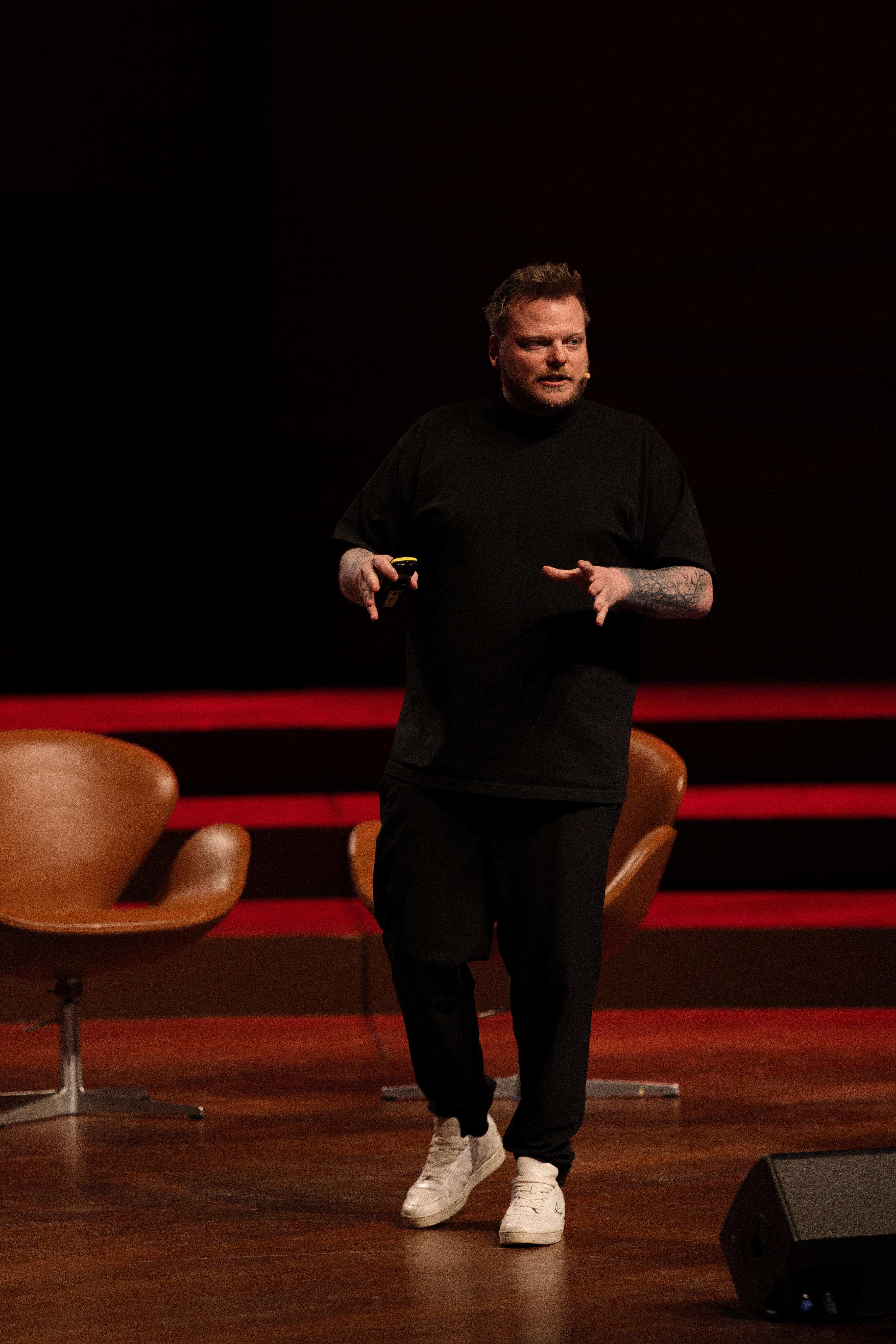
One of the most compelling sessions came from René Frank of CODA, who challenged how dessert itself is defined. Frank traced the relative youth of refined sugar in culinary history, questioning why sweetness has become synonymous with it. His work, which builds sweetness through fermentation, acidity, and ingredient maturity, reframed dessert as balance and structure rather than indulgence.
Other Spora talks widened the geographic lens. Leonor Espinosa spoke about the Colombian biosphere and the responsibility of restaurants to act as stewards of biodiversity, while Jaime Pesaque discussed the Amazon as both pantry and endangered ecosystem, illustrating how culinary research can intersect with preservation.
Together, the sessions reinforced a central idea of Convergence: that technique is inseparable from context, and that chefs increasingly operate at the intersection of culture, ecology, and education.
The Dinners: Cohesion at Scale
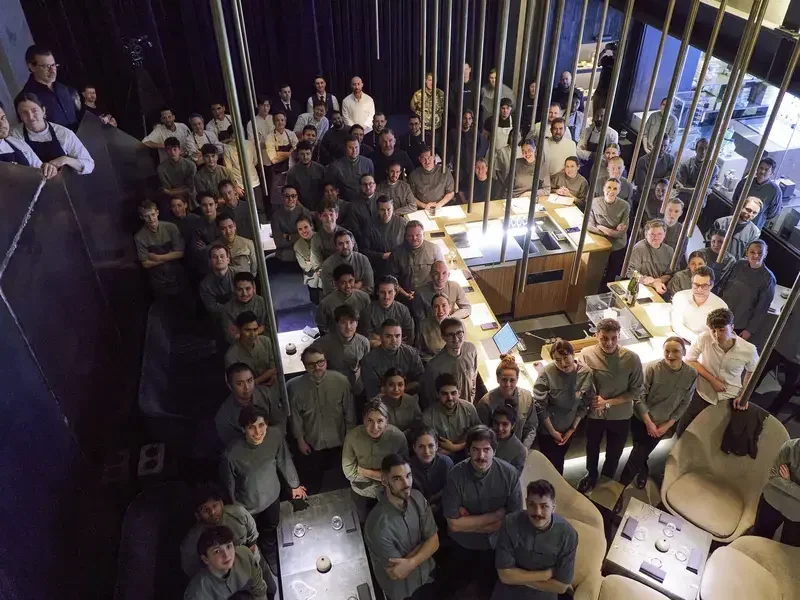
Each evening began the same way, with guests passing through Alchemist’s iconic doors and stepping from the cold into a space already in motion. Inside, the experience unfolded less like a traditional Alchemist dinner and more like a sustained current, with waves of dishes arriving in rapid succession, each shaped by a different hand, place, and philosophy.
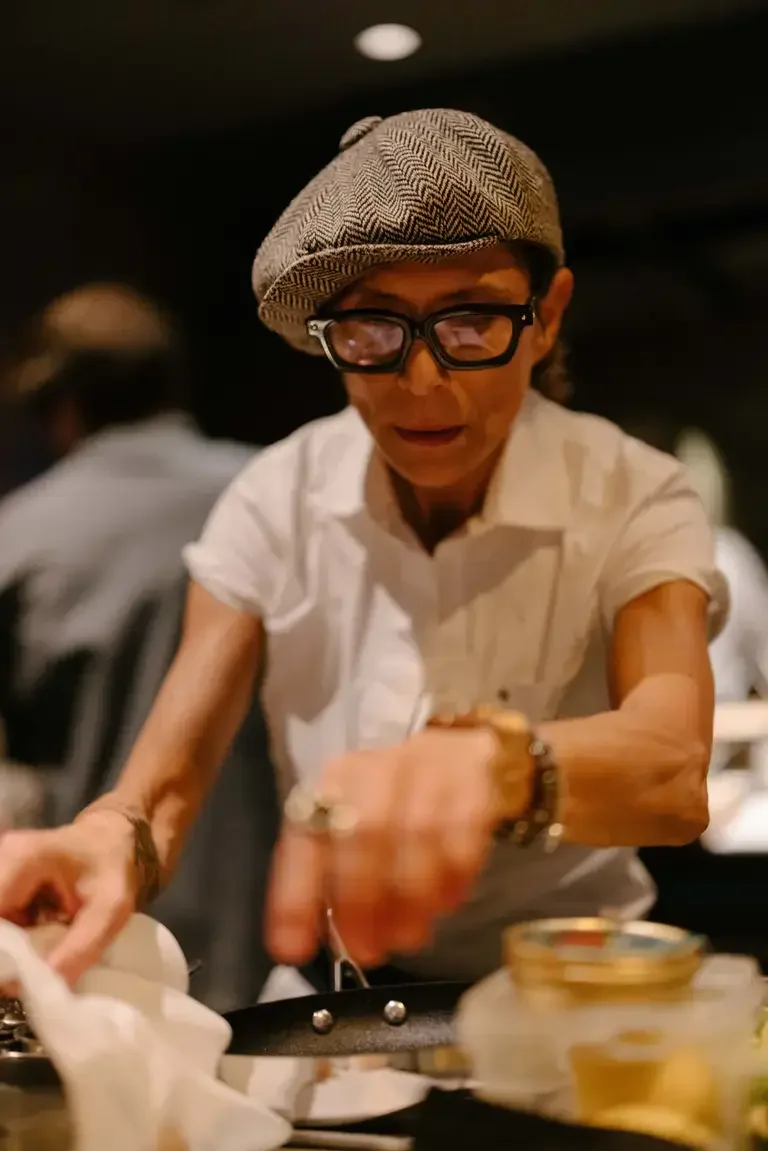
What might have felt chaotic instead resolved into momentum: a barrage of ideas translated into flavor, technique, and gesture. Dishes like Kadeau’s cured Danish squid with preserved nuts and seeds, Wing’s Golden Egg, and Kol’s langoustine taco moved the experience forward. The result was not a greatest-hits parade, but a collective expression that asked diners to absorb the breadth of contemporary gastronomy in real time.
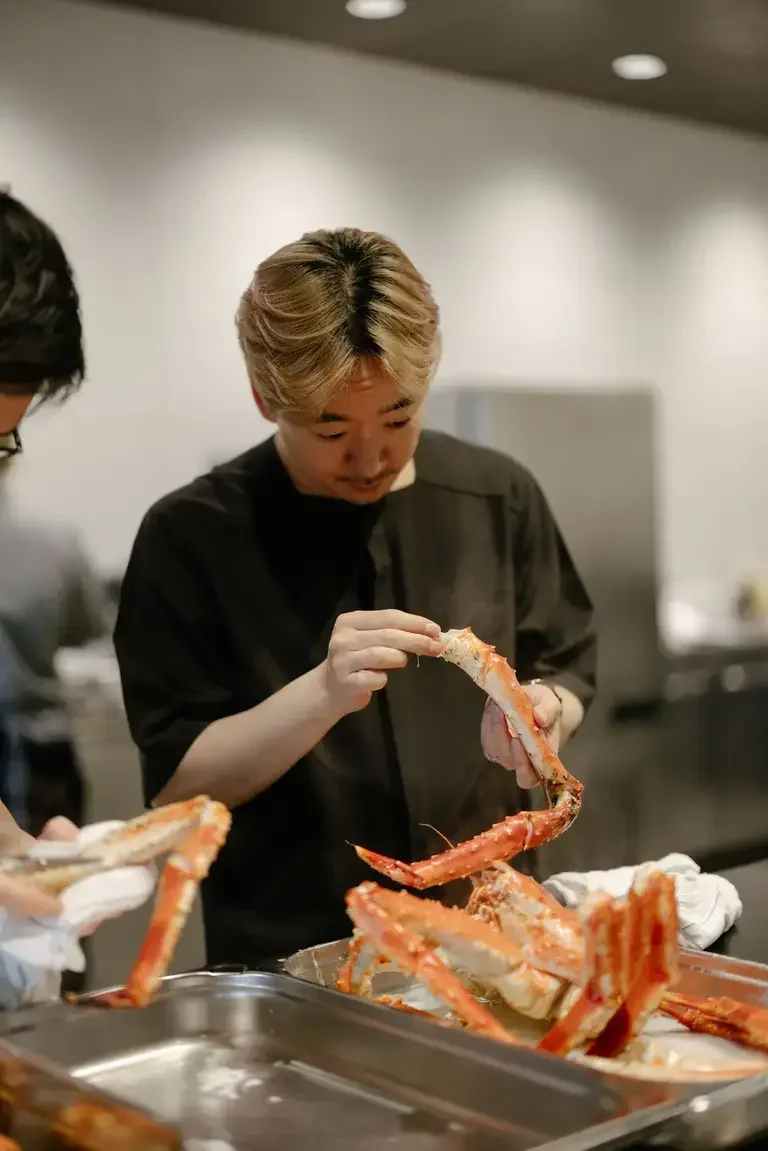
For SingleThread chef Kyle Connaughton, cooking alongside nearly 20 chefs per night for five consecutive days bordered on the unprecedented. What surprised him most, however, was the sense of cohesion. “You have chefs from all around the world cooking very different cuisines, but somehow it felt very unified.”
Connaughton emphasized that the success of the dinners came down to trust rather than choreography. “It felt like something we had done together many times,” he said, even though many of the chefs were cooking side by side for the first time. “I’m not really looking for a new piece of equipment or a trick. What I’m interested in is what’s motivating chefs right now, what they’re thinking about, what’s driving their decisions.” In that sense, the kitchen itself became a kind of symposium, where ideas were exchanged through action rather than presentation.
That same sensibility resonated with Junghyun “JP” Park, chef and co-owner of Atomix, who described Convergence as a rare opportunity to step outside the relentless rhythm of service and reflect on the larger responsibilities of leadership. “Events like Convergence are important because they allow chefs to step outside the day-to-day operations and reflect more broadly on what we do and why we do it,” he said.
“What we gain from experiences like this is not a single answer, a specific flavor, or a technique. What stays with us is resonance, something that lingers emotionally rather than intellectually.” That resonance, he added, shapes how chefs return to their kitchens long after the event ends.
How It Landed at Home
For Copenhagen’s local chefs, the impact was immediate, with extra services and extra covers across the city. At the newly opened Esse, chef Matt Orlando felt Copenhagen tighten and rise together. “When you have all these people in town, everyone wants to show off. Everyone is striving for greatness,” he said. For a new restaurant, Convergence compressed what might normally take years of industry attention into a single week.
The burst of media attention surrounding Convergence arrived at a timely moment for Orlando, aligning with a newly articulated ethos around his evolving approach to sustainability. “I used to approach the conversation from the angle of ‘if you’re not doing it, you’re wrong,’” he said. “That doesn’t work.” At Esse, sustainability is embedded quietly through practices like whole-fish cookery and material reuse, allowing guests to engage on their own terms. “There’s a fine line between preaching and informing,” he added. “You never want to preach.”
For Jon Tam, Convergence arrived at precisely the right moment. “This January felt like one of the longest winters I’ve experienced,” he said. “To have a global event like Convergence happen right then was a necessary jolt of energy.” Short notice, he added, prevented over-curation and helped preserve a sense of honesty. “Hearing chefs share their personal journeys gave us the fuel to come back and focus even harder on our own story.”
What Endures
Convergence did not attempt to provide answers. It created conditions. Across panels, prep tables, and early-morning conversations, chefs spoke less about ambition than responsibility, and less about image than intent. As Jessica Rosval observed, cooking is “a language meant to be spoken together, not performed alone.”
For those who were not in Copenhagen, the value of Convergence lies not in the menus served, but in the thinking revealed: how chefs across cultures are reexamining identity, questioning assumptions, and aligning around shared values of care, discipline, and exchange. Like any major global cultural gathering, the week will be remembered for its scale, but its real legacy will unfold more quietly. Its effects will linger in kitchens, classrooms, and in decisions made long after the Alchemist dome’s digital screens went dark and winter settled back in.