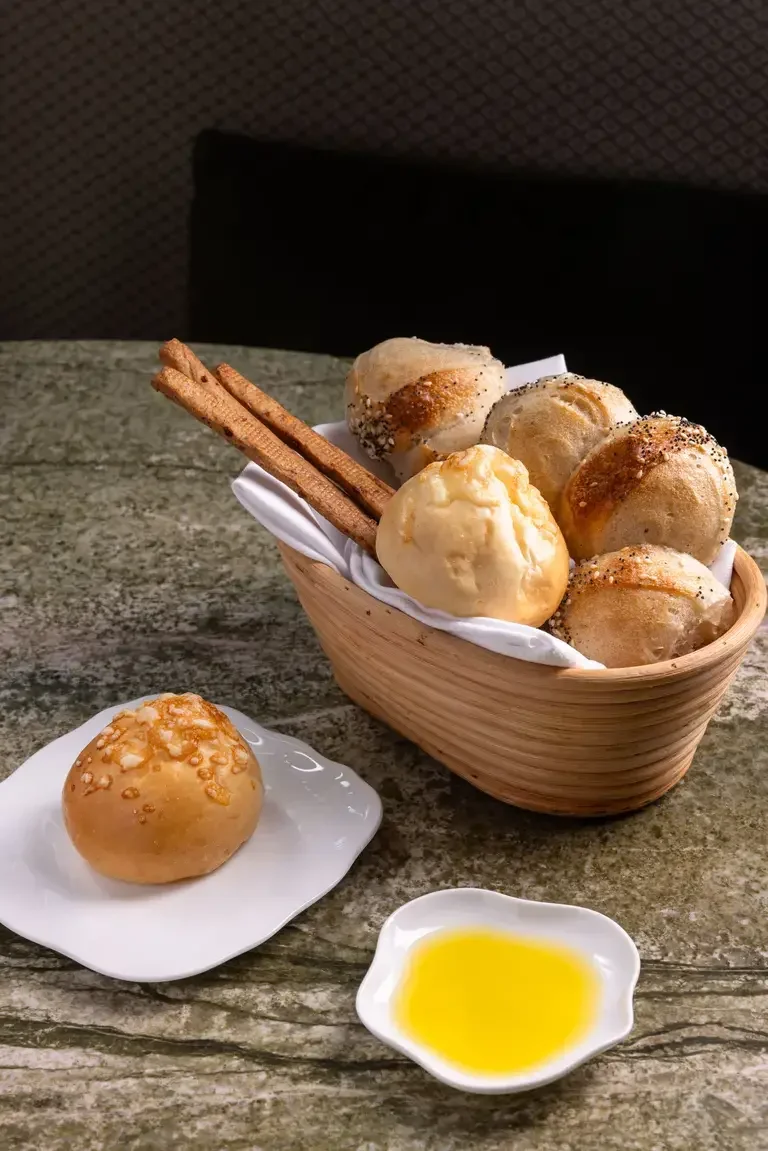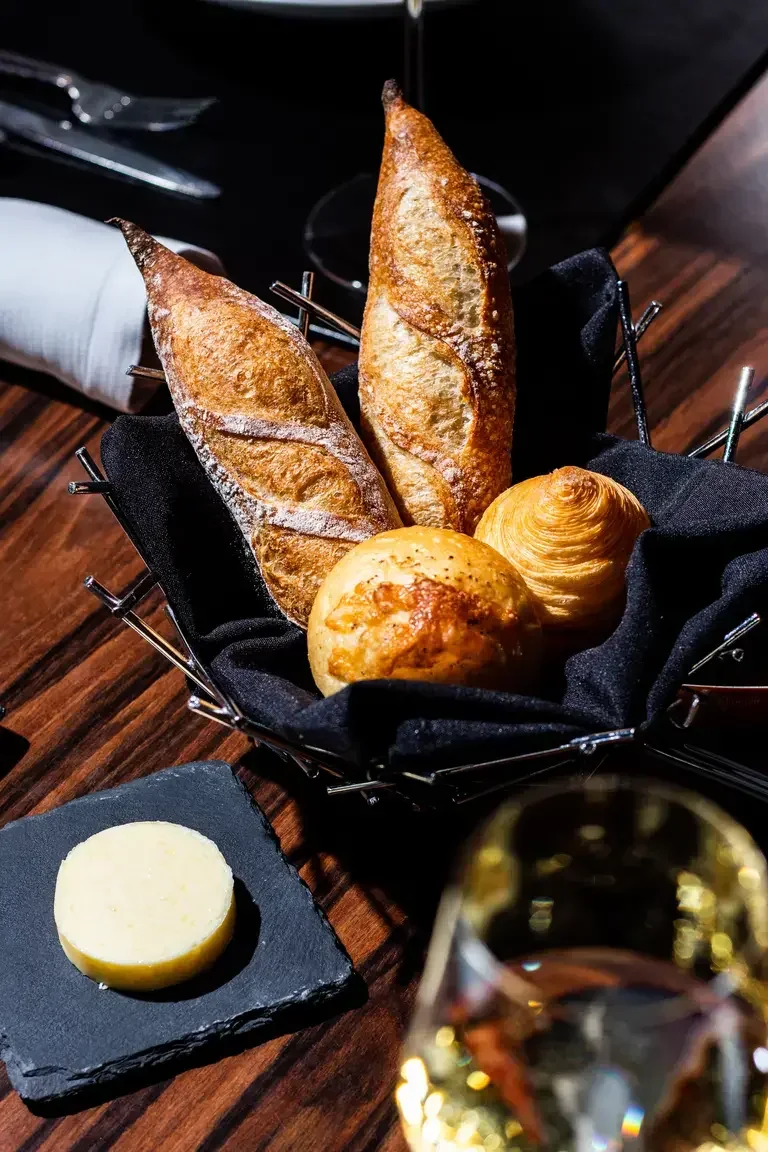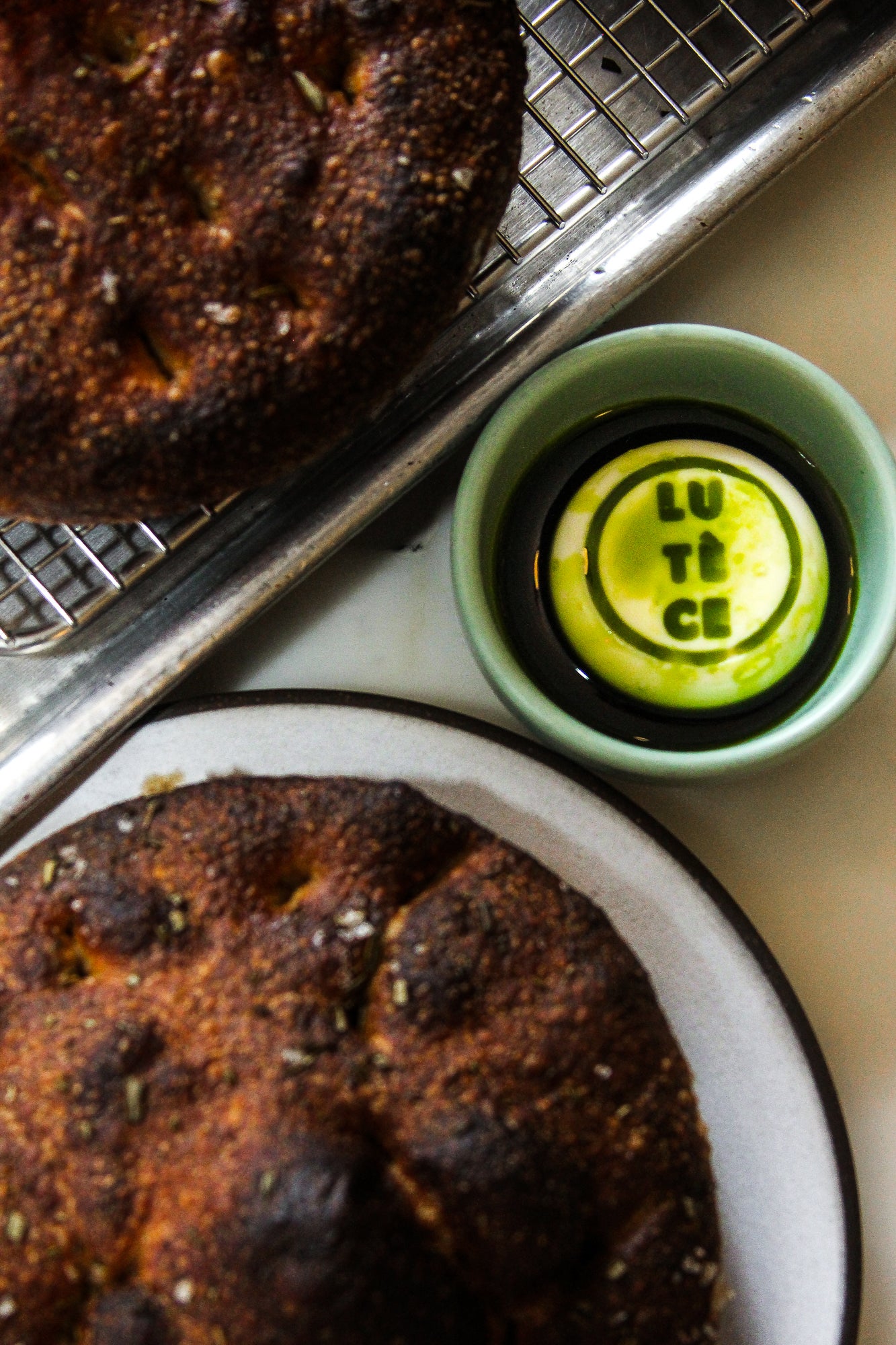
Bread baskets may seem like a standard courtesy, but in fine dining they’re often something more—an intimate gesture of comfort that sets the tone for the entire meal. “Bread is humble, but unforgettable when done right,” says Pepe Moncayo, chef of Arrels in Washington, D.C., who previously earned a Michelin star at Cranes.
At Arrels, Moncayo serves bread just after the amuse-bouche, one of several deliberate choices that shape how guests experience the course. He and four other Michelin-starred chefs reveal how they elevate bread service through decade-old starters, precise timing, and thoughtful accompaniments—proof that the bread course is never an afterthought.
Glass Bread at Arrels
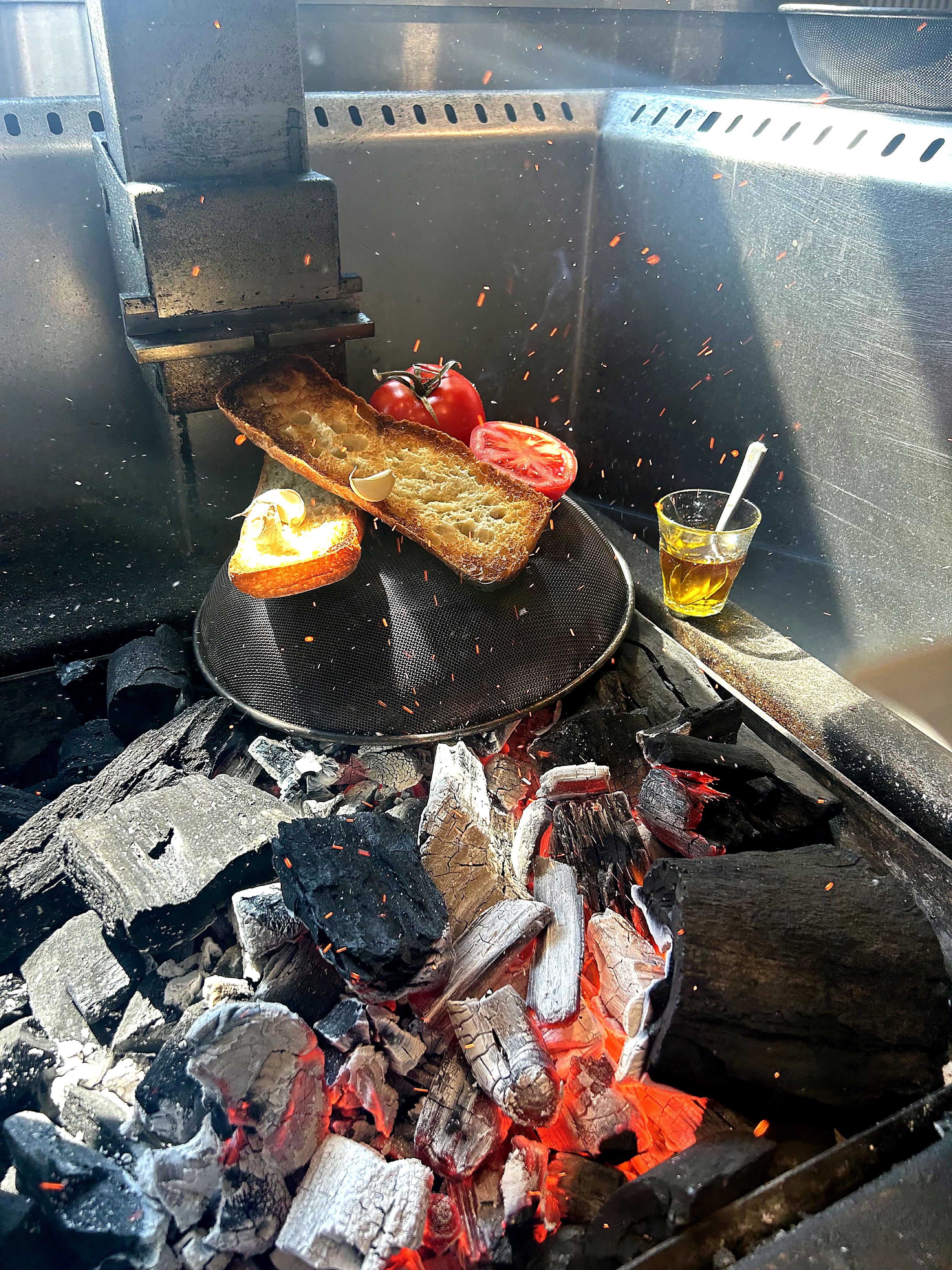
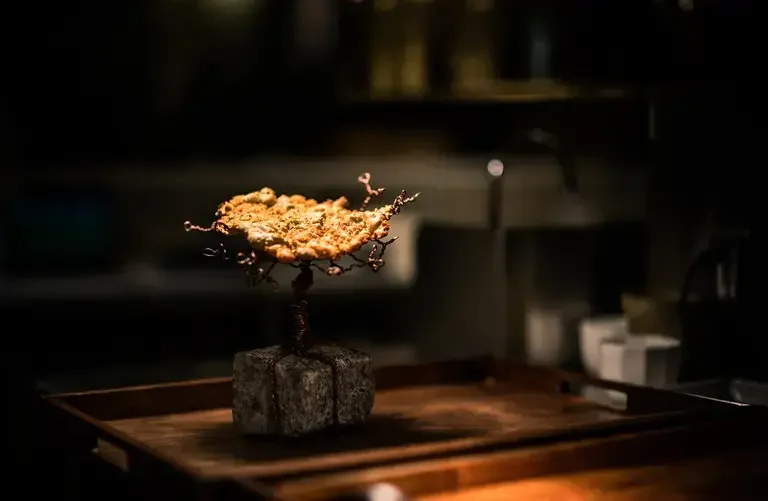
At Arrels, Moncayo serves pan de cristal, the Catalan “glass bread” prized for its airy crumb and shattering crunch. He places it after the amuse-bouche because, as he explains, “guests are settled by then, they’ve had a first sip of wine and they’re ready to engage.” Just before service, the bread is toasted in a charcoal oven for subtle smokiness and presented with roasted garlic, halved ripe tomatoes, flaky sea salt, and Arbequina olive oil from Tierra Callada. Diners rub the tomato and garlic on the bread themselves—just as they would in Catalunya—for what Moncayo calls an “interactive, textural and personal” ritual.
“It stands as its own quiet course—not just background, but part of the architecture of the meal,” he says. The memory that inspired him comes from Supra in D.C., where a khachapuri (a Georgian cheese-filled bread) once “completely blew my mind. I was already impressed, and then that bread arrived… hot, rich, stretchy, and completely unforgettable.”