Why Awards Matter Less Than We Think
There are similar oversights and misfires in any awards program, including ours. Which would be fine, except there are repercussions that go beyond the hurt feelings of the never-nominated and perpetual non-winners:
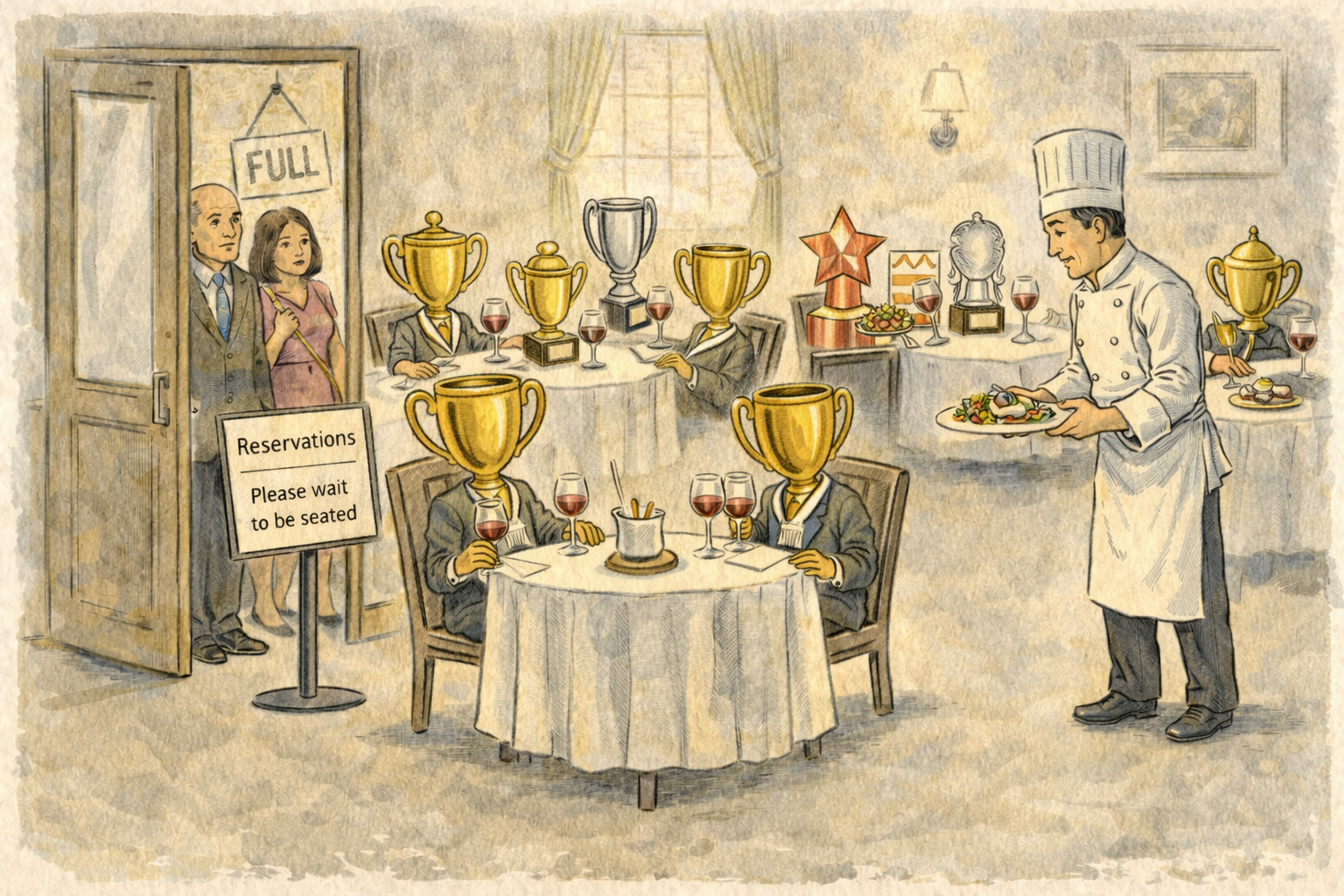
First, laypeople make decisions based on who wins awards. They don’t have the depth of knowledge or sophistication to put accolades in their proper perspective. They will point to whoever owns the top spot in the World’s 50 Best and say, “That’s the best restaurant in the world,” as a matter of fact, as if such a thing exists. Or they will choose a Food & Wine Best New Chef’s restaurant and tell their dining companions, “This chef is one of the best ten young chefs in the country,” as if the well-meaning committee that selects these chefs has canvassed a country of 3.12 million square miles (plus Alaska and Hawaii) sufficiently to make that call in any literal way.
And when it comes to restaurant and chef awards, there looms the possibility, if not likelihood, that many if not most voters haven’t visited every nominated restaurant, which begs the question: “What have you actually won (or lost) if the people who awarded (or denied) you haven’t actually tasted or experienced your restaurant, food, beverages, or hospitality?”
(On this week’s episode of my Andrew Talks to Chefs podcast, Tom Colicchio—direct as ever—explains that he doesn’t vote in the Beards because he hasn’t been to all the restaurants. This—both the practice and the willingness to explain it without apology—is why I so appreciate Mr. Colicchio.)
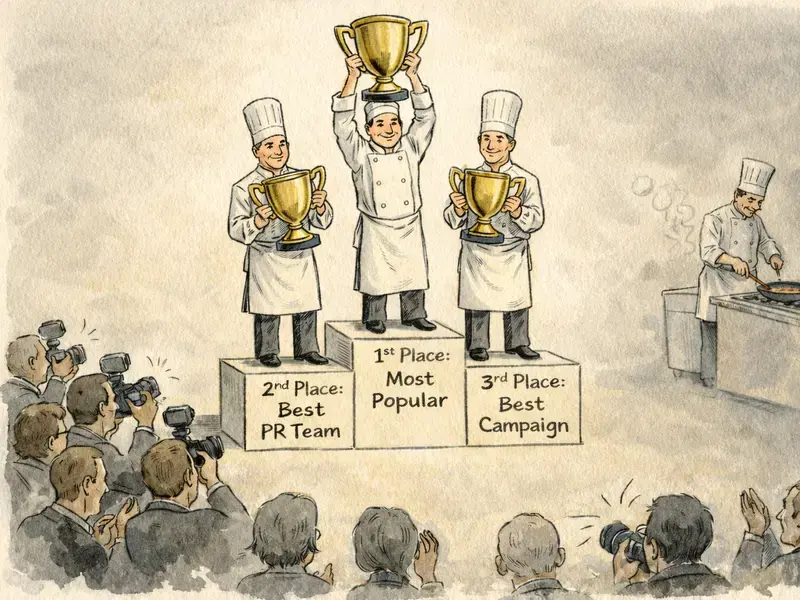
And then there’s the unavoidable reality that many awards are heavily influenced by campaigning, which takes us right back to the question of how seriously we should take awards. I submit that any award that can be successfully campaigned for is by definition an award for “Best Campaign,” not “Best Whatever-It’s-Supposed-To-Be-For.”
I’ve written a little about chef and industry history and teach about it at the Culinary Institute of America. In the two courses I designed, industry awards are referenced exactly zero times except in passing, and generally as a barometer of increasing celebrity. That’s because, at the end of the day, they have nothing to do with who contributed what. If anything, they threaten to confuse the issue by elevating some and omitting deserving others. (I’ve always loved the story Wolfgang Puck laughingly told me in our Chefs, Drugs, and Rock & Roll interview, about how in the James Beard Foundation Awards’ inaugural year of 1991, he left his medal—for Outstanding Chef, no less—at an after-party, never to be seen again. Wolf has done just fine, but would his career be marred if he’d never won a JBF award? Would any of us even realize it against his accomplishments and success?)
Then there are the thorny ethical clouds that hang over so many awards and “best” programs: standards of what constitutes a conflict of interest have been gradually eroded to the point where there are scant guardrails against partiality. I can’t say how widespread the practice is, but I do know it’s a fact that many journalists dine with PR people and/or accept comps. (I myself do those things, but I’m not a critic or list-maker. Even so, I always disclose what I’ve accepted if recommending restaurants online or on the air.) Are we all okay with those restaurants making it onto a list, or winning an award, with no asterisk indicating when that’s the case?
An example from my own past: More than a decade ago, I was asked to participate in the U.S. selection process for an international awards program. My assignment was to offer up a set number of restaurants that I had visited within a certain timeframe and that I believed deserved commendation. Of the places I wanted to include, one was honchoed by a chef whose cookbook I was in the process of coauthoring, and another had comped my dinner at their restaurant. I wrote the awards committee’s designated oracle to ask if, given the clear conflict, I should leave one or both places off my list.
The answer came back quickly: “No problem,” meaning go ahead and include them. I did, because I knew they were deserving, but I still feel a little dirty about it.
Tony Bourdain once said in an interview that he’s happy for his friends when they win awards and—referring specifically to the JBF Awards—that chefs deserve a party once a year. (He also pointed out, critically and correctly, that the immigrant workers who serve as prep cooks, porters, and dishwashers, for whom the industry professes profound affection and appreciation, have zero presence at awards ceremonies and galas.)
That’s exactly my point of view. Several years ago, I made the decision to never submit my podcast, now in its ninth year, for awards consideration. If asked why, I reply that my reward is the DMs and emails I receive from listeners and the nice things they say to me at conferences and festivals. That’s how I know I’m doing good work—because people take the time to let me know, not unlike a restaurant whose patrons return again and again, year after year. I also insist that if I were to internalize the validation of awards (as I once did), then I must also accept the invalidation of not being nominated and/or winning. And who needs to set themselves up for that emotional gut-punch?
So if you see me in May, roaming the events, panels, and after-parties in Chicago during JBF Weekend and on Awards night, and wonder why I look so freaking happy, it’s because I’m just there to see people and have fun. I’m off the awards grid, far removed from the attendant bitterness and disappointment, and happier for it.
A modest proposal: This spring, do yourself a favor when the nominations are announced. If you don’t make the cut, move right along. Stay off social media for two days. Work up a new dish for your upcoming seasonal menu change. Spend a little more time in your dining room marinating in the contentedness of your guests. Take your team on a farm visit or personally make them staff meal one night.
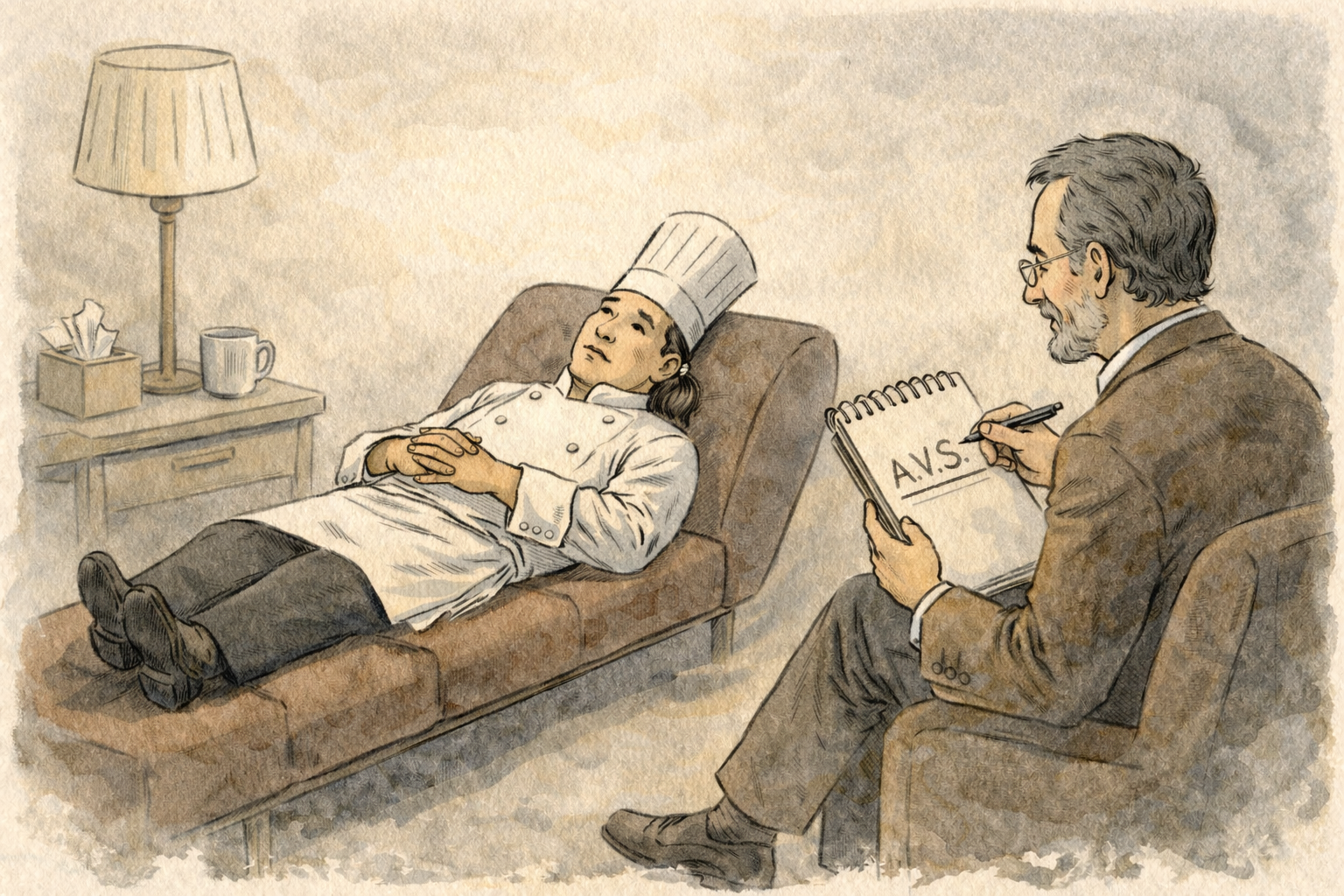
However you do it, go ahead and free yourself from Awards Validation Syndrome. You might just realize that—hokey as it sounds—you’re a winner after all.