This interview has been edited for length and clarity.
How do you describe what you’re doing?
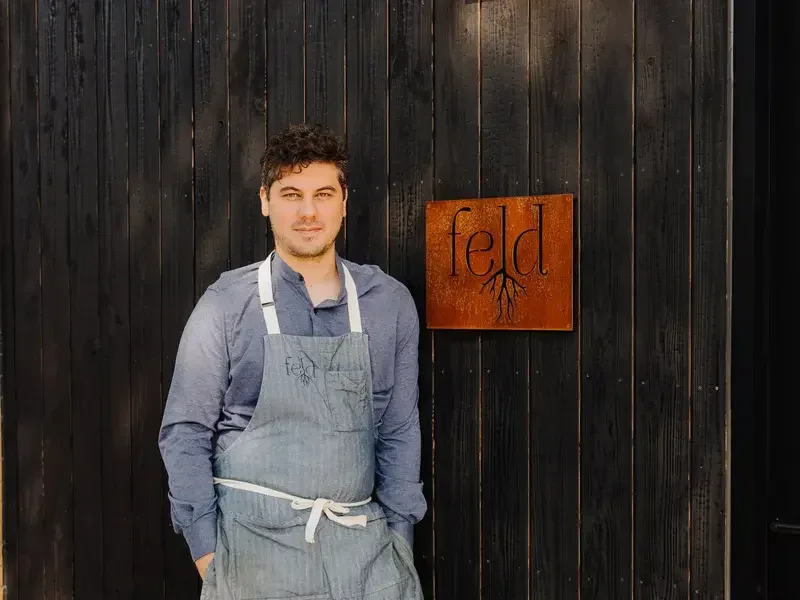
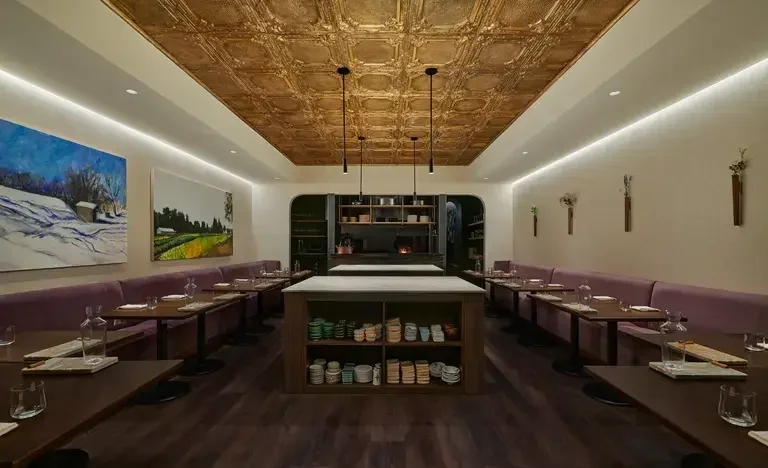
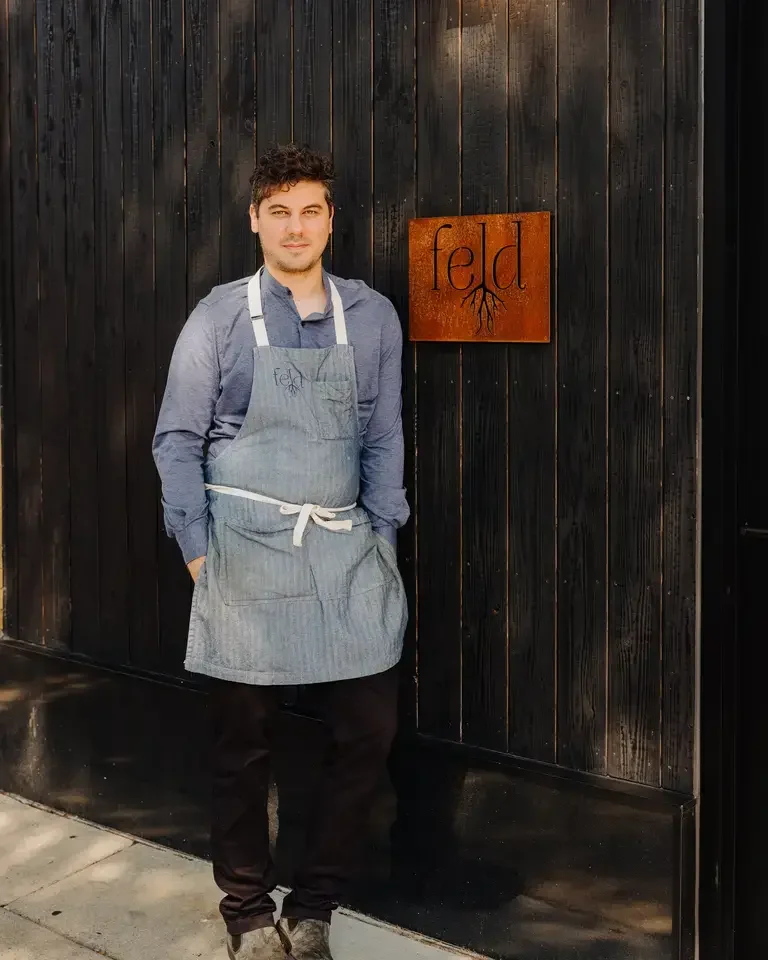
I worked at some really amazing restaurants before I opened Feld, and one of the things I found was that great restaurants don't just work with farms. They go directly to the farm. They meet those people. They get to know them. Farm to table doesn’t seem like the right term for what we're doing, because everybody uses that term now, and there's gigantic farms that people use, and it sort of has become an overpopulated term. I call it relationship to table, because the core concept of the restaurant is visiting and meeting farmers, fishermen, ranchers, producers, and getting to know them and seeing why their product is special. That’s what the restaurant is based on, and it applies to every detail, including the ceramics and wooden chopsticks. Feld is a restaurant, but it's also just a place for me to tell other people's stories and the incredible work they do.
There’s quite a few Reddit threads about you and Feld. Is it accurate to say you’re a polarizing figure?
I don't think so. We had polarizing reviews when we opened, but those were right when we opened. And part of that is because I am pretty public on social media and in writing and all that kind of stuff. There was a hype train going into Feld’s opening, and I'm a first-time chef owner. I made some stumbles out of the gate, but we haven't received a negative review anywhere since what it was like when we first opened. But of course, those were the first words to the public, and a first impression is always going to last.
Anybody on social media gets considered a polarizing figure, whether or not they're trying to be. My TikTok is just me talking about what it's like opening a restaurant. We opened with all this hype, and we were really, really busy that first month, and then some negative things came out, some fair, some unfair.
I do not think it is ethical to review a restaurant after six days of being open, which is what happened to Feld. As a result of those early reviews, cancellations went through the roof, reservations stopped coming in, and that early fall, we were essentially empty.
It was terrible and, in retrospect, the best thing that has ever happened to this restaurant, because it gave us time to focus outside of the limelight and really work on who we are and what we are, and come together as a team and focus on our craft and our work. That sounds like a cliché, but it's true. We really dedicated ourselves to just focusing and working on getting better.
We would have a night with four guests, and we would focus our energy on giving those four guests the greatest experience they've ever had in a restaurant. They would leave and tell their friends, and word of mouth grew. Not that we weren't doing that when we opened, but it was so chaotic, I don't know if we were operating at the best of our ability.
By the end of 2024, we were busy again.
To my knowledge, it's the greatest public and private turnaround of a restaurant in, at least, Chicago history.
We were pegged as the next Le Select, and we showed everybody what we were made of. We really refined the experience we were providing and built something special. That's why the star this week was so special. We focused on our craft, and it paid off.
How long was that period that you saw cancellations come through, until it picked up again?
It hit pretty hard in August of 2024, and September was the worst month. By December, things were looking rosy again.
How were you able to pull yourself out of that tailspin early on? As a new business, forget the Michelin Star, I’m guessing you’re just trying to stay open and survive.
Nobody wants to go through pain, even if you come through the other side of it a stronger person. It was really difficult. It’s easy to make fun of what you don’t understand. A lot of the comments were people who had never even seen my videos and were like, “Oh, he’s the TikTok guy.” A rumor spread that I had no work experience. I worked at some of the best restaurants in Europe. But how do you correct the internet when a rumor starts flowing? It was difficult because the narrative was out of my control.
I laid off social media for a while and let that narrative play its course. When I did finally come back, it was just me doing Day in the Life videos. It’s not like I ever just stopped working. It’s easier to mock somebody on the internet when they’re just a face talking to a screen. It’s harder to do that when you realize they’re a real person who works a job. I showed myself waking up early every day and doing things like breaking down lobsters. That’s much more relatable to a lot of people.
How did you take care of yourself during this period?
I was so all in on Feld. Half my team moved to Chicago to work for me. I felt a ton of responsibility to them and to the team from Chicago. That early stuff was really, really hard for them. My job was to focus and say, “I know this is going to get better. Good things are going to come if we keep working at what we're doing here.” From really early on, I knew we had something special. I didn't have time to think in any other way, and it would have crushed me if I had.
And you’re saying the hype and backlash was caused by your social media presence?
The hype was a lot of things. Eater saw my TikTok in 2023 and did a profile on me, and that was a year and a half before we opened. I joke that we were the only restaurant to appear twice on Eater’s “Most Anticipated Next Year” list because we were so delayed in our opening. We were on the list in 2023 and 2024, so there was a lot of anticipation that wasn’t helped by the fact that I have a public persona.
You recently called out a diner on Instagram who gave you a bad review because you don’t offer Coke products. A lot of chefs would take that on the chin, but you didn’t. You hit back.
That was its own beast. It was a radio host who blasted us on the radio. We received 30 one-star Google reviews out of nowhere from people who had not dined at Feld. That’s the internet.
From Feld’s opening, there was fair criticism. We were getting reviews saying the seasoning was “a little under my preference.” That’s fair criticism. As a chef, as a business owner, you have to look at that and think about it. Now comments from 2,000 people saying, “That plate looks silly,” is not useful feedback. And it’s not feedback from people who are ever actually going to come to the restaurant. You have to be able to separate the two.
We were never going to change the philosophy of the restaurant because people on the internet were unhappy with it. I’m so proud of what my team did and what we’ve done, because we got here by sticking to our guns about what the philosophy of this restaurant is.
What is its philosophy?
We practice extreme seasonality. We're driven by what's at the market right now. We don't work with big box supply companies. I don't have a contract with a truck that pulls up behind my restaurant and drops off all of our produce. I go to the market, where farmers we know personally drop off each week.
Every week, the menu changes by 30 percent.
The critique when we opened was, “They change so much. How can the food be consistent in quality?” We've not slowed down in our interest and excitement for change and following the seasons.
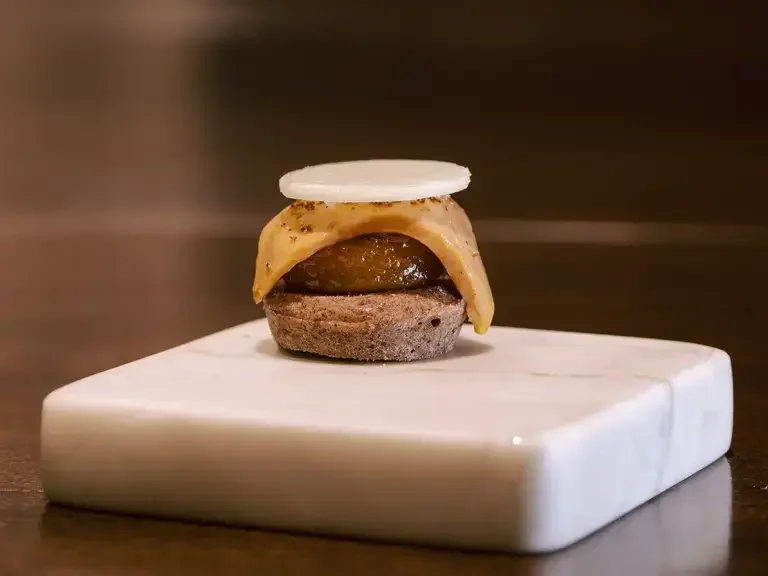
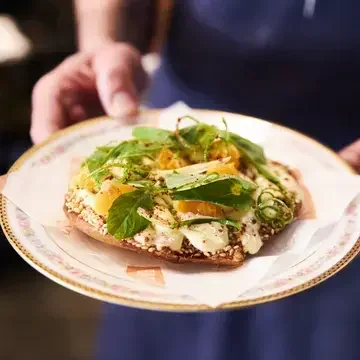
The easiest thing during that period we were being critiqued would have been to go to a three-month menu and change the concept. But no, we stuck with what we do, which is this longer tasting menu based around the product coming right now and working around that extreme seasonality. That's what makes Feld really special. Every night is a new opportunity. There are refined dishes, new dishes, and experimental dishes. It's fun. Guests feel that in the food.
You are one of the few, if not only, chefs operating at a high caliber while also being an active TikToker. What’s that like?
I don't know if you remember eGullet, which was an early food blog from around 2003 to 2010. Grant Achatz live blogged the building process of Alinea, and that's how he built hype. I don't know other people who did what I did on TikTok, but the concept of pre-teasing your business using social media, or whatever media is available to you, is a tale as old as time. I have an incredible amount of respect for Chef Achatz. I went into cooking, fine dining partially because of him. I remembered he did that, and I thought it was a really, really intelligent way to get your brand out there, because there's a lot of restaurants and it's hard to stand out.
I went to the Cornell University hotel school. I knew I wanted to own and run a restaurant since I was seven years old, and I have designed my life path around that. You go to school for something like this, you study the idea, but it wasn't until I started doing this that I realized knowing how to cook and run a restaurant are their own beasts. You can study it all you want, but the reality of the day to day is very different from what's on paper. I did not have a resource. I started sharing my experience online thinking, “There are other people who will be able to use this as a resource.” That's where the idea came from.
I never cooked on TikTok. I never wanted to be the cooking chef guy. I wanted to show this interesting world I'm very passionate about, which is the niche segment of fine dining, and that connected with people.
What’s next?
Feld is 16 to 17 months old. I love this place so much. I can't imagine not being here. I've never missed a service. I don't know if we would open if I did, and I just want to keep refining this place and making it the best it can be.
I have this amazing team who's been with me since day one. We're never going to be a restaurant that rests on our laurels. We have so much more to prove to others and to ourselves.
Anything you wish I had asked you?
There is actually something I do want to say. I don't know why, but every single article ever written about me struggles to get my résumé correct. There are four places where I worked full time, and those are the ones that should be talked about. That’s Daniel Berlin Krog in Sweden. I worked at a restaurant called La Marine in France after that. Then I moved to Berlin and spent a couple of years at Ernst, which was a very special restaurant that strongly influenced what I'm doing. After that, I was the head chef for about a year at a restaurant called Barra in Berlin.
I did a lot of internships and stages in Japan, Thailand, and the US, but those four places are the core of my résumé.