From Lineage to Legacy
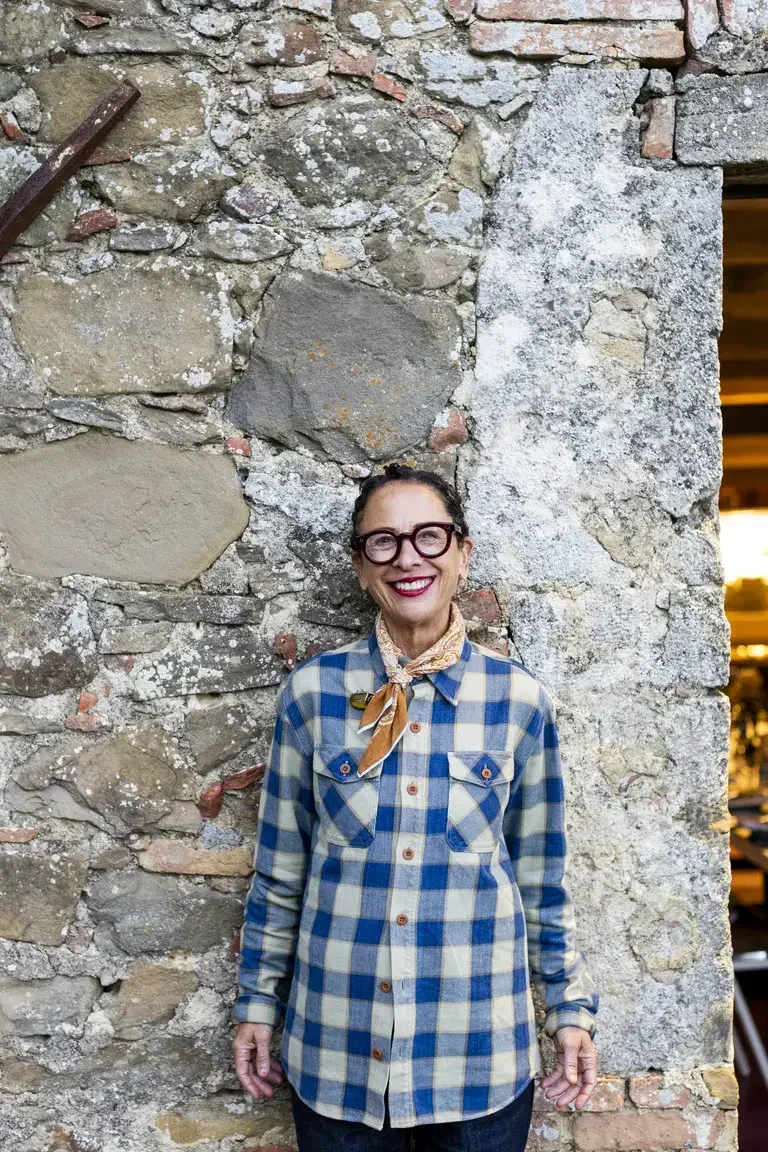
“It’s absolutely a priority, a necessity,” says Nancy Silverton of becoming a mentor to young whisks. “I only hope I can be that to somebody in my orbit as my mentors were to me.”
Wylie Dufresne, who was coached and supported by Jean-Georges Vongerichten, relishes his role as a mentor today and is openly proud of those who have worked for him and gone on to their own success.
“I love that part of talking to cooks,” he says. “And I’ve been very fortunate. Look at the lineage of people that were part of wd~50, like Mario Carbone (Major Food Group) and Paul Carmichael (Kabawa). [Some of the] best pastry chefs in [the] last century came out of wd~50: Sam Mason (OddFellows Ice Cream), Malcolm Livingston II (who went on to be Noma’s pastry chef), Rosio Sánchez (who eventually turned her attention to bringing Mexican food to Denmark at her Hija de Sanchez restaurant), Alex Stupak (who also pivoted to Mexican food with his Empellon group of restaurants), and Christina Tosi (Milk Bar).”
“It means a lot to me that people have passed through my kitchens and gone on to do great things,” says Dufresne. “Hopefully we helped people think differently about how and why they do things, and when the scores are tallied, they will say we made a difference.”
He also hopes, thirty-five years later, that he is still contributing in a different arena: teaching younger colleagues the intricacies of one of today’s “it” foods, pizza.
There is also a pragmatic element to mentorship, even if it is not its primary driver.
“[Mentorship] is the main thing of what I do,” said Jeremy Fox on a December 2025 episode of my Andrew Talks to Chefs podcast. At the time, Birdie G’s in Santa Monica was still operating, and he had not yet announced his departure from Rustic Canyon.
“Especially when you have more than one restaurant, you can’t physically be in both places at one time,” he said. “You can’t have that thing where, when you’re not there, the restaurant isn’t as good. The goal is for it to be better when you’re not there. In order to do that, you have to mentor people. You have to nurture creativity, awareness, the craft of cooking, how to work with people, how to train people, having the right temperament.”
“That’s my favorite part,” Fox said. “It feels great to me to see other people thrive. To work with people for five, six, seven, eight years, then see them go on to do great things is really nice.”
Correcting the Kitchen’s Power Dynamics
Mentorship assumes added weight when it offers an opportunity to improve upon one’s own lived experience.
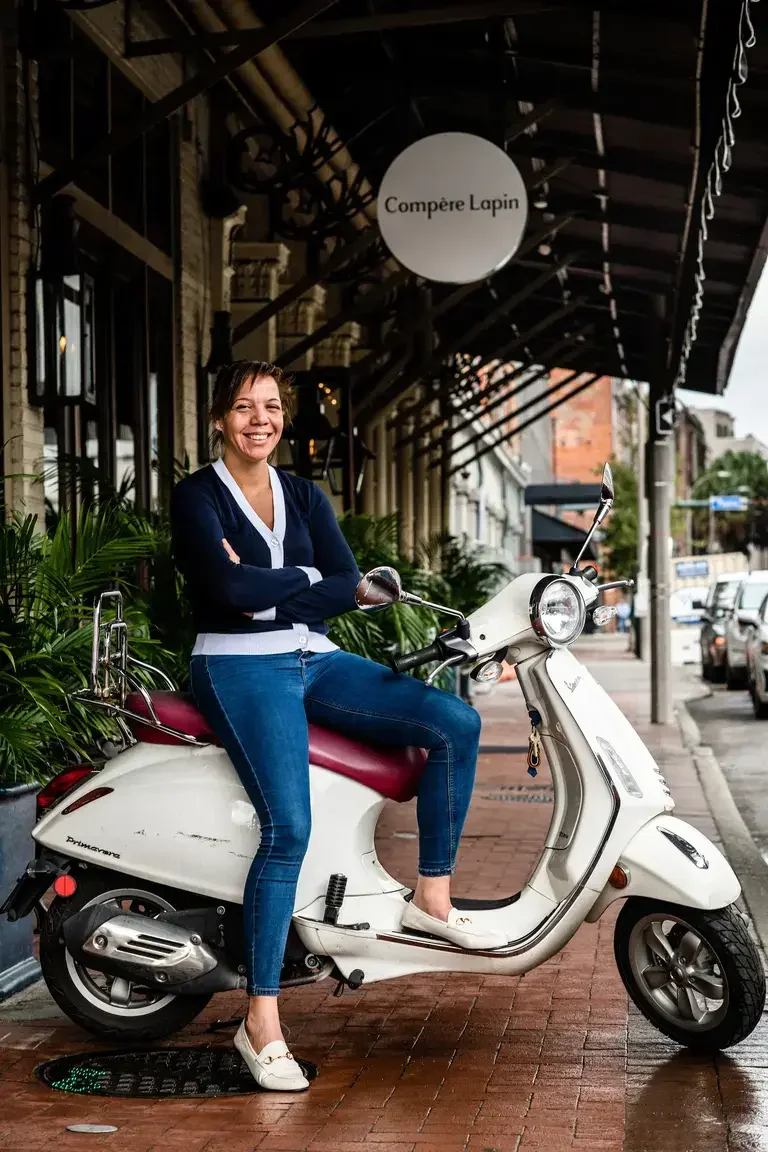
“I didn’t have a woman teaching me how to navigate kitchens,” says Nina Compton. “It was male dominated, and I was the only woman, or one of two.”
She knows she was not alone.
“We have all seen many women chefs who say, ‘Hey, Chef, I don’t know what to do in this situation.’”
Often the tension emerges from daunting scenarios where the “no crying in baseball” ethos of the professional kitchen discourages emotional expression.
“You can’t show weakness,” says Compton. “You have to put your poker face on and push through.”
Compton believes this dynamic also inflicts a different kind of psychic harm on men, many of whom feel they cannot make mistakes, must project strength, and cannot display vulnerability.
“Men have to prove themselves all the time,” she says. “Women are just happy to be here.”
Compton believes the tide is turning.
“It’s amazing to see so many women chefs at a high level get recognized,” she says. “The shift is happening. More women are in the kitchen, or having restaurants. It’s not as lonely. It’s like, ‘Hey, we are all in the same boat.’”
“When I surround myself with women in the kitchen,” she says, “it becomes a source of energy and drive. We all want to see women succeed.”
Compton believes mentorship is ultimately more about the person than the work itself.
She recalls that shortly after she and her husband moved to New Orleans, a young woman cook direct-messaged her on Instagram after recognizing her in a local grocery store. If Compton was hiring, the woman wrote, she would love a shot at a position.
“I blindly hired her and she was with me for eight or nine years,” says Compton. “I eventually promoted her to sous chef.”
“It’s about seeing a person grow,” she says. “Seeing them excel. The most important thing for me is to see them run a service.”
When Mentorship Becomes Institutional
After generations as an informal, self-perpetuating industry feature, mentorship may be evolving into something more structured. Some organizations have attempted to formalize the tradition by pairing aspiring chefs with established mentors.
Case in point: The Bocuse d’Or USA Foundation was created in 2008 with the goal of placing an American chef on the podium at the Bocuse d’Or, the biennial competition in Lyon, France.
Before long, the foundation expanded its mission to include mentorship for a select group of aspiring chefs. To signal that shift, it adopted a new name that would resonate more clearly with English-speaking audiences.
The result was Ment’or, a portmanteau that nods both to mentorship and to the organization’s origins.
According to its website, the organization strives to “build a sustainable community of young American professionals that are knowledgeable and confident in their career pursuits and will be life-long ambassadors of quality and excellence in the world of gastronomy.” It also aims to support serious young chefs through educational opportunities, internships, and access to a Culinary Council of established mentors.
Today, Ment’or organizes programs that connect participants with mentors, including the André Soltner Grant Program, which finances stages in professional kitchens, and the Young Chef & Commis Competition.
Similarly, the S.Pellegrino Young Chef Academy competition refers to each competitor’s culinary adviser not as a coach, but as a mentor.
The culinary arts, like many fields, are at an inflection point, as fast-evolving technology promises operational efficiency, sometimes at the expense of human connection. Reservation platforms have automated the booking process to the extent that many restaurants no longer maintain a phone line. Robotics are beginning to enter the kitchen in incremental ways and may eventually displace some cooks. Even marketing now leans more on social media than on interaction with flesh-and-blood journalists.
Against that backdrop, mentorship preserves the humanity of a profession that can be physically and psychologically demanding. It offers guidance and direction, along with the reassurance that, no matter what else may be happening, someone is invested in your growth and has your back. And in time, as generations gather to mark milestones and farewells alike, the roles quietly reverse, and the mentee becomes the mentor.