Sorry, you need to enable JavaScript to visit this website.
Zanti Sphere

Zanti Sphere

When Dessert Meets the Bar: Why Pastry Chefs Are Turning to Cocktail Glasses

10 Minute read

From martini glasses to coupe stems, pastry chefs are borrowing from the bar to rethink dessert presentation, blending visual drama, sensory payoff, and a sense of play at the end of the meal.

In the last decade, the cultural crossover between cuisine and cocktails has intensified. This goes far beyond the citrus juices of classic drinks, extending to tomato-laced martinis, bacon-washed bourbons, and pizza-inspired Negronis that have increasingly blurred the line between kitchen and bar. More recently, that interaction has taken on new significance in restaurants, particularly at dessert, where pastry chefs are turning to classic cocktail glassware to present the sweet finale of a meal.

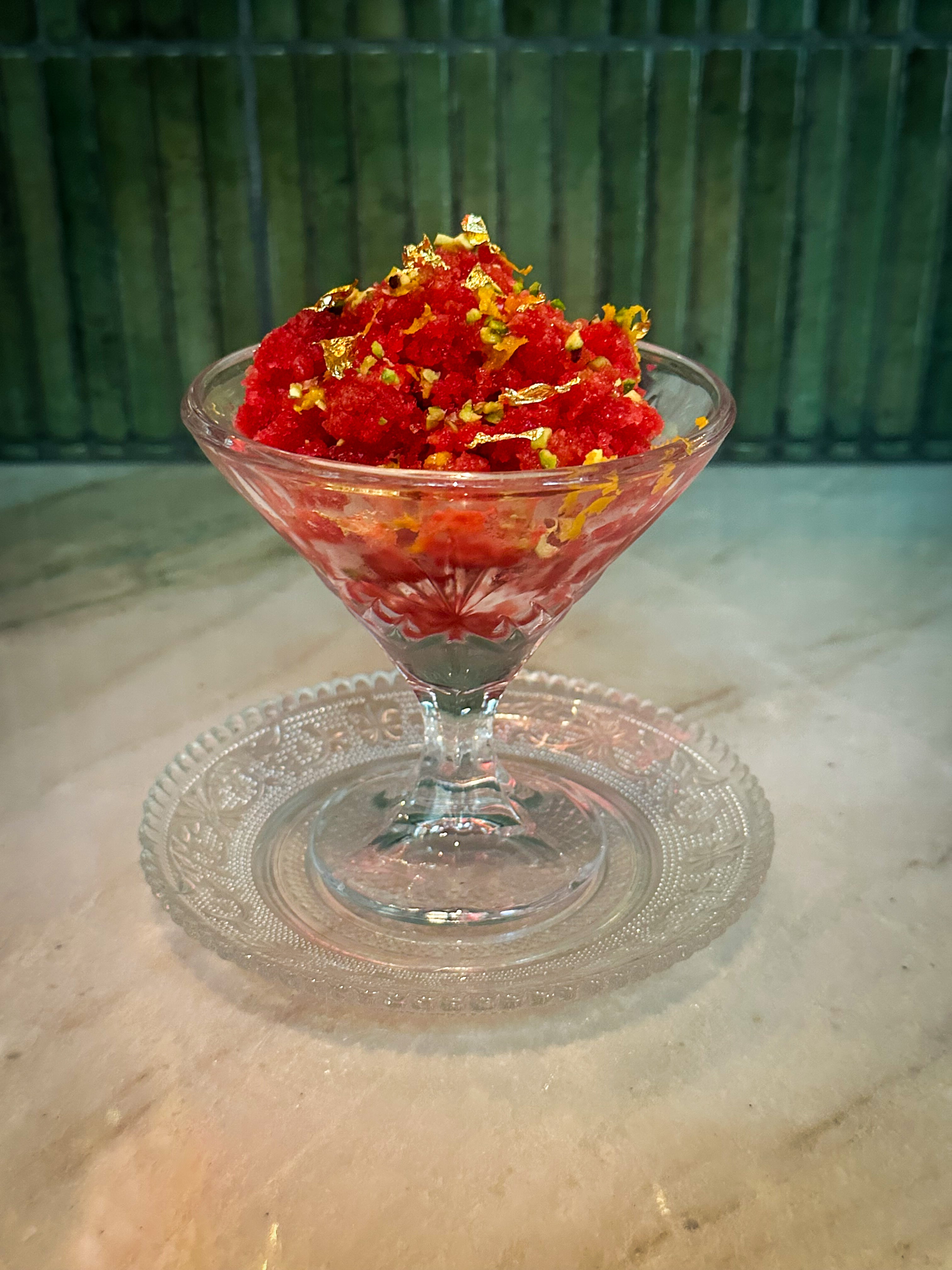
“Cocktail and pastry programs are and always have been complementary to one another due to the beginning-ending nature of the service aspect of the meal,” says pastry chef Veronica Arroyo at Acqua Bistecca in Washington, DC, who serves a raspberry granita in a vintage-style martini glass.

“The beauty of serving dessert in glass is in the visible layers,” adds Norie Uematsu, executive pastry chef of Momoya Soho in New York City, where seasonal parfaits are presented in wine glasses. “Just like people enjoy transparent designs, even a Dyson vacuum shows its inner workings, guests love seeing the composition of the dessert.”

Although visuals are increasingly important to diners, there are also practical and sensory reasons to serve dessert in cocktail glassware. Below, eight chefs share the inspiration behind their creations and how they view this approach as a whimsical, modern way to engage guests through the very end of the meal.
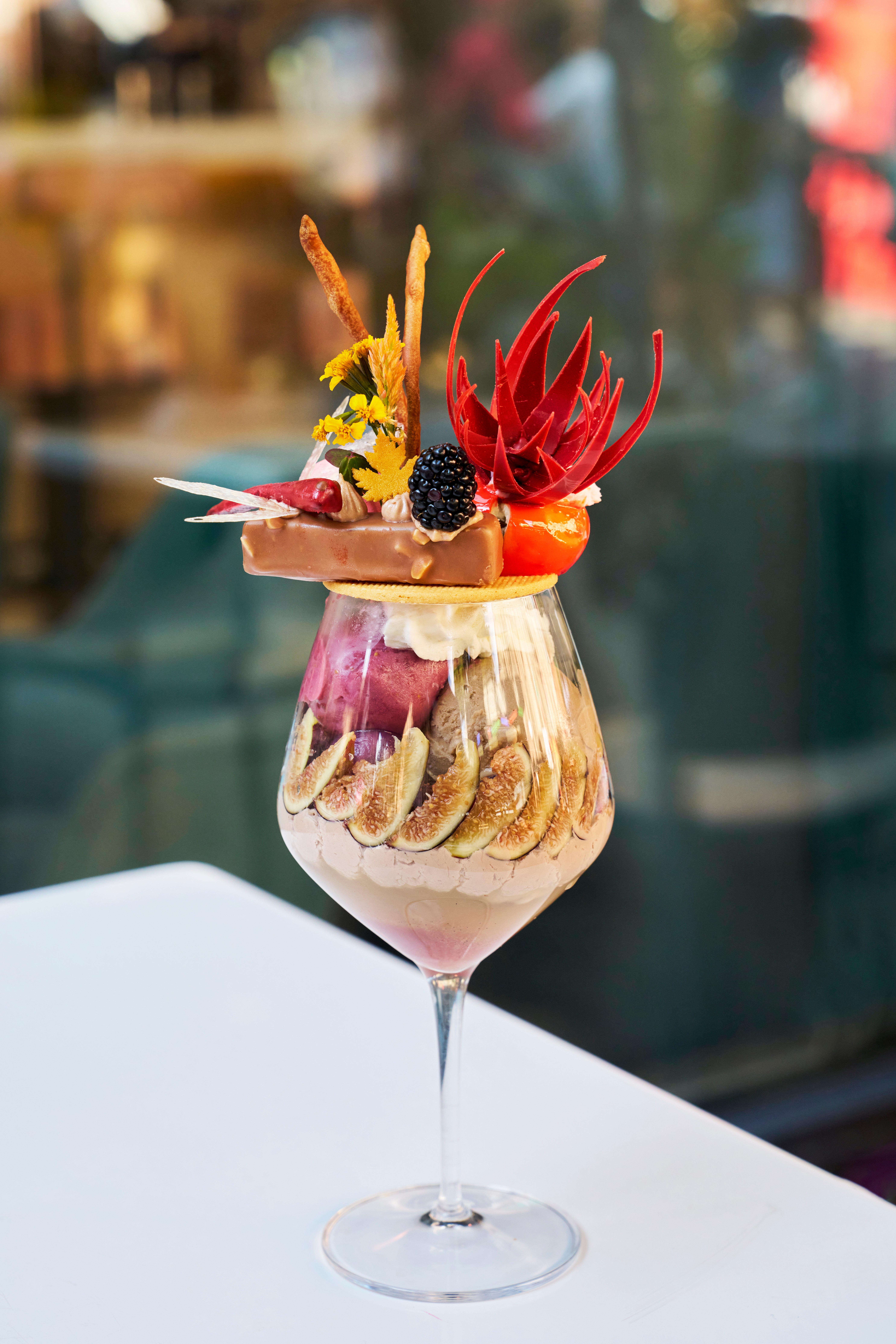
Aka Tombo Parfait at Momoya Soho

Aka Tombo Parfait at Momoya Soho

Aka Tombo Parfait at Momoya Soho

The first time Momoya Soho’s executive pastry chef Norie Uematsu spotted a Luigi Bormioli glass in a showroom, she recalls being amazed “not only by its elegant design but also its incredible durability.” Uematsu is known for using thin, refined glassware for her desserts “as a subtle dialogue between the bar and the kitchen,” but she is selective, since much high-end glassware is too fragile for restaurant service. After experimenting with cocktail, wine, sherry, and sake glasses, Uematsu found the Luigi Bormioli style best suited for the restaurant’s latest seasonal parfait, which features layered flavors including pear vanilla jelly, milk chocolate whip cream, chestnut mousse, red wine fig sorbet, and earl grey yuzu ice cream.

“I wanted a clear visual boundary between the jelly and other components; the gentle curve of this glass creates that distinction beautifully,” she says. “I also liked that the rim is wide enough to easily scoop a proper portion of ice cream.” Aside from aesthetics, Uematsu adds that there is a practical and sensory benefit that comes with serving dessert in glassware, one that turns the final moment into part of the dining experience. “They don’t have to lick the plate for the last drop of melted ice cream,” she says. “Guests can enjoy every bit, even sipping the melted ice cream at the end feels elegant.”

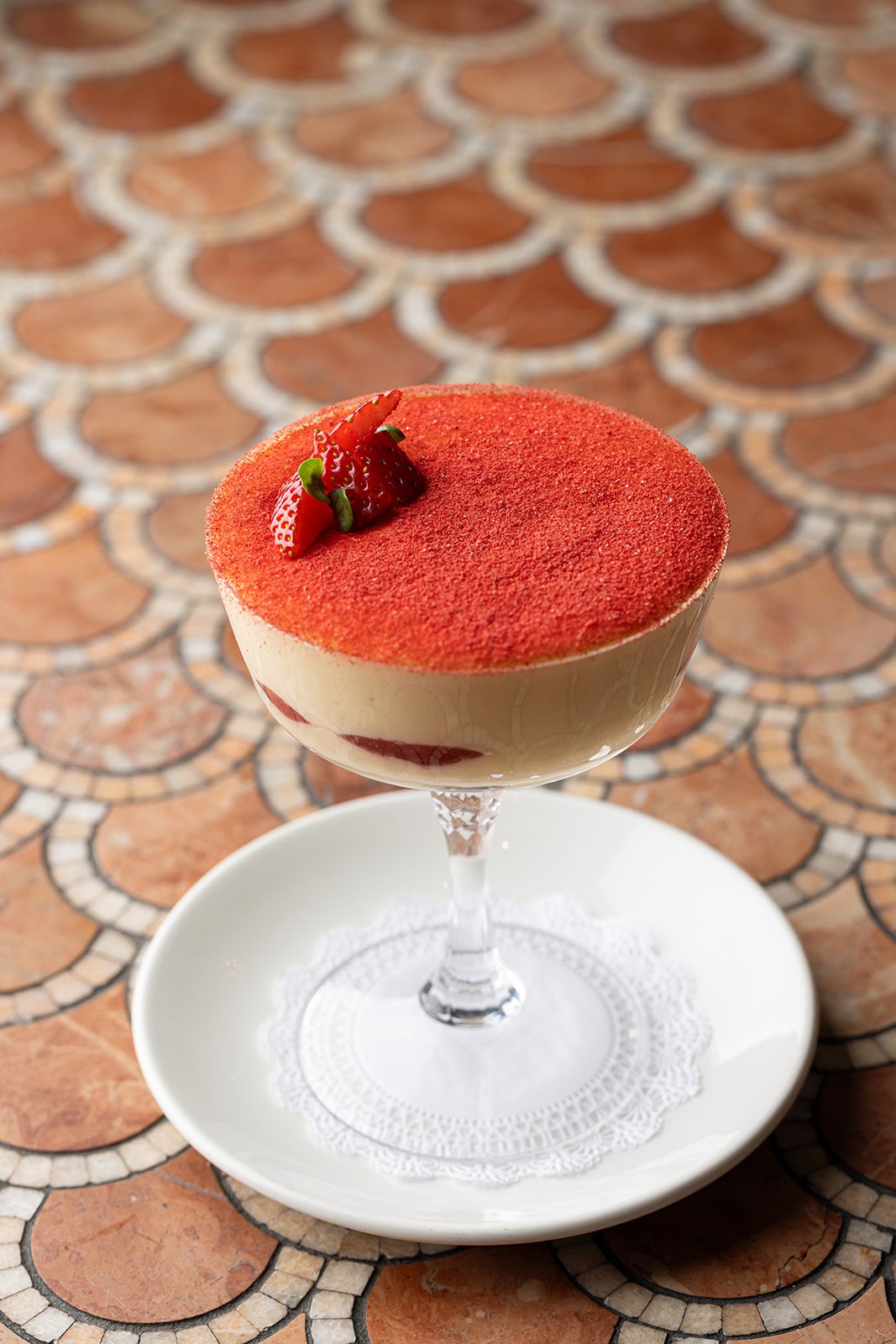
Strawberry Tiramisu at La Marchande

Strawberry Tiramisu at La Marchande. Credit: Nitzan Keynan

Strawberry Tiramisu at La Marchande

This past summer, Sofia Schlieben, corporate pastry chef of JF Restaurants, served a strawberry tiramisu in a straight-sided, crystal-cut coupe glass at La Marchande, located inside The Wall Street Hotel in New York. “Food as art is something I think about often; I cook to be eaten, but I put so much energy into its aesthetics,” says Schlieben, noting the layers of strawberry jam, Telmont Champagne-soaked ladyfingers, and whipped mascarpone mousse, which “are beautiful to see” as they “add depth and intrigue beneath the red strawberry powder surface.” Schlieben chose the crystal-cut coupe for its sturdy stem and shallow cup for ease of eating, but also to connect to the champagne-soaked ladyfingers within the dessert. “It felt like a nice nod to the traditional serving vessel of Champagne itself,” she says.

Zanti Sphere

Zanti Sphere

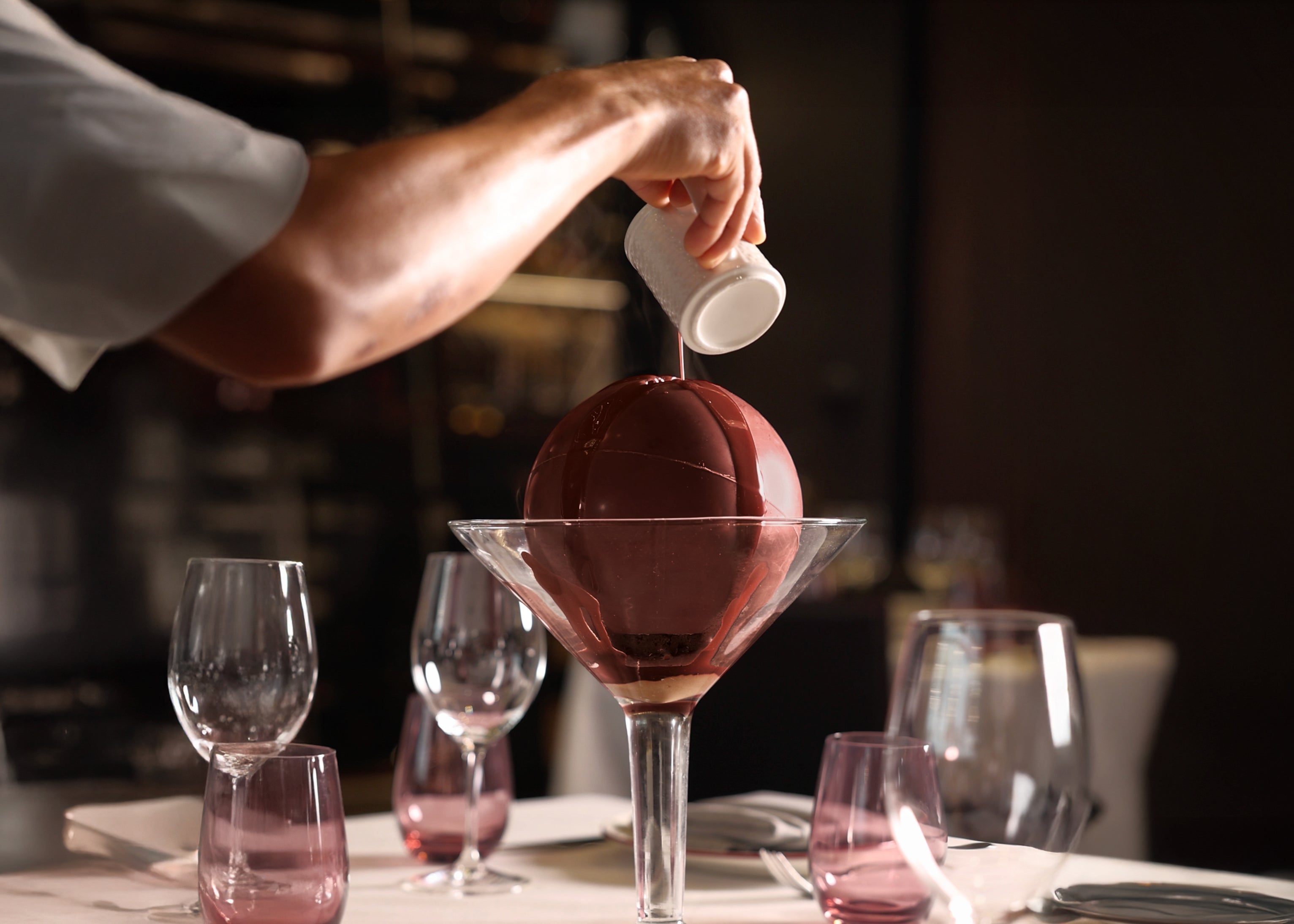
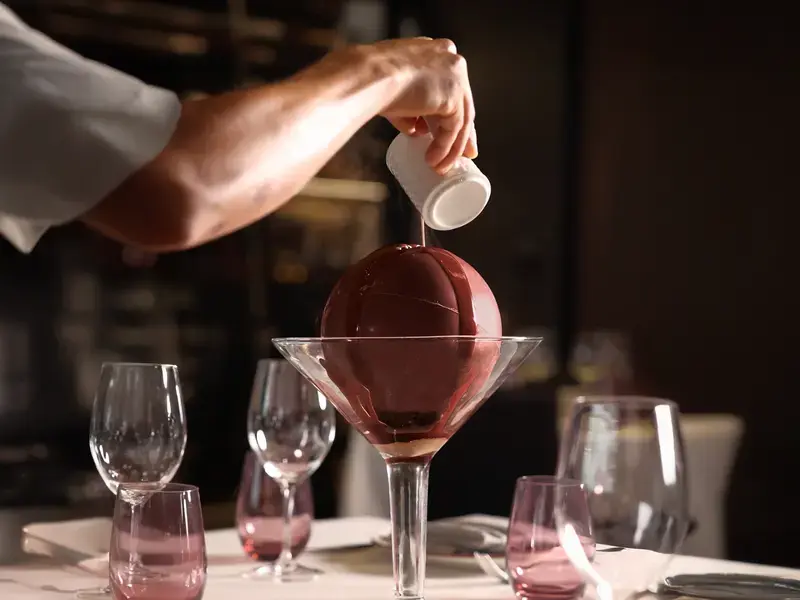
The Zanti Sphere at Zanti

Served in an oversized martini glass, The Zanti Sphere is one of Zanti’s most popular desserts, combining hazelnut cake and housemade caramel gelato with toffee pieces, chocolate, and warm caramel sauce. “There’s a saying that ‘love enters through the eyes first,’” says Santiago Pelaez, owner of Zanti in Houston, Texas, noting that when the sphere arrives at another table, other guests immediately want to experience it too. The show does not stop there. “When the warm chocolate is poured and the sphere slowly melts open, it’s almost like a live performance at the table,” says Pelaez.

The sphere began as a limited dessert item, something the team would only make five to ten of per day, but Pelaez says it became such a guest favorite they had to add it to the permanent menu. “Now, it’s part of our identity,” he says. Pelaez is not surprised, given how “the restaurant world has evolved and guests no longer come just to eat… they come to feel, connect, and experience.” With the lines between food and beverage creativity increasingly blurred, he says it is combinations like desserts served in cocktail glasses that “makes modern dining so exciting.”

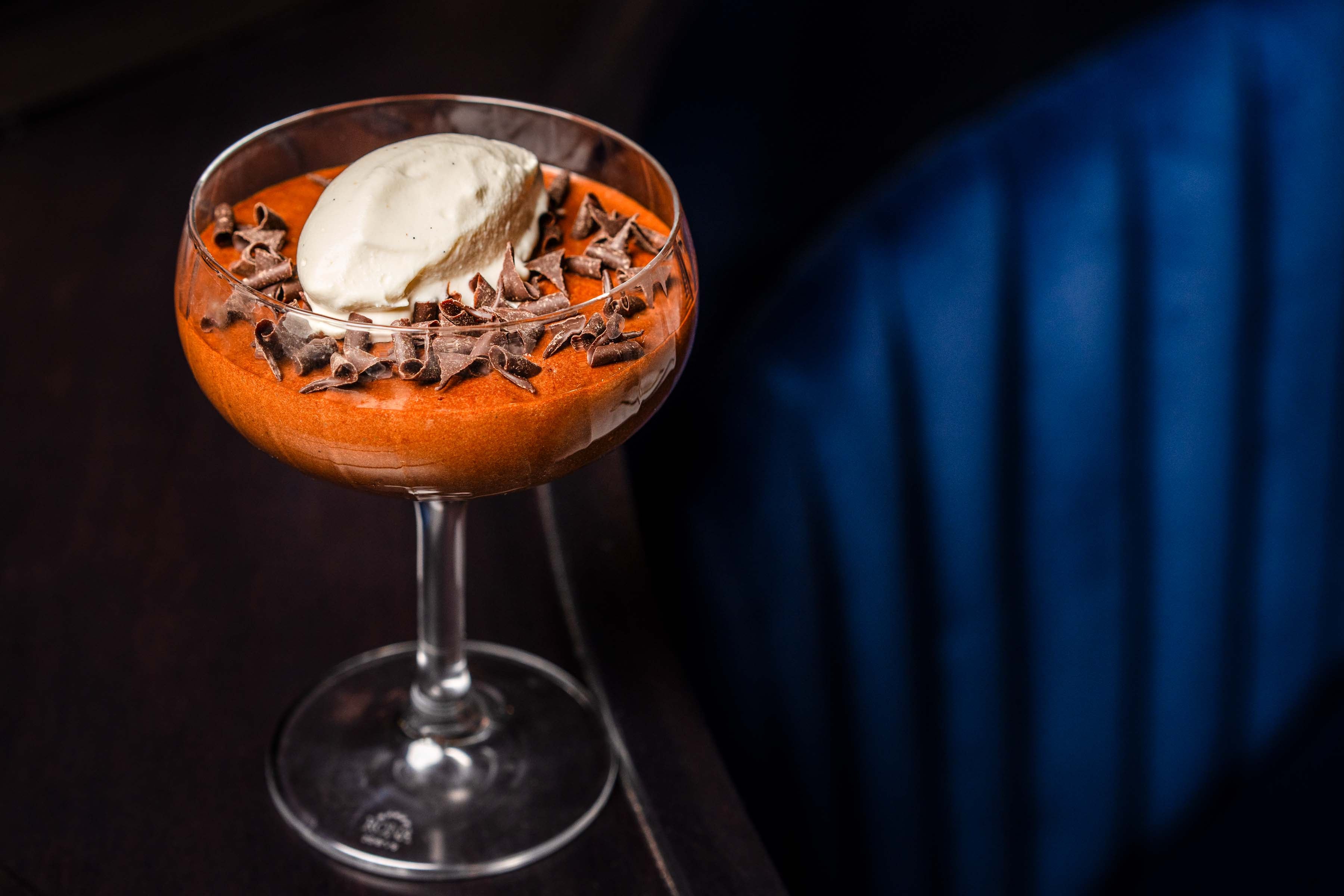
Dark Chocolate Mousse at Augustine

Dark Chocolate Mousse at Augustine

Dark Chocolate Mousse at Augustine

On many menus, chocolate mousse may be overlooked as a safe choice, and that is exactly what Augustine wanted to avoid with its silky, layered dark chocolate mousse, which balances bittersweet chocolate, fresh cream, and warm tonka bean. “The cocktail glass elevates a simple dessert into something a bit more refined and celebratory… adding a touch of classic charm to a timeless favorite,” explains Nicolas Brichet, director of culinary operations for Bacchus Management Group, which includes Augustine in San Jose, California.

The etched coupe glass was already used in the restaurant’s cocktail program, an important detail for the hospitality team in creating a sense of continuity throughout the dining room. “The presentation feels intentional and sophisticated, yet it doesn’t take itself too seriously,” says Brichet. “Like a great cocktail, it’s all about balance—flavors, textures, and presentation coming together to create something memorable.”

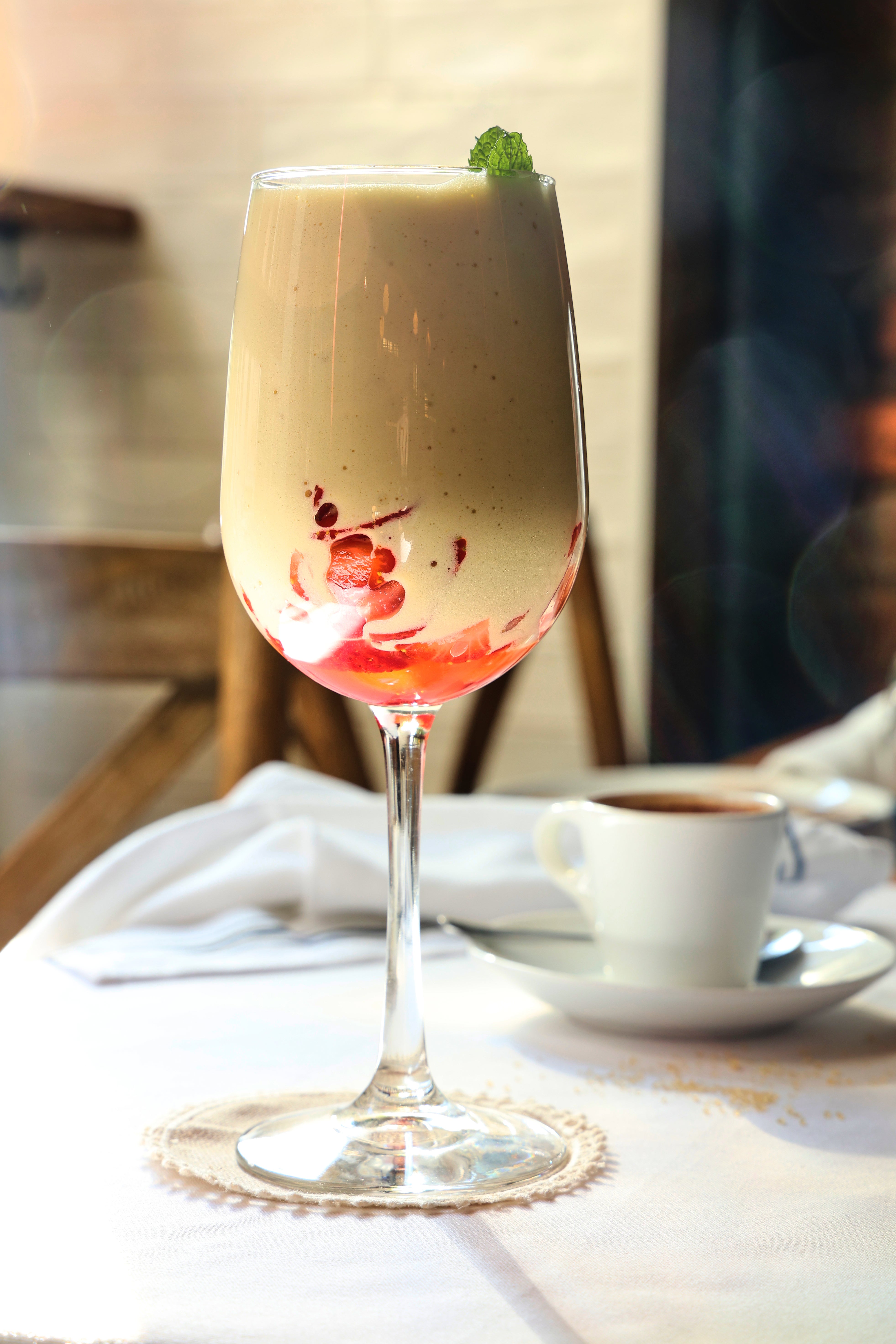
Zabaglione at Canto

Zabaglione at Canto. Credit: Hallie Burton for Canto

Zabaglione at Canto

The satin-like texture of whipped Italian custard swirls with a base of crimson berries and amber Masala wine in the Zabaglione at Canto in Manhattan, served in a stemmed wine glass. Having previously worked in fine dining in Europe, Djamel Omari, owner and founder of Canto Restaurant Group, was inspired to present this classic Italian dessert in a wine glass, just as it is overseas. He also notes that “it adds an artistic touch by elevating the dessert, both literally and visually, in this case on a graceful stem, turning the dessert into a small showcase.” The elegant glass, he adds, fits a perfect portion for the dessert and is “a playful presentation that also celebrates the finale of a great meal.”

Granita Italiano at Acqua Bistecca

Granita Italiano at Acqua Bistecca

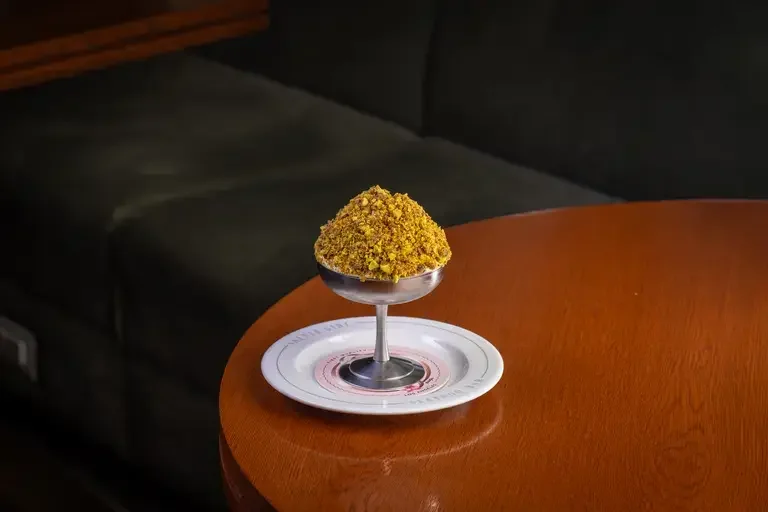
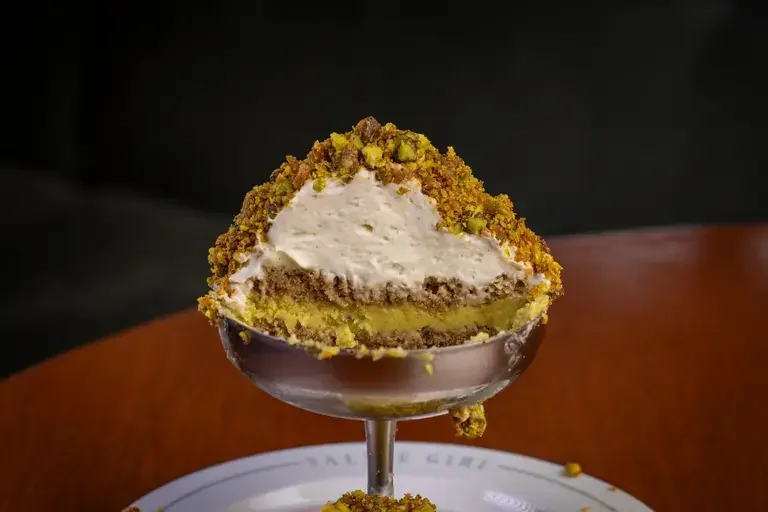
Pistachio Tiramisu at Saltie Girl

While many pastry chefs rely on clear glassware to showcase a dessert’s depth and layers, the bicoastal Saltie Girl’s pastry chef, Ben Sidell, uses an opaque metal coupe for his pistachio tiramisu. “The metal coupe immediately caught my eye,” says Sidell, explaining its ideal blend of practicality and beauty, sturdy enough for service yet refined in its simplicity. Beyond aesthetics, there is a sensory experience in “the contrast between the creamy tiramisu and the cool metal,” he says.

As the first dessert he has served in a cocktail glass, Sidell sees it as less of a cultural statement and more as an opportunity to “capture a sense of whimsy.” “I love the idea of taking something traditional and giving it a different personality… It feels like a toast to the end of a meal,” he says.

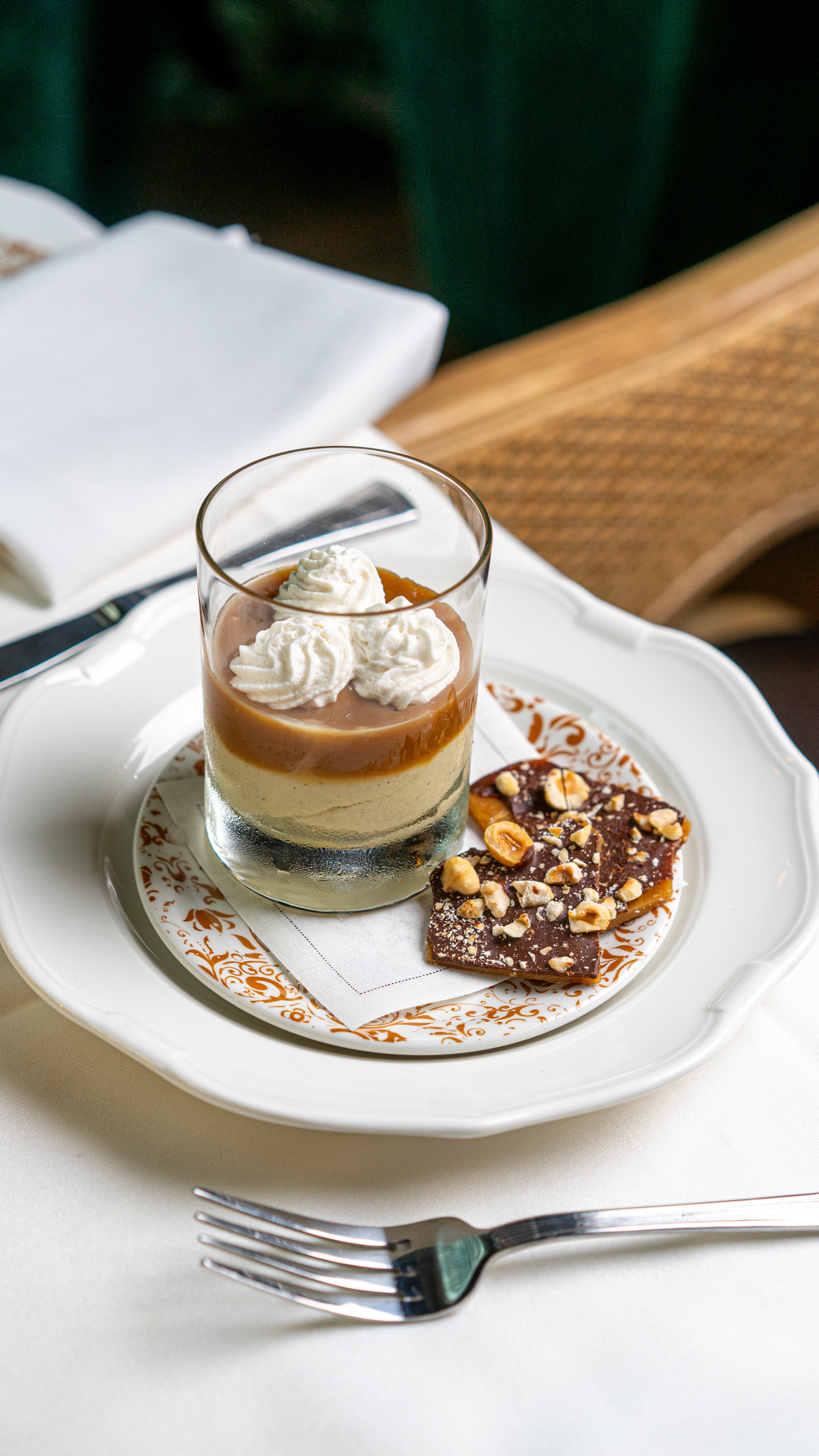
Butterscotch Budino at Campi Italian

Butterscotch Budino at Campi Italian

Butterscotch Budino at Campi Italian

Executive chef Greg Rubin of Campi Italian in Delray Beach, Florida could have easily opted for a ramekin or decorative ceramic dish. Instead, he chose a rocks glass for the restaurant’s butterscotch budino, a creamy Italian pudding, to “enhance the presentation and allow the diner to see its layers” of salted caramel and whipped cream.

“Presentation plays a huge role in how a dish is experienced,” says Rubin, who views it as a playful way of serving dessert while also adding visual intrigue. “Serving dessert in a cocktail glass transforms something simple into something sculptural… a moment of art that guests can really enjoy.” Not all desserts are made for cocktail glasses, though, Rubin cautions. “Presentation should never come at the expense of flavor. The key is balance: the glass should complement the dessert, not define it.”

Join the community
Badge
Join us for unlimited access to the very best of Fine Dining Lovers
Unlock all our articles
Badge
Continue reading and access all our exclusive stories by registering now.

Already a member? LOG IN