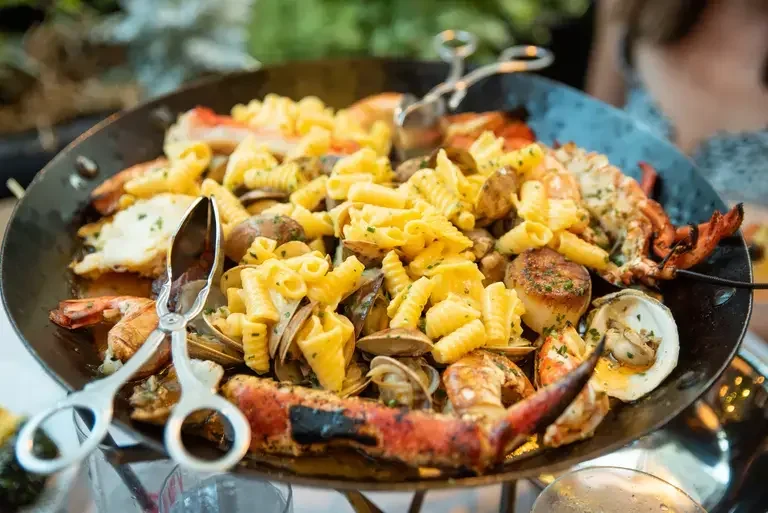

In the dimly lit, golden-hued dining room of Casa Dani in Los Angeles, a server carefully trims the edges from a vivid slice of tuna carpaccio glistening in Spanish olive oil. From the section of the menu dubbed “tuna, as served in Andalucía,” the porterhouse cut features three grades of fish, akami, chu-toro, and o-toro, each separated tableside, then twirled into bite-sized portions and arranged by quality.
If the plate had arrived finished, it would have been just another crudo-style dish among the many raw fish starters on restaurant menus. Instead, the tableside moment doubles as a culinary lesson spanning butchery, seafood quality, and the nuances of Spanish fishing culture. The process is both visually compelling and instructive, making it well suited for social media, where diners increasingly document and share these moments.
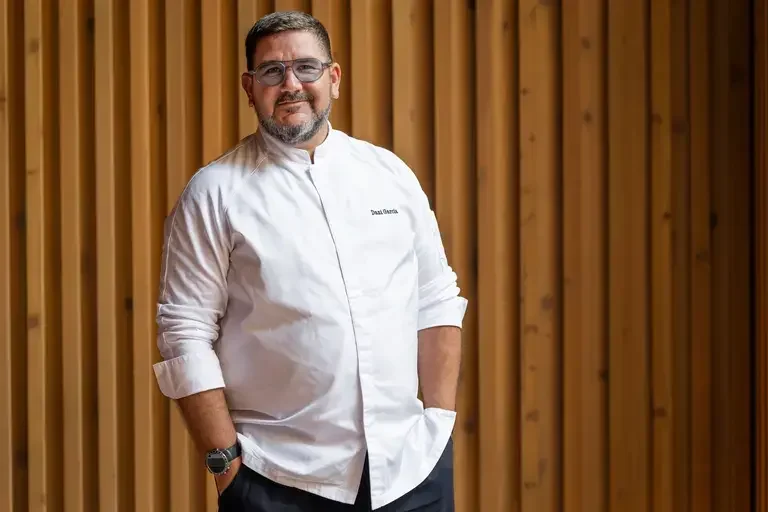
In the age of Instagram and TikTok, when a viral video can rival a rave review or a Michelin star, tableside dishes carry new weight. For many chefs, however, the appeal extends beyond spectacle. At Casa Dani, the tuna reflects a central ingredient in Chef Dani García’s personal story and embodies the quiet luxury of exceptional sourcing. The kitchen considers it a personal dish, making its tableside presentation a natural extension of that narrative.
“On the surface, it’s a restrained, minimal dish, but that’s exactly where the luxury comes from,” says Chef Luis Mayoral, Head of Culinary at sbe, the hospitality company partnered with the restaurant. “Finishing it tableside allows us to highlight the quality of the tuna and share why something so simple can also feel so special. It’s not about adding more, it’s about honoring what’s already there.”
The novelty of a tableside presentation can make an immediate impression, but the practice can wear thin if overused. It requires diners to pause conversation and can feel cumbersome when done purely for spectacle. “Tableside dining is a mixture of art and science,” says Brendan Scott, executive chef at Golden Steer Steakhouse in New York. “If too many dishes are tableside then the ritual loses its specialness. Diners can tire quickly and it becomes blasé, or even worse, a nuisance.”
One of the most classic tableside dishes, the Caesar salad, is a staple at Golden Steer Steakhouse, where Scott says the restaurant serves about 3,000 salads a month at its Las Vegas location. The dish works as a spectacle for a couple of reasons. Because it was originally improvised tableside in the 1920s, it remains a natural fit for an old-school steakhouse like Golden Steer. And as simple as it may be, diners at destination restaurants in cities like New York and Las Vegas often expect a sense of occasion.
Another essential part of a successful tableside dish is minimizing the potential for mistakes. “Dishes done tableside must be sturdy to minimize room for error,” Scott says. “For example, our Caesar salad uses two emulsifiers, eggs and mustard, making it difficult for the sauce to break.” A viral post of the restaurant’s tableside Caesar from last year highlights how one server has made more than 375,000 salads, underscoring the role of staff expertise.