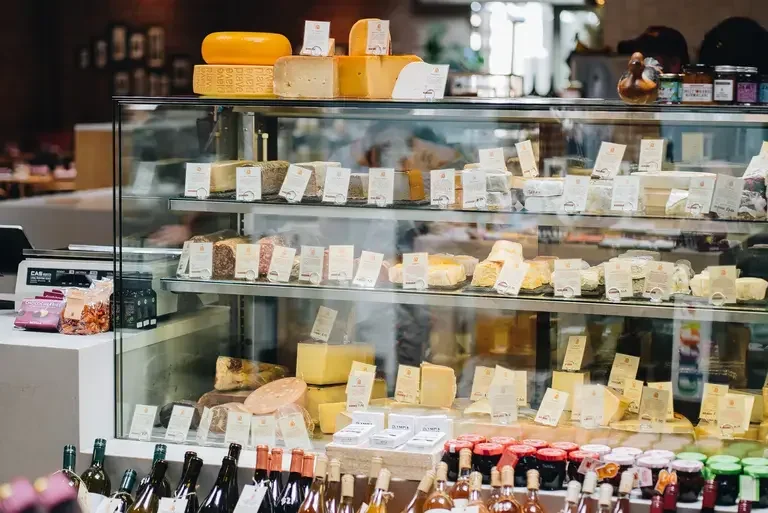
Temper the Cheese
The biggest mistake hosts can make is serving cheese at the wrong temperature. Tilaka advises removing cheese from the refrigerator at least 30 minutes, and up to an hour, before serving. The exact timing depends on the style of cheese. Soft cheeses, such as a gooey Brie or young Gouda, do not require as much time to come to room temperature as firmer cheeses, such as aged Cheddar or Pecorino.
Cut the Cheese
While a whole cheese wheel or block may seem like it adds visual appeal to a plate, it can overwhelm guests and overcomplicate the board. As Tilaka likes to say, “KISS: Keep it simple, silly!” Slice or crumble the cheese into bite-size pieces so guests can easily serve themselves.
Make It an Intentional Course
There isn’t a specific timeline you need to follow when serving cheese for dessert. Tilaka notes that in some countries, cheese is served one or two hours after dinner, but the most important thing is to read the room and the energy of your guests. “There needs to be a bit of a ‘cooling down’ period where guests have time to digest,” says Stoller. At home, he likes to serve cheese around the time guests start congregating on the couch. In a restaurant setting, the table should be cleared and reset with fresh plates, utensils, and glassware.
Offer a Variety of Cheeses
“I like a broad variety of cheese from medium intensity to high intensity. You need a flavor punch to end the meal,” says Stoller. He likes a funky Brebis, a fresh sheep’s milk cheese prized for its acidity, along with semi-soft washed-rind cheeses such as Mt Tam, Red Hawk, or Taleggio. He also likes semi-firm cheeses with some age, including Cheddar, Toma, and even the occasional Jack cheese, as well as artisanal Alpine cheeses. No matter what, though, Tilaka advocates for every dessert cheese platter to feature some type of blue cheese. “There are many different kinds and styles of blue cheese from mild and creamy to bold and robust; the right one paired with the right accompaniments will really take it to the next level.”
Offer a Variety of Accompaniments
A general rule of thumb is to balance sweet and savory flavors, says Tilaka. However, the accompaniments on your cheese platter should be tailored to the styles of cheese you’re serving. She suggests pairing honey with salty cheeses, chocolate with blue cheese, candied nuts or dried fruit with nutty cheeses, and tart preserves with creamy cheeses, all served alongside a crusty baguette.
Cheeses to Avoid
Stoller advises avoiding fresh, milky cheeses such as chèvre, ricotta, mozzarella, and burrata when serving cheese for dessert. “All of these cheeses are amazing, but they don't have enough depth and complexity to wind things down.”
Pair It Properly
A cheese course should be approached thoughtfully, including what you serve in the glass alongside it. The ideal pairing depends on the cheese, says Tilaka, who recommends dessert wines with blue cheese, ciders or ales with Cheddar and washed-rind cheeses, and sparkling wines with creamy cheeses. Stoller adds, “I think there's a lot of interesting pairings with spirits like calvados, peaty scotches, single malt bourbons that are often slept on.”