The Set Begins
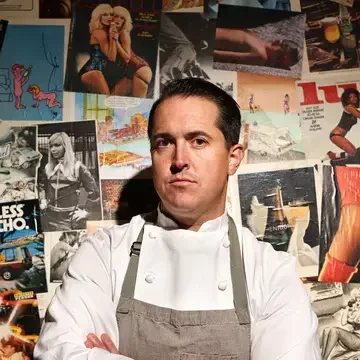
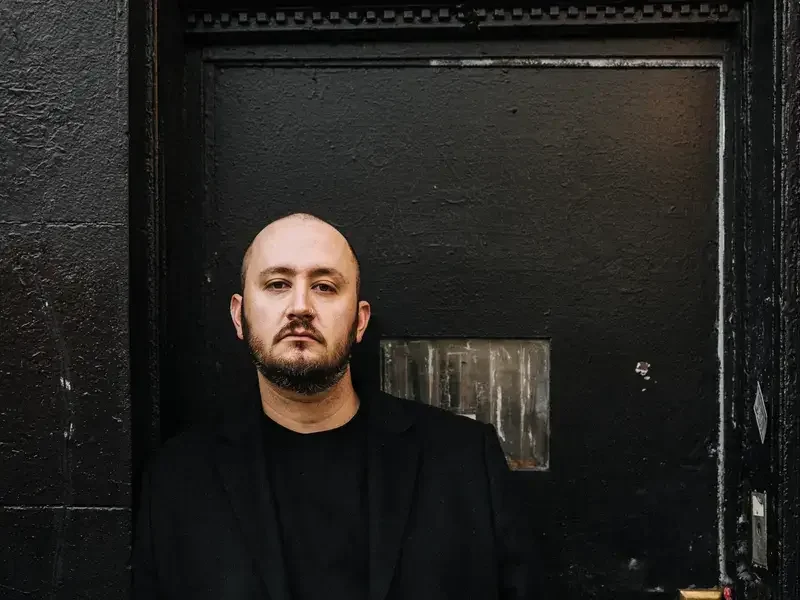
It is late afternoon at Corima on the Lower East Side. Five cooks move around the narrow kitchen with quiet rhythm, eyes up, hands fluent, bodies tuned to the heat and hiss. Pots rattle like percussion, knives find their tempo on the board, and someone behind Fidel Caballero adjusts a sauce without a word. He glances, nods, and the motion resolves into harmony.
Caballero calls it a jazz kitchen. “It’s almost identical,” he says. “You don’t have to really speak a lot in order to know what’s the next step.” With just five cooks, there is no space for noise or ego, only instinct and timing. “We’re kind of like a quartet,” he adds, laughing, “but we’re five in the kitchen.”
Each service plays like a set. They know the standards—the roux, the sear, the plating—but every night shifts with the room. Ingredients change, tempos bend, and what begins in controlled chaos settles into groove. Caballero likes it that way. He grew up on the border between Chihuahua and El Paso, surrounded by movement and mix, so improvisation feels natural. “It’s such a small team that everyone becomes an extension of you,” he says. “You depend on each member every day.”
From Punk to the Pass
Caballero grew up near the border, where El Paso and Juárez bleed into each other, and where punk bands, not restaurants, first gave him a sense of rhythm. “I was really into the punk scene,” he says. “Playing shows, going to shows—it kind of felt the same way. It had that, you know, they were kind of putting on a show, and I found that very cool.”
At sixteen, he took a bussing job at a local restaurant. “That was my first glimpse of it,” he says. “It was wild, but it was cool.” Kitchens in those days were rougher, louder, a little dangerous. “It was one of those kitchens,” he admits. “They were still smoking in the kitchen.”
In college, Caballero enrolled in industrial design, but the culinary school was across the street. “The only thing I could think of when I was in class was what they were doing across the hallway,” he says. “It was so frustrating to be trying to learn how to design on a computer when I just wanted to be cooking.”
He dropped out, started cooking, and never went back. “I took a sabbatical, I took a year out, and I was like, I’m just gonna cook,” he says. “I really wanted to see what I wanted to do. And then I never looked back.”
Cooking became the only design he needed. “I started cooking in local restaurants, and then fell in love with it,” he says. “And then a year, probably a year and a half later, I joined the culinary school.” After time in Shanghai and the Basque Country, he returned to the States. “New York kind of hugged me,” he says. “It’s one of those cities that either hugs you or spits you out. I got hugged.”