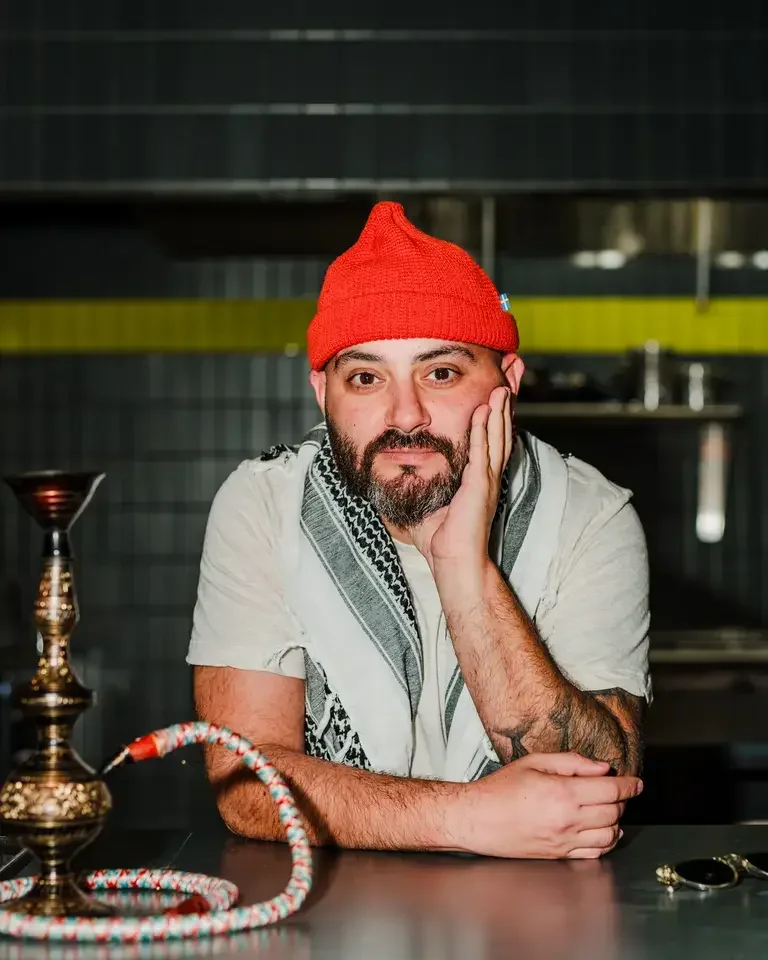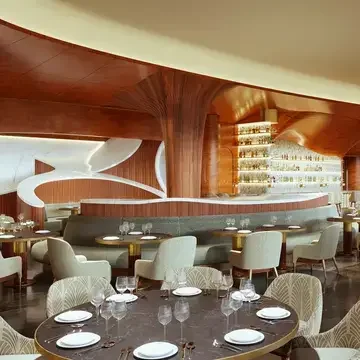
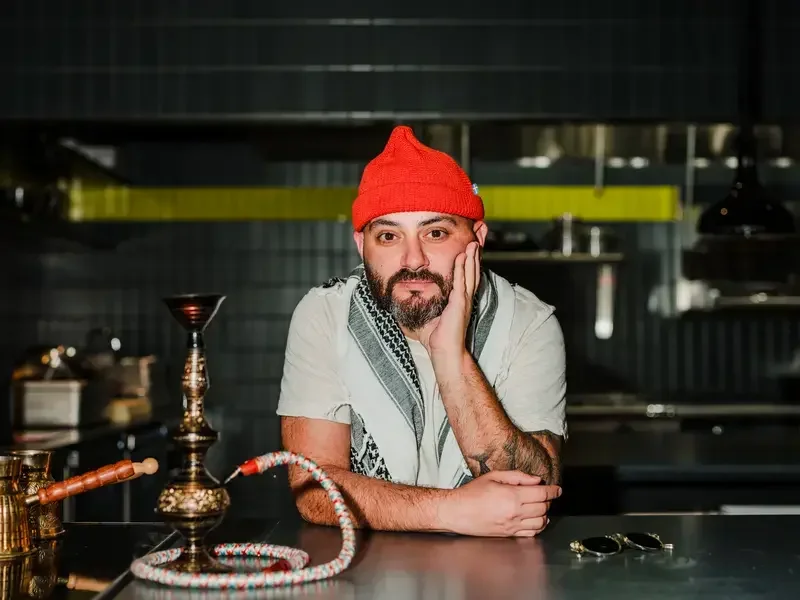
When Palestinian-rooted chef Michael Rafidi was dreaming of his modern Palestinian restaurant that would one day become Albi, his vision was anchored by a kitchen dominated by a live-fire hearth and wood-fired oven. Using the back of a cocktail napkin, he sketched out a rough plan for the setup, which turned out to be surprisingly close to this casual visualization.
The two primal-powered elements are the stars of Albi’s open kitchen, offering diners an uninhibited view of the culinary team in action as sparks fly, warmth wafts, and wisps of woodsmoke flit through the air like disappearing ghosts. The hearth is largely charcoal powered, some cherrywood added for flavor, while the oven achieves its high temps thanks to a steady diet of red and white oak.
This all creates an intoxicating scent, a head-spinning blend of smoke and spice. “You’re smelling charred cinnamons, different spices that are being cooked, kebabs over charcoal, pita coming out of the oven,” says Rafidi. “It’s very fragrant.”
There are challenges to such a setup. “In the beginning, the hearth was way too hot,” he admits.
In the five years since opening—during which time Albi earned a Michelin star and the top spot in Washingtonian’s 100 Very Best Restaurants 2025, and took home the James Beard Award for Outstanding Chef—the hearth has been reconfigured to accommodate new equipment to help deal with the searing heat, including custom-built kebab boxes crafted by Ben Eisendrath at Grillworks, whose best-in-show grills are used by José Andrés, Sean Brock, Dan Barber, and Tom Colicchio, as well as celebs including Matthew McConaughey and Damien Hirst.
The best way to experience the wonders of live fire cooking is to book one of the two hearth tables in the kitchen (each seating two or three guests), where diners are treated to an exclusive tasting menu as they get a front-row seat to the action and enjoy frequent interactions with the chefs.
Expect offerings to include dishes Rafidi learned to make from his Palestinian family, including sfeeha (open-faced meat pies), dawali (stuffed grape leaves), and knafeh (syrup-soaked dessert of cheese topped with crunchy pastry threads). He still leans on his grandmother for advice when dialing in a dish, as she continues to be a strong presence in his life. “She was over my house last two weeks ago, and she brought me her sfeeha,” he says. “She always brings me a little goodie bag. She loves mine, but it's very different than hers.”
That difference is the point. Though Rafidi borrows heavily from the past and appreciates tradition, he always aims to create food that is unmistakably his own and of this moment. For him, the hearth and oven are a bridge between the two worlds, an homage to time-honored techniques, but harnessed with a contemporary mindset and an eye to the future of Palestinian cuisine.