Sorry, you need to enable JavaScript to visit this website.
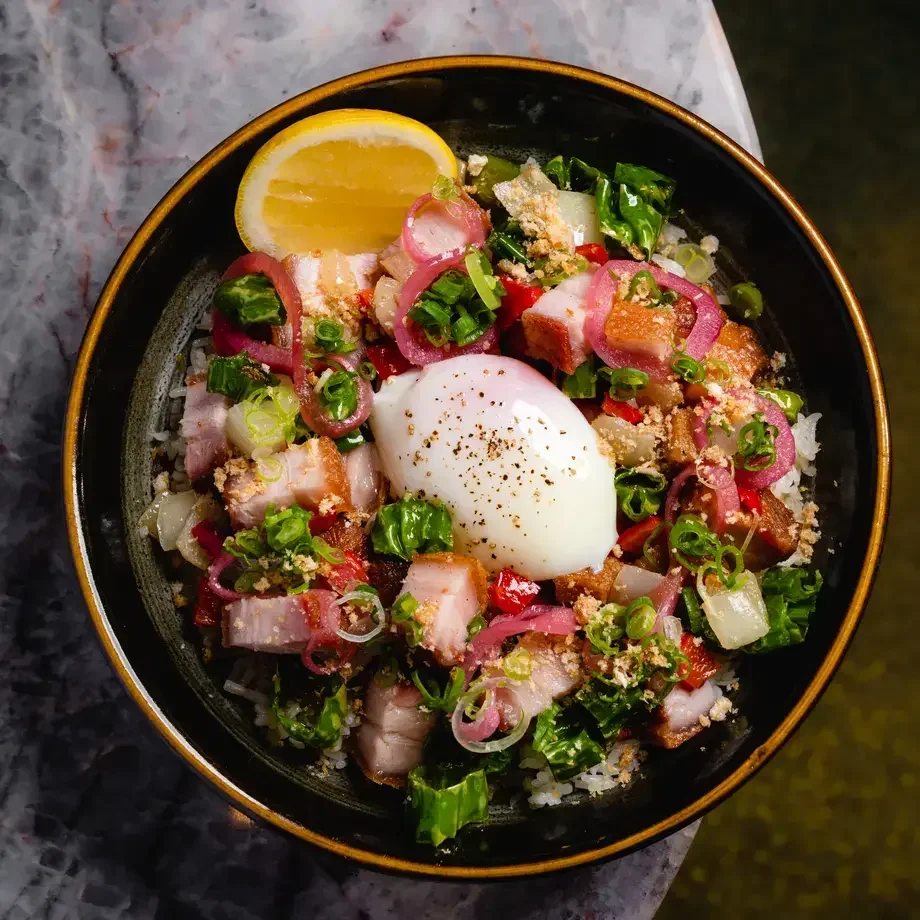
Sisig

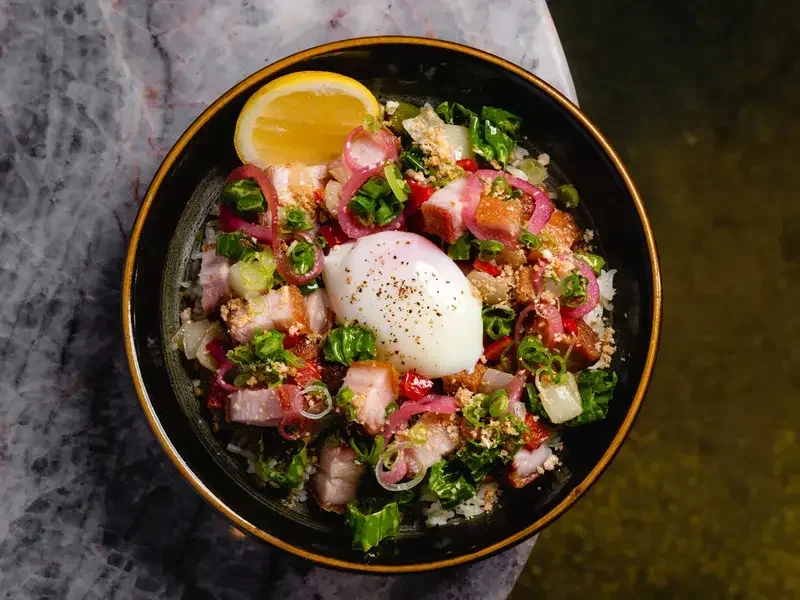
Tara Monsod's Sisig. Credit: Kimberly Motos

Filipino Fine Dining, on Its Own Terms

12 Minute read

From kamayan spirit to precise plating, a new generation shows Filipino food belongs at the top tier without shrinking its voice.

In some ways, Filipino fine dining can feel like an oxymoron. “When Filipinos get together, in general, we feast,” said chef Lordfer Lalicon. “Fine dining is like small, dainty bites that you always want more of.” At his Michelin Green Star restaurant Kaya in Orlando, Lalicon fuses both impulses with the idea that “feasting can also come from hospitality, from having a good time.” At Kaya, dinuguan—the often polarizing pork-blood stew that typically comes in heaping bowls—shows up as a tiny bite on puto slider buns.

In 2022, Chicago’s Kasama became the world’s first Michelin-starred Filipino restaurant—a daytime bakery-café that flips to a meticulous tasting menu at night. The signal was clear: Filipino food belongs in fine dining on its own terms. In Florida, Kaya’s Michelin Green Star pushed that conversation toward sustainability. Filipina chefs are also shaping what “high level” looks like beyond explicitly Filipino menus: Aisha Ibrahim, who led Seattle’s Canlis from 2021 to 2025 and earned Food & Wine Best New Chef (2023) and a spot on TIME100 Next (2024), threaded Filipino sensibility into a Pacific Northwest icon without branding it a “Filipino restaurant.”

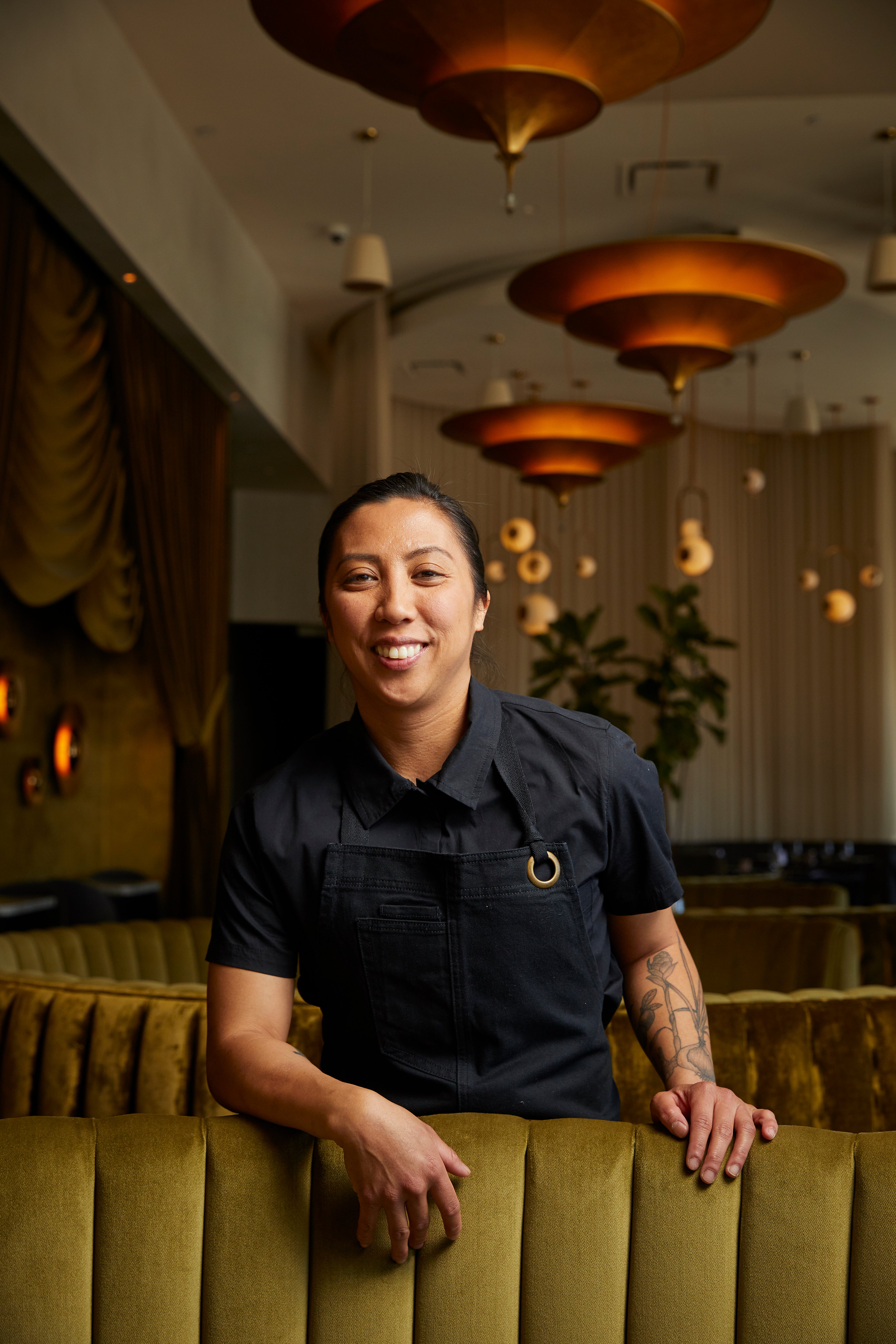
Aisha Ibrahim

Aisha Ibrahim. Credit: Canlis

Over a decade ago, the Filipino Food Movement surged on social media, and disparate enclaves across the U.S. banded together under a hashtag. First-generation Filipino chefs began presenting the flavors of their families and childhoods more straightforwardly. Kamayan dinners—eat-with-your-hands feasts where slabs of pork belly and hefty legs of chicken inasal are splayed over mountains of garlic rice—took hold in Philadelphia, where I live and where Filipino restaurants remain a minority. At chef Lou Boquila’s Perla, a BYOB named for his mother, kamayan is now served each night they’re open.

In the last few years, Filipino food in America has grown less traditional. In Philadelphia, I’ve had joyfully Philadelphianized versions of laing—at Tabachoy, broccoli rabe stands in for taro leaf in a “South Philly laing,” served in a small dish like much of the menu, carefully plated and composed. At the recently opened Baby’s Kusina, fishy funk gives way to umami depth via a house bagoong made from mushrooms. Contemporary fine dining in those “small, dainty bites” exists, too, at New York City’s Tadhana by chef Frances Tariga, a contemporary multi-course tasting menu—though such formats remain in the minority.

This next wave also raises a question: where are the U.S. restaurants devoted to specific regions—say, Visayan or Ilocano cuisine?

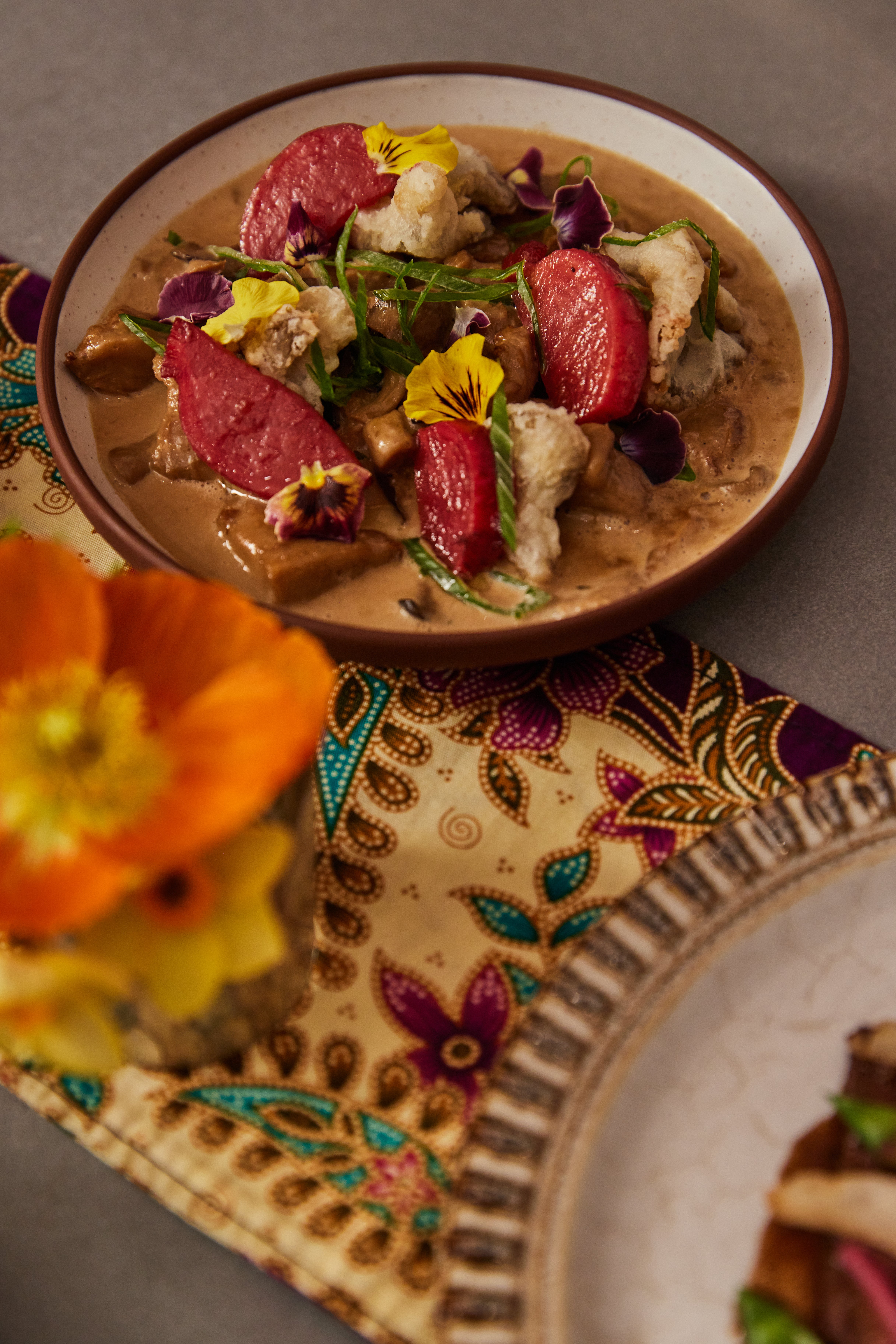
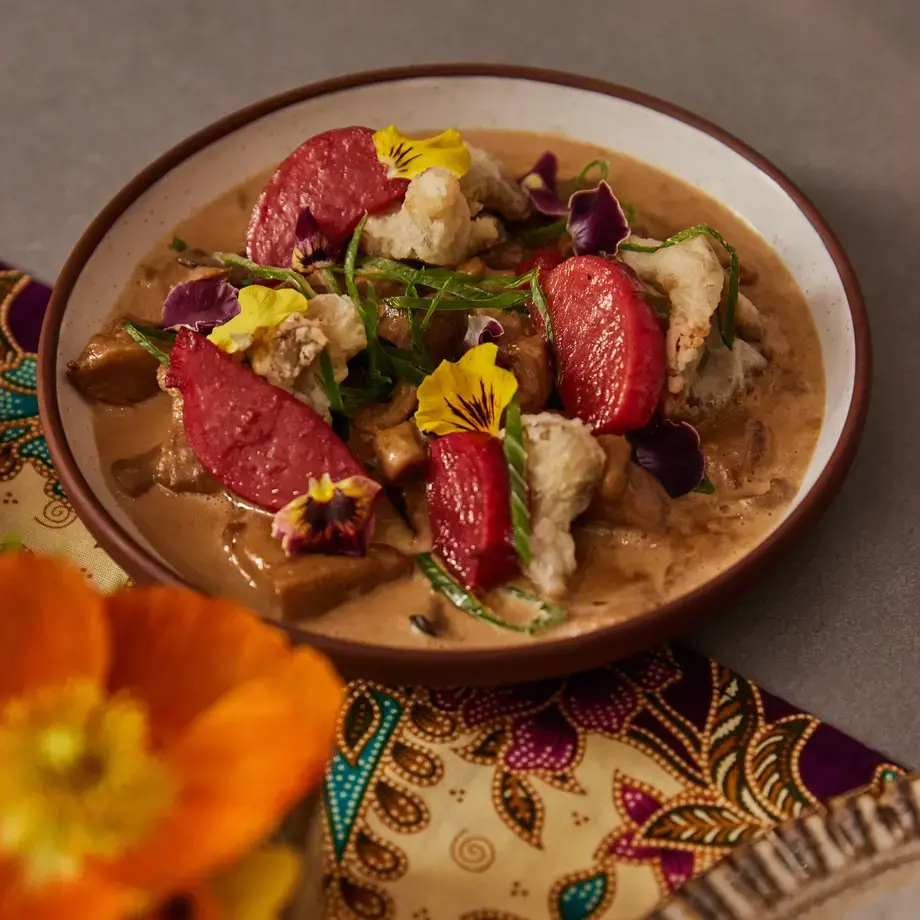
Lordfer Lalicon's Mushroom Adobo

Lordfer Lalicon's Mushroom Adobo. Credit: Blake Jones

Making It Local, Making Friends Through Lumpia

On Kaya’s property, co-owners Lordfer Lalicon and Jamilyn Bailey nurture guava, calamansi, lemongrass, figs, and more—plants both familiar and unfamiliar to Filipino palates. Working with vegetables wherever he is in the U.S. has sparked Lalicon’s creativity and, he says, “shows the flexibility of Filipino food, which can be made anywhere with anything from ramps to broccoli rabe. We don’t have to use solely Filipino vegetables. Filipinos are all over the world. So is Filipino food.”

Filipino food often embraces bitter and sour notes, which Lalicon finds in unexpected ways in Florida—for instance, by blending starfruit with vinegar (“It’s a very Filipino thing to eat fruit with salt and vinegar”) and making tartar sauce with tamarind. “We’re colonizing the colonizers through that tartare sauce,” he said. He’s exercising fermentation techniques that are de rigueur in any fine-dining kitchen. But Kaya still meets guests partway, using tried-and-true tactics—bribery through lumpia.

“Our parents taught us to make friends using lumpia. That’s how they built their community—bringing lumpia to, say, their doctors. And in their honor we offer lumpia. It’s like a gateway drug,” said Bailey.

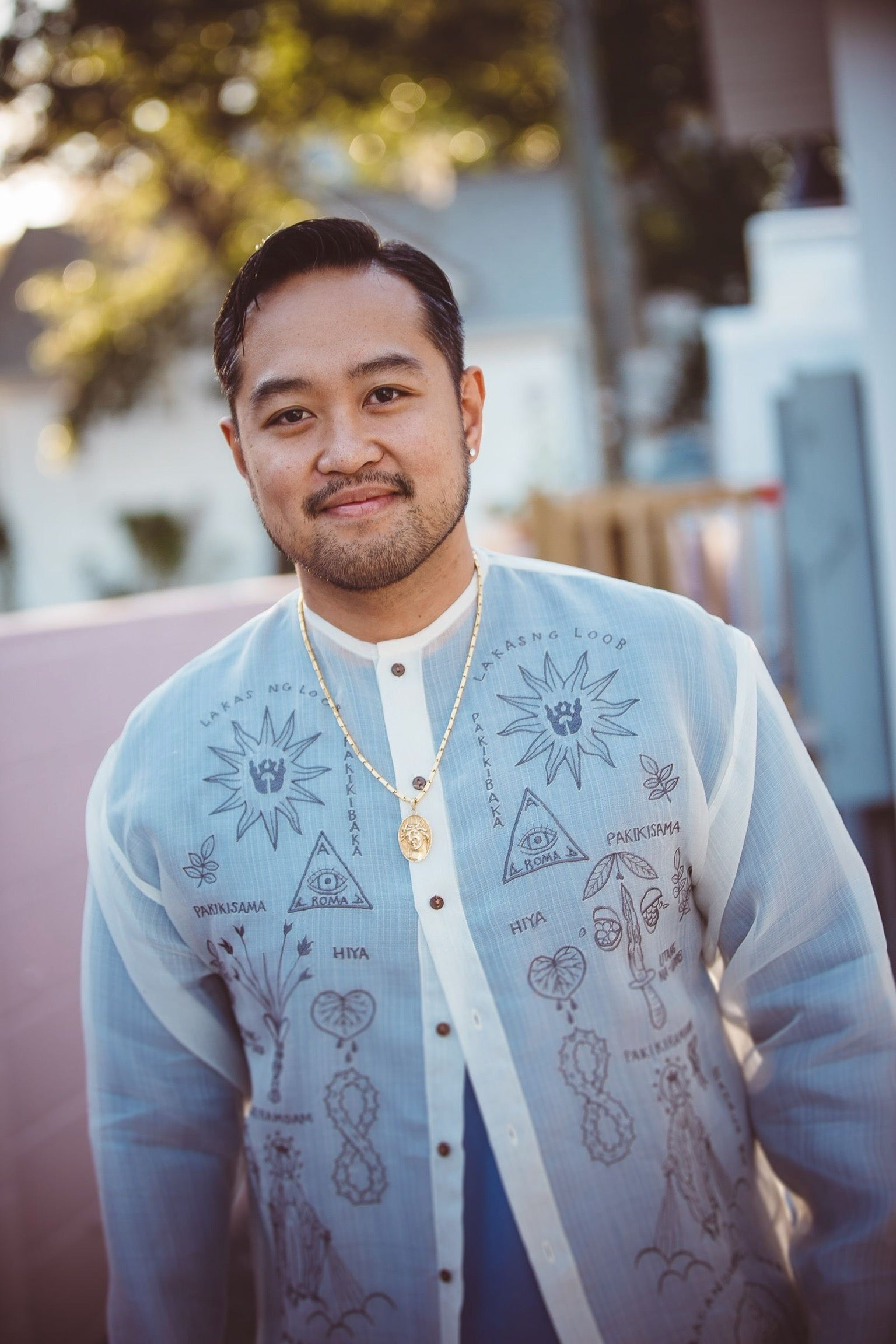
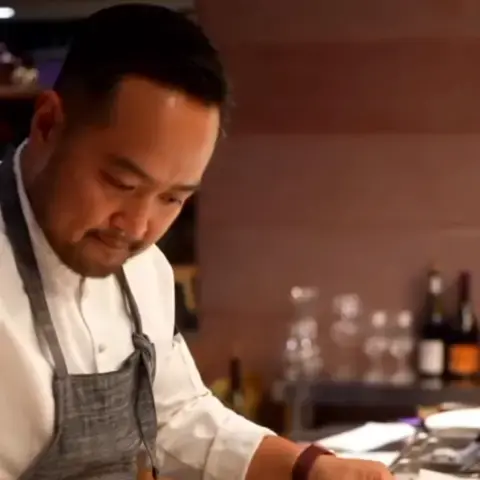
Chef Lordfer Lalicon

Chef Lordfer Lalicon. Credit: Michael Mitra

Where Are We At?

“How we ended up in fine-dining Filipino is because we looked around our community and thought, what’s missing? How else can we represent Filipino food? There are mom-and-pop restaurants and home-cooking–style spots geared toward Filipino immigrant communities. We have turo-turo, where you ‘point, point’ and pick what you want,” said Bailey.

“Right now, we’re working on awareness when it comes to Filipino food—getting people to the point of seeing Filipino food the same way they see Japanese food,” said Lalicon. A lot of work remains to get there. Lalicon and Monsod both described selecting elements from different Filipino regional cuisines and filtering them through their American experiences.

That also means the new wave of Filipino fine dining often isn’t tethered to a single regional tradition. We don’t yet have widespread Filipino equivalents of udon or ramen shops—or sushi bars—focused on one dish or technique.

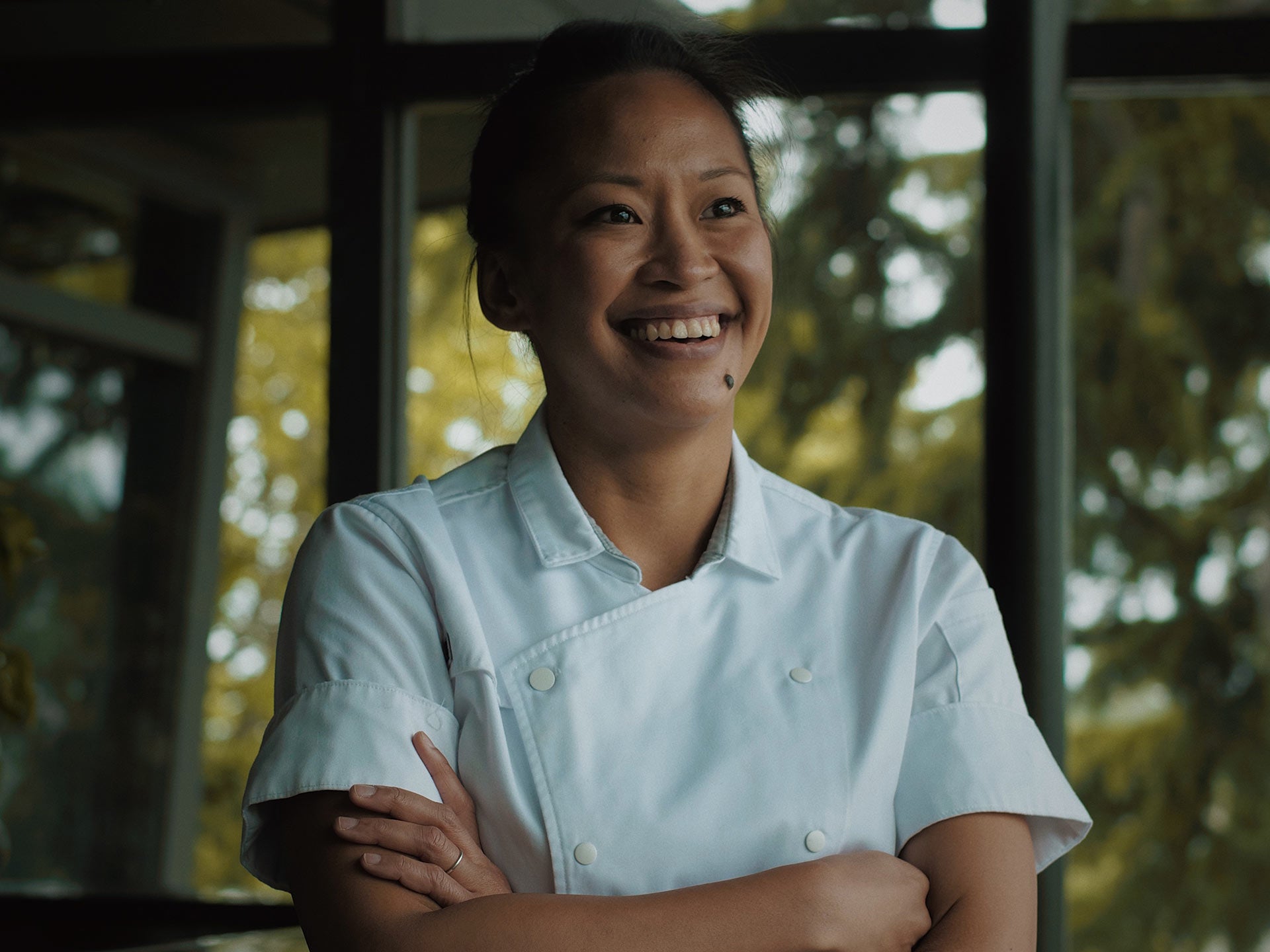
“I see a lot of other people doing brunch takes on Filipino foods,” said Tara Monsod, the executive chef of ANIMAE and Le Coq in San Diego—the former a pan-Asian steakhouse with Filipino accents; the latter a French steakhouse with nods to Asia. “They’re doing the food they want to do and having fun. There are no guidelines and rules. It’s much more open than how it was before.”

“I see a lot of other people doing brunch takes on Filipino foods,” said Tara Monsod, the executive chef of ANIMAE and Le Coq in San Diego—the former a pan-Asian steakhouse with Filipino accents; the latter a French steakhouse with nods to Asia. “They’re doing the food they want to do and having fun. There are no guidelines and rules. It’s much more open than how it was before.”

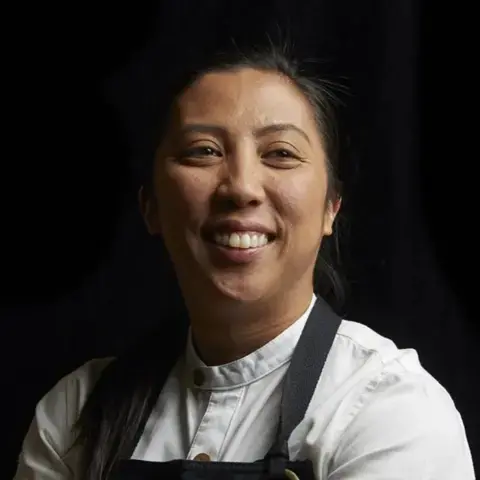
Tara Monsod

Tara Monsod. Credit: Matt Furman

Keeping Up with the Philippines

Fil-Am chefs are also trying to keep pace with how cuisine is evolving in the Philippines. “The crossover or gap in between Filipino American and Filipino is starting to lessen,” said Monsod. She points to Manila, where Wildflour Café + Bakery—co-founded by République co-owner Margarita Manzke and her sister Ana Lorenzana de Ocampo—now has multiple locations.

Cosmopolitan Manila is an extraordinary place to eat and to learn to cook, and—as with any diasporic cuisine—its evolution can surprise those who left long ago. “In terms of the trajectory of Filipino food in America, it’s about creating more avenues for different types of folks to explore and enjoy it. To see it as bigger and not smaller. This is a challenge for immigrant communities like ours, where our parents moved here in the 1970s and didn’t go back to the Philippines for a very long time,” said Bailey.

“We have aunties who come in and say, ‘Oh, this isn’t really Filipino.’ And then I’ll ask, ‘When’s the last time you were in the Philippines?’ Because Filipino food in the Philippines continues to evolve. And a lot of our food at Kaya looks similar to what you see in Makati,” said Bailey.

“If I have a hamburger, I don’t expect it to taste the same everywhere I go. But for some reason, everyone wants chicken adobo that tastes just like their mom’s. Us being on this stage and having the space to share Filipino food is to tell the story of how Filipino food can be just as diverse as other cuisines,” said Bailey.

“It starts with getting people to the table, making them comfortable, then making them see Filipino food in a different way,” said Lalicon.

Where Do We Go from Here?

“There’s so much more to our food than lumpia,” said Monsod. “I think we, as a [wider Asian] community, assimilated a lot in the 1980s. For instance, you could have a Lao restaurant, but still serve Thai curry in order to be approachable. We’re now exploring our own selves, our own cultures, and putting that on the plate.”

With the Philippines’ unique position as a country whose primary export is its labor, it’s tempting to see the global diaspora as an unofficial “18th region” of the Philippines—stretching wherever Filipinos have landed. In Filipino American chefs’ search to honor their roots, they’re developing a hybrid cuisine—often lighter and more seasonal in ways that suit their surroundings. In San Diego and Orlando, for example, chefs Tara Monsod and Lordfer Lalicon are finding those roots far from their ancestral homes.

They’re also departing from the notion that Filipino food must use exclusively Filipino ingredients—whether certain vegetables or pantry staples like Jufran banana ketchup or bagoong. “We have the opportunity now to make our own versions of those. Will it hit the same? Maybe not. But take something that you wouldn’t normally mess with, and make it your own,” said Monsod. “The fun part of being a chef is making something just as good, if not better.”

More and more Filipino American chefs aren’t dependent on imports because they’re making their own mother sauces. And yes, they taste different from what many grew up with. They may even be better.

Join the community
Badge
Join us for unlimited access to the very best of Fine Dining Lovers
Unlock all our articles
Badge
Continue reading and access all our exclusive stories by registering now.

Already a member? LOG IN