For years, I politely declined airplane food because my culinary idols did the same. “No one has ever felt better after eating plane food,” Anthony Bourdain told Bon Appétit in 2016. “I don't eat on planes. I like to arrive hungry.”
“I need to watch my weight, and planes are a good place to diet,” Wolfgang Puck told Condé Nast Traveler in 2014. Most people, he added, “eat just to pass the time on a plane.”
But airplane food has come a long way. As a frequent flier, I’ve graduated from skipping meal service to sampling the latest location-inspired menus and chef-curated dishes, and I’ve realized that sometimes, particularly in a premium cabin, it’s worth noshing in the sky. The more I’ve tasted, the more curious I’ve become about the process of building an in-flight menu and what it really means when an acclaimed chef’s name appears on it.
Chef and Restaurant Partnerships
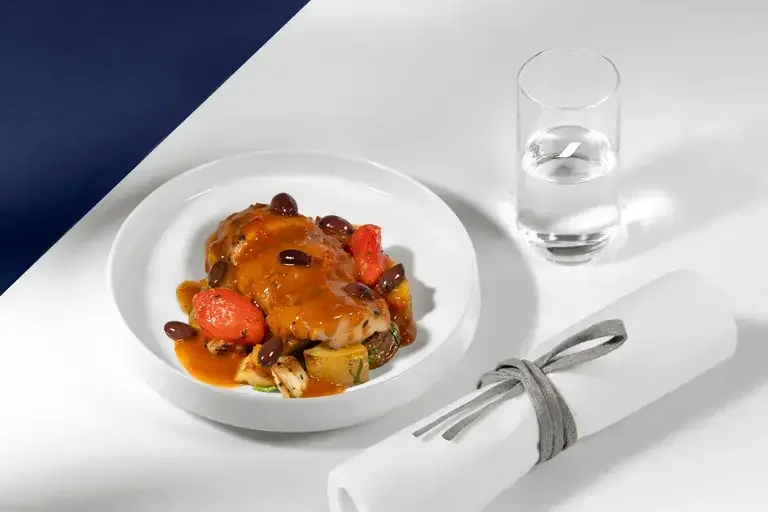
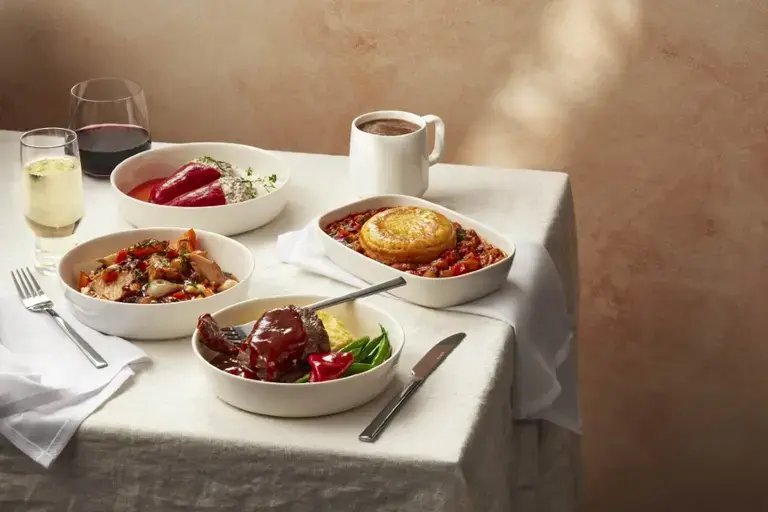
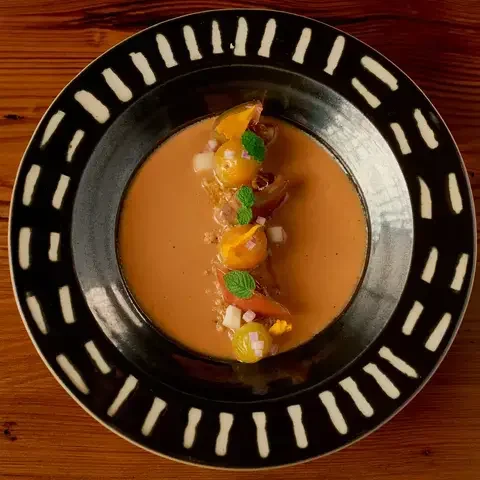
Airlines have long relied on large-scale catering operations, but partnerships with prominent chefs have become an increasingly visible part of in-flight dining. At the start of this year, Delta Air Lines announced a new partnership with chef José Andrés that is rolling out through the rest of 2026 in Delta One and Delta First cabins. The menus focus on the Spanish flavors Andrés grew up with, featuring dishes such as Spanish tortilla with pisto Manchego, stuffed piquillo peppers, and braised beef short rib with Mojo Rojo barbecue sauce. “We work side by side with the chef and their culinary teams to adapt recipes for the in-flight environment,” says Rod Eggleston, director of onboard dining experience at Delta. “Translating a dish from a restaurant kitchen to 30,000 feet is a unique process… That includes evaluating how ingredients behave at altitude, how flavors evolve in a pressurized cabin, and how dishes hold up through chilling, reheating, and plating,” adds Eggleston. The culinary team pays particular attention to seasoning and texture to ensure the ingredients maintain their integrity throughout onboard service. “The goal isn’t to replicate a restaurant dish exactly as it appears on the ground, but to capture the spirit, flavor, and creativity of the chef in a way that works beautifully in the air,” says Eggleston.
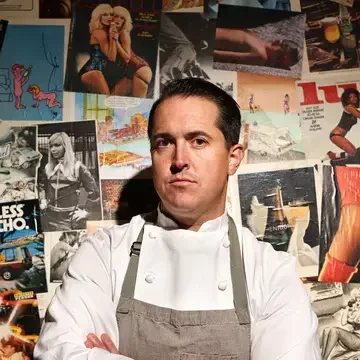
On Air France, chef Daniel Boulud designs menus for the Business and La Première cabins on flights departing from the United States. The Michelin-starred chef worked closely with Air France’s culinary team in Paris to ensure each meal expressed what he calls “French soul” while offering enough variety for repeat travelers. “We wanted a seasonal menu that would allow guests to enjoy different recipes throughout the year, especially if they are frequent fliers,” says Boulud, who ultimately signs off on every dish served from a menu bearing his name. That approach extends beyond Boulud’s menus: On all flights departing from Paris, Air France sources its meat, poultry, dairy products, and eggs from France.
In March, United Airlines announced a partnership with Chef’s Table to create exclusive menus for its United Polaris international business class cabin. The airline worked with 11 acclaimed chefs across four continents, including Nancy Silverton of Osteria Mozza in Los Angeles, Manu Buffara of Manu in Curitiba, Tomos Parry of Mountain and Brat in London, and Tashi Gyamtso of Jimgu at Enowa in Yufuin, Japan. Their regionally inspired menus, each connected to one of United’s U.S. hubs or key international gateways, debut August 1.
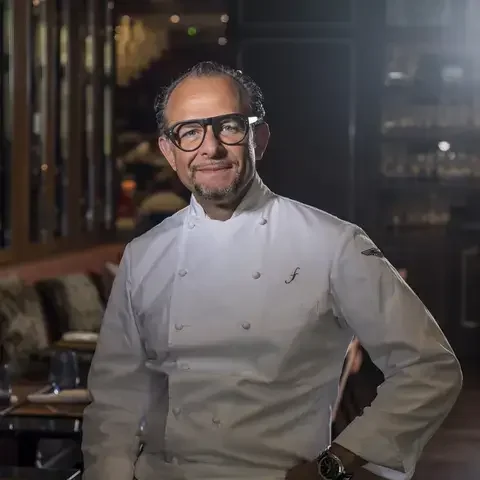
Hong Kong-based carrier Cathay Pacific taps into the city’s network of Michelin-starred restaurants to create its onboard menus. Duddell’s serves Cantonese dishes and Louise French cuisine in First and Business, while Yat Tung Heen offers Cantonese menus in Premium Economy and Economy. “Our culinary team works closely with partner chefs to understand the essence of each dish, its intent, technique, and flavor profile, before adapting it for the in-flight environment,” says Verena Hui, Cathay Pacific customer experience manager, dining and hospitality. The process includes tastings, trials, and hands-on training sessions at the restaurants and catering facility.
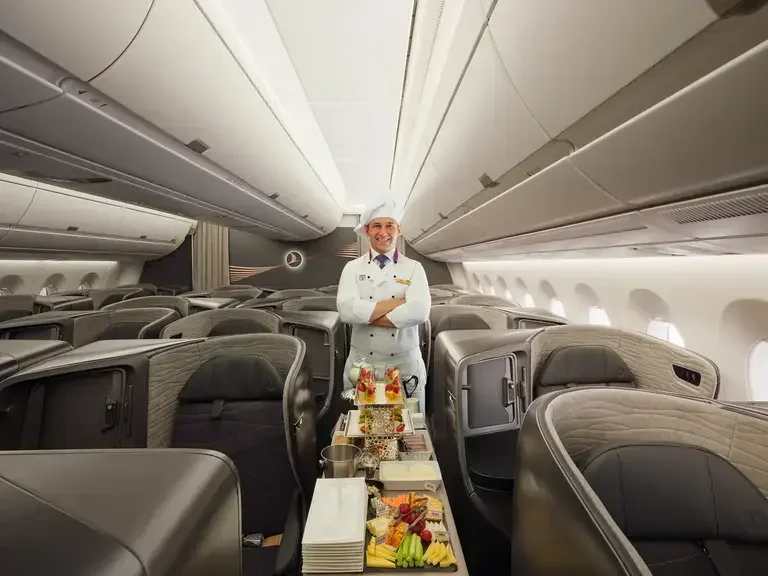
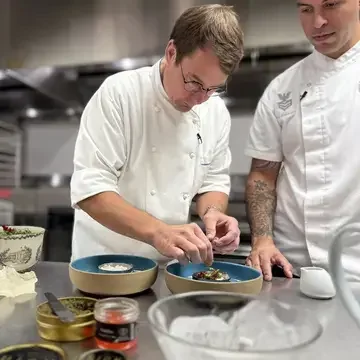
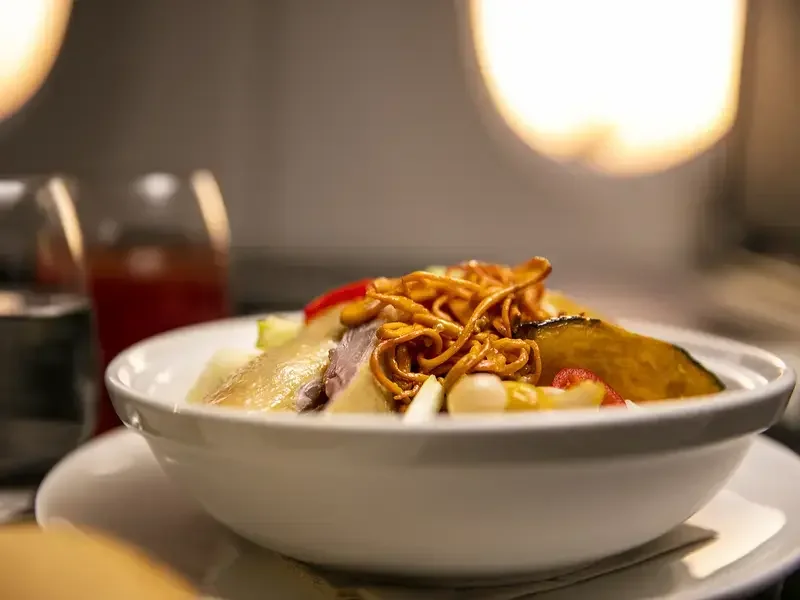
Golden Door, a 40-room wellness retreat in San Marcos, California, has attracted high-profile guests including Oprah Winfrey and Madonna. It has partnered with Singapore Airlines since 2021 to develop menus designed for long-haul travel. Golden Door executive chef Greg Frey Jr. creates dishes intended to support passengers’ well-being in flight, addressing issues from jet lag to bloating. The process is collaborative, says James Boyd, spokesman for Singapore Airlines. The airline’s corporate and catering chefs train with Frey, then spend three months learning to reproduce the dishes at scale. “Fast forward three months, and chef Frey visits their kitchen to sign off on them,” says Boyd. Each approved dish is then photographed for a plating guide that cabin crews consult during service. “We have over 7,000 cabin crew members, and the menu can change as frequently as monthly, so it’s impossible to train every member; the plating becomes critical to translate a dish from a restaurant-quality [one] to in-flight dining.”
The investment extends beyond food. For its 2026 Delta One wine program, Delta worked with Master Sommelier Andrea Robinson to evaluate hundreds of wines for a list emphasizing Italy, France, and Napa Valley. Air France entrusts the selection of wines and Champagnes served across its cabins to sommelier Xavier Thuizat. Singapore Airlines goes further with a First Class Champagne Cellar featuring rotating grower Champagnes and prestige cuvées alongside Krug Grande Cuvée and Taittinger Comtes de Champagne. These programs treat wine not as a generic cabin amenity but as part of the airline’s culinary identity.