Milk Matters: A Quick Guide to Milk Types
Different milk types create completely different flavor profiles—and Tilaka likes to mix them up on every board.
- Cow’s milk: “Sweet, like sweet cream,” and approachable.
- Goat’s milk: “Tangy, a little bit chalky, minerally... because it has less fat.”
- Sheep’s milk: “The most fat... nice and nutty and creamy.”
- Water buffalo: “Very creamy and rich, but more sweet—similar to a cow’s milk.”
Even if you’re working with just one cheese, she notes, “if it has a mixture of those milk types, then it’ll lend a different flavor and texture to the board.”
Cut, Temperature, and Presentation
Even the best cheese can fall flat if it’s too cold, too warm, or cut the wrong way. According to Tilaka, these seemingly small details are often the most overlooked—and the most important.
Start with temperature. “I always temper cheese at least 30 minutes before I’m going to serve it or eat it myself,” she says. Straight from the fridge, “you can’t really taste anything—it hasn’t opened up yet.” Too warm, and the texture breaks down, or the flavor overripens. “Eat it within two hours” of removing from the fridge, she advises, adding that these guidelines apply to typical indoor room temps—not a July picnic.
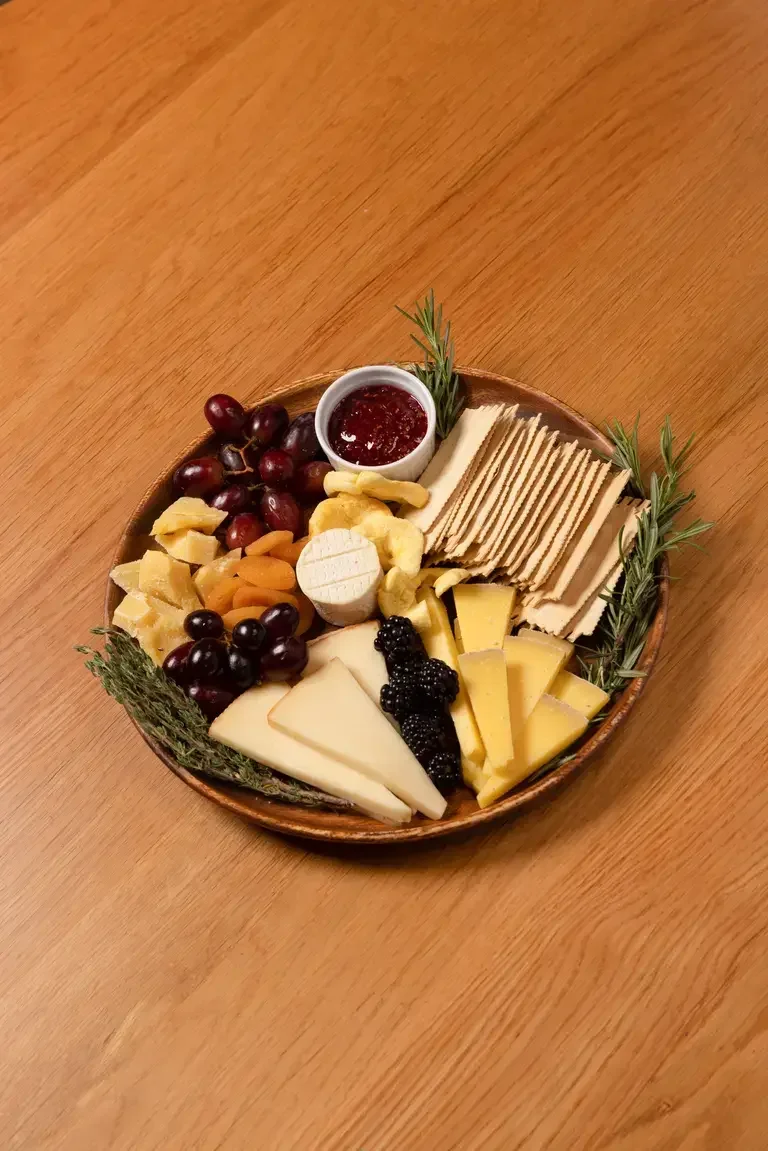
Then there’s the cut. Tilaka gets surprisingly animated on this point: the shape of each slice matters. A soft, round cheese? “You always cut it like a pie,” she says. “You want to cut triangles so you have equal paste-rind ratio. You don’t want to cut a piece that’s all rind... that’s just a sad piece.”
The rind, she adds, also acts as a natural handle—something to hold while tasting. “If you’re hacking at the cheese from different angles, then you’re not tasting it properly.”
For wedges, her rule is the same: start from the nose and cut across the wedge to preserve that rind-to-paste ratio. And while some rinds are edible, others aren’t. “It’s honestly a textural preference,” she says. “If it’s waxed, like Manchego or Bucherondin, I cut that away. But something like an Alpine—yeah, I’ll eat the rind. It tastes like peanut shells.”
As for presentation? Forget the chalkboard trend. “It doesn’t really matter what it goes on,” she says. “A plate, a wooden board, slate… whatever you have.” Slate, she notes, holds temperature better and isn’t porous, making it ideal for soft cheeses. But the point is accessibility, not perfection. “If you have the vessel and the accompaniments, it doesn’t really matter.”
Styling & Seasonality
For Tilaka, the beauty of a cheese board isn’t just in how it tastes—it’s in how it looks, and when it’s made.
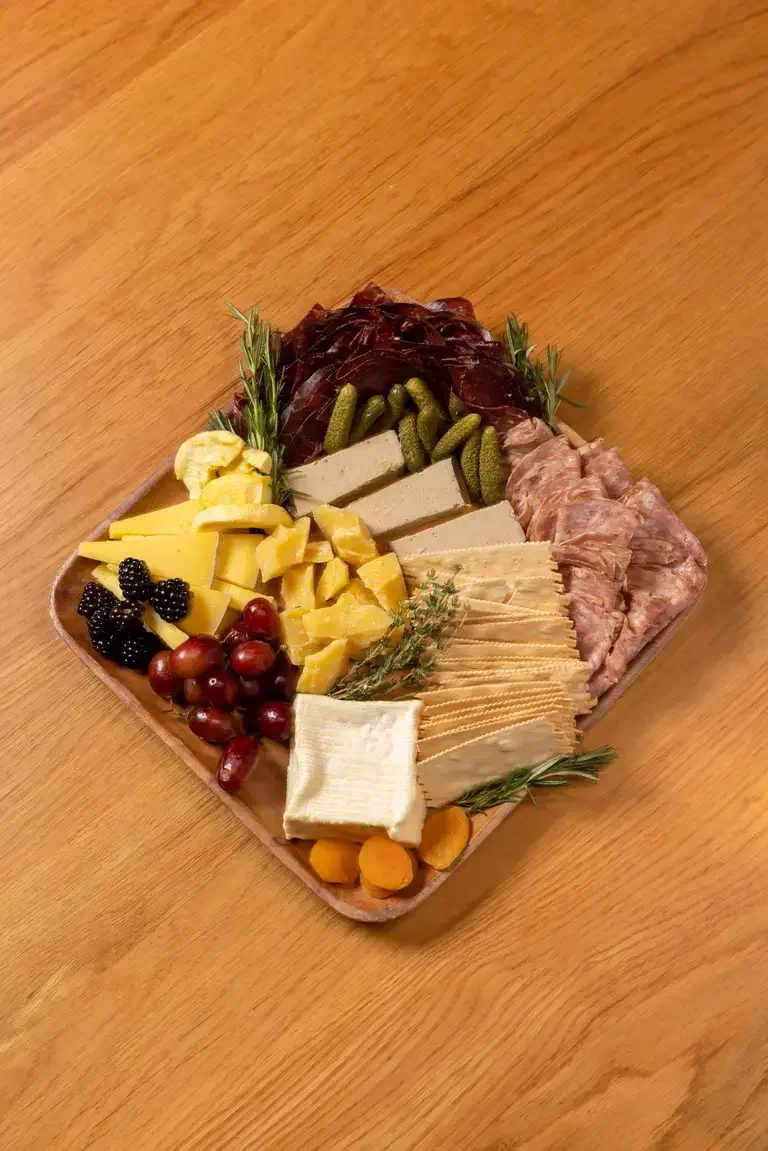
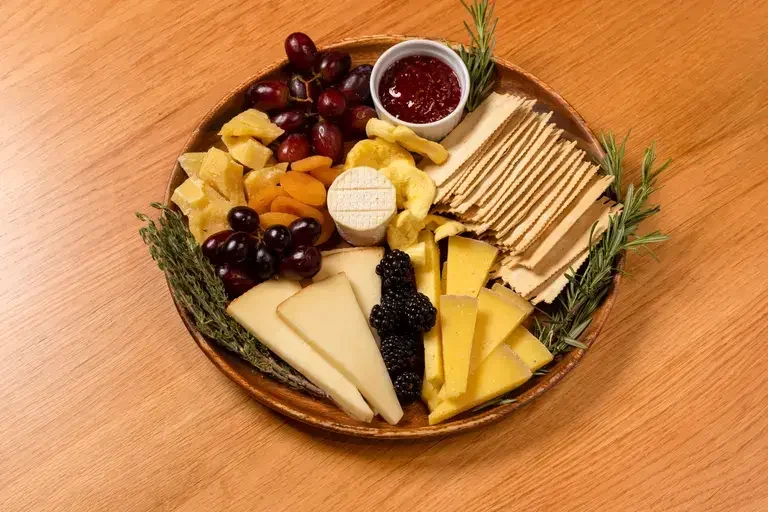
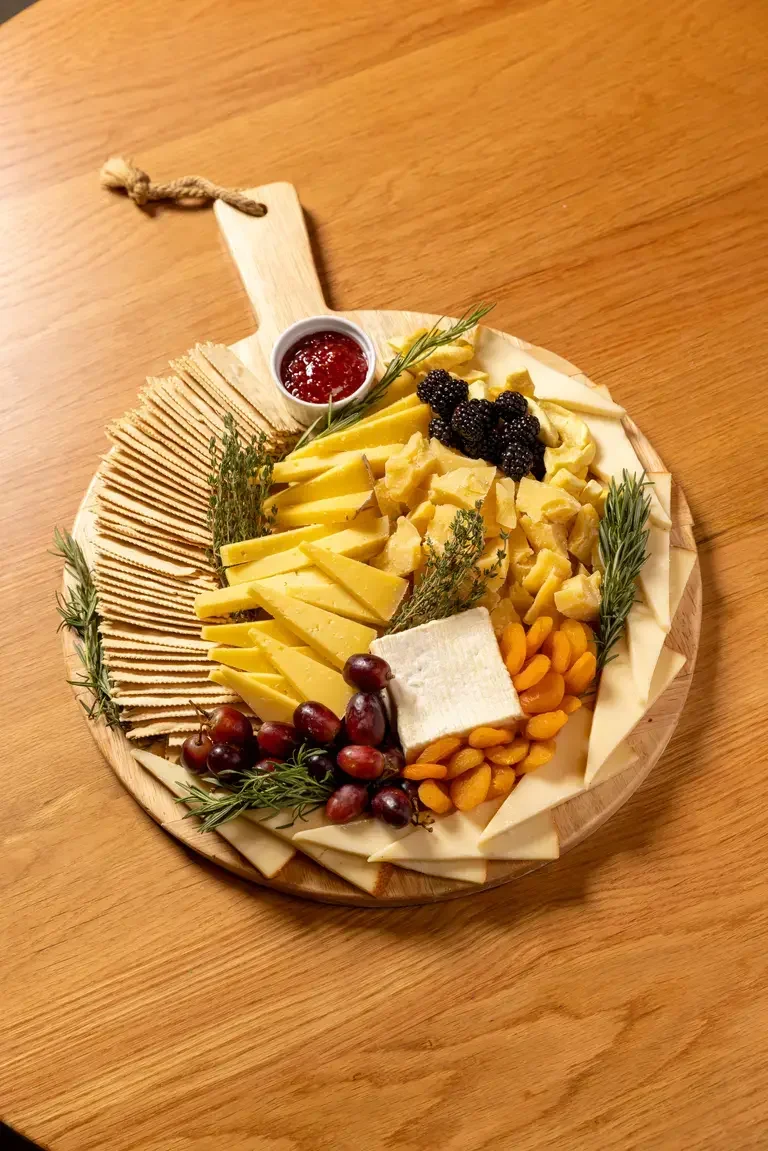
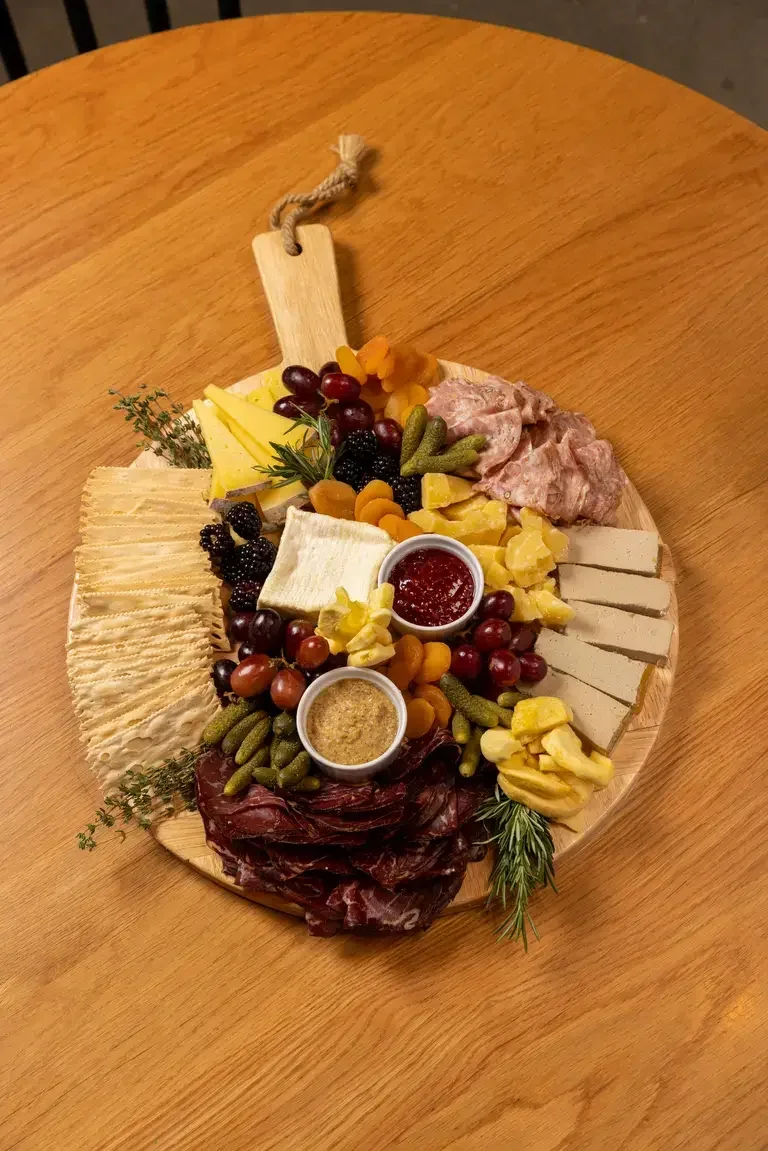
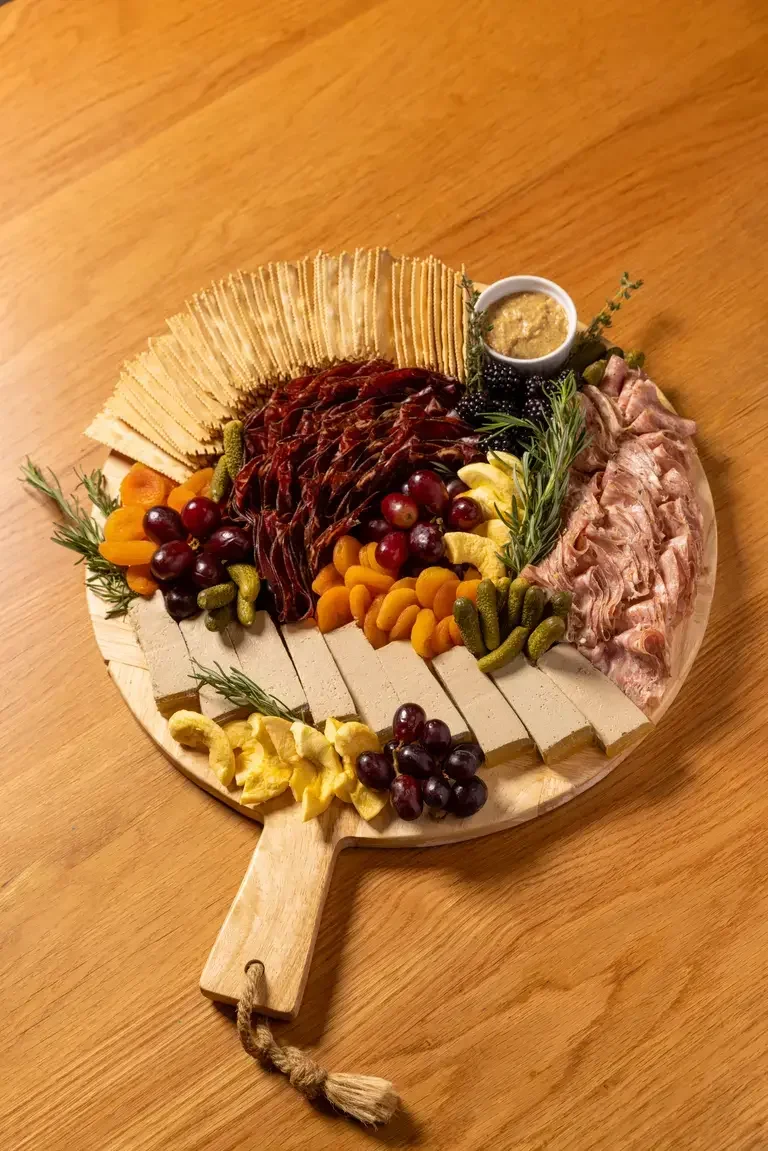
Start with structure. “Something my mentor always told me was jaunty angles and rivers,” she says. The trick is to build a board the way a painter might approach a canvas. “If you’re almost painting a picture, you start with what’s stationary, and then build around that—a river of salami, different angles of hard cheese, a round soft cheese.” She’ll also cut fruits into various shapes and sizes to avoid monotony. The goal: height, contrast, and visual rhythm.
But a cheese board isn’t a one-size-fits-all aesthetic. “If you don’t know what you’re doing and you just put stuff on the board, it may look a little disheveled or flat,” she says. “You want height and angles.”
Seasonality also plays a major role, especially when you’re working with artisan cheeses. “Cows are milked maybe 300 days out of the year. Sheep and goat are much less than that—and they only milk when they’re about to produce an offspring,” Tilaka explains. This impacts not only the availability of milk, but also its character.
“Grass only grows at specific times of the year, and the rest of the time, they’re eating hay,” she says. That affects everything: texture, color, fat content. “Cheesemakers may yield more or less depending on the season.”
Some producers even market their cheeses seasonally. “There’s a very well-known cheese called Beaufort from France,” Tilaka says. “They have a summer one and a winter one... and one is more expensive than the other.”
Breaking the Blue Barrier
Blue cheese has a reputation—a polarizing one. And Tilaka gets it.
“They see the blue and they get freaked out,” she says. “I get it. That used to be me.”
When guests tell her they don’t like blue cheese, she doesn’t dismiss it—she gets curious. “I ask them what it is that they don't like about it, and generally... it means they’ve tasted the wrong blue.” Her approach is incremental. “I'll start off with a mild blue and see how they go from there.”
Tilaka carries a range of blues—some bold, some barely funky—to meet people where they are. The goal is to gently guide them up the intensity spectrum. “Just asking questions, drawing information out of them: What did you not like? What did you like? And then go from there.”
It’s not just about flavor—it's about overcoming fear. And often, she finds, all it takes is one gentle nudge. “I like brie,” some guests tell her, “but I want something with a little more.” That’s her cue.
One Fancy Splurge
If you’re ready to level up your cheese board—and maybe impress a few guests along the way—Tilaka has one showstopper in mind: Maison Truffe’s truffle Brie.
“It’s pre-order only in America,” she says. “So anybody who can get it has probably pre-ordered a lot, or they only get it closer to the holidays because it’s such a luxury.”
The cheese starts as a hefty two-kilogram wheel of Brie, which is sliced in half horizontally. A truffle and mascarpone mixture is spread in the center, then it’s sandwiched back together and aged further. The result is a rich, custardy brie with a luxurious, earthy streak right through the middle.
Even Tilaka, who isn’t typically a truffle fan, keeps it in rotation. “I’m not a person that likes truffle,” she admits, “but that’s one of the three or four truffle cheeses that I would carry because it’s so rich and lovely. And anybody who tastes it’s like, ‘Take my money.’”
Entertaining with Cheese
More than just a snack, cheese is a conversation starter. For Tilaka, that’s the real magic of a great board.
“It’s a nice, social, interactive, choose-your-own-adventure language of love,” she says. “You can stand over it, pick at a couple of things, and then you run into somebody that you haven’t seen... ‘Did you like this? Did you not like that? Ooh, try this pairing I did.’”
It’s also an easy, low-effort way to feed a crowd without firing up the stove. “You can just set it in the middle, have some beverages, and snack without feeling like you have to cook a whole three-course meal and have 20 pots and pans to wash afterward.”
At Agnes, Tilaka offers a monger’s choice board for guests who want to try something new without the pressure of picking. “I want to make people feel comfortable about ordering the cheese board and not knowing what they’re going to get,” she says. “But also... give up the control a little bit. I’m going to find you something that you’re going to like.”
In the end, that’s what a good cheese board does—it brings people together, invites curiosity, and reminds you that food doesn’t have to be complicated to be memorable.