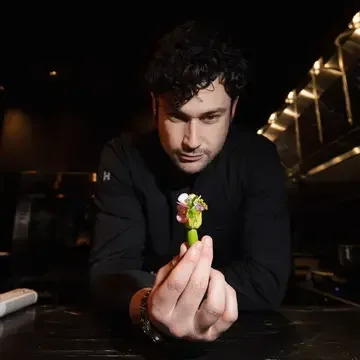
The path from that pasture to Counter- did not initially run through a kitchen. After graduating from Dickinson College and beginning a career in advertising, Hart moved to Utah in their early twenties and spent several weeks living out of their car. With little money for food, they began cooking because it was the cheapest way to eat.
“I got 10-for-$10 boxes of pasta, three-for-$5 jars of Kroger brand pasta sauce,” Hart says. “Then I was like, ‘Huh, this is actually kind of cool. Let me adjust the sauce. Let me try and make my own pasta.’”
Within months, Hart was working through Julia Child’s cookbooks and teaching themself techniques that had nothing to do with survival. Four years later, they were back in Charlotte, working in advertising and hosting dinner parties for friends and clients.
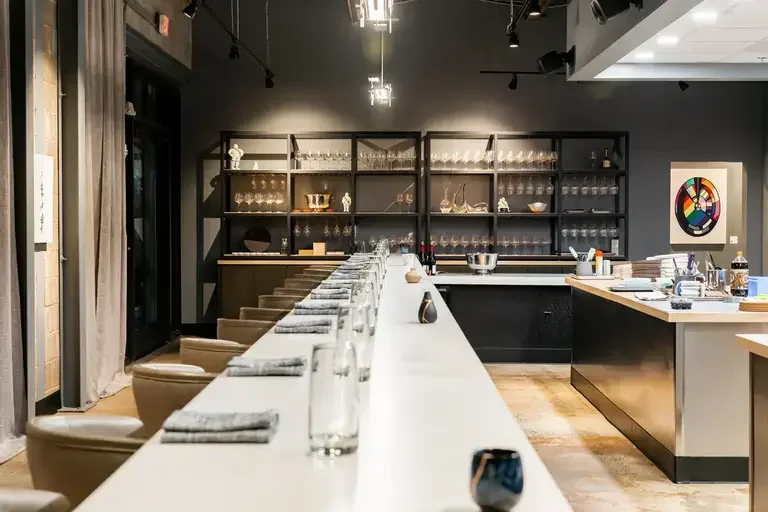
“While I was doing that career was when the idea of Counter-, the physical space that you dined in, really landed,” Hart says. “It was such this obsessive idea. I knew that if I didn’t do it... I was just going to forever regret not doing it.”
The next day, Hart quit their job and enrolled at Central Piedmont Community College in Charlotte. They went on to work in several of the city’s restaurants but knew they needed to see fine dining at its highest level.
“I could see this curving of a graph,” Hart says. “But I didn’t know the equation that created it. I didn’t know how to make that formula operate.”
To learn the equation, Hart moved to Chicago, where they worked at Alinea under executive chef Simon Davies and later joined Momotaro.
“I had gone my entire life undiagnosed for many different things, and it kind of all came and reared its head there,” Hart says.
That struggle would shape Counter- as profoundly as anything Hart learned in a kitchen. Food became the medium for the experience they had imagined. The decision to give Counter- a finite lifespan was more personal.
“What started out as the concept itself, the set end date happened more out of personal bouts with depression and PTSD,” Hart says. “It came from a lot of studying of death and being joyful about the fleeting moments that we have in life. Through being happy that death does come and the end does come, you get to take so much more enjoyment out of the present day.”
For Hart, the study of death was not merely intellectual.
“I was not expecting to make it to 30,” Hart says. “I attempted to take my life on four different occasions.”
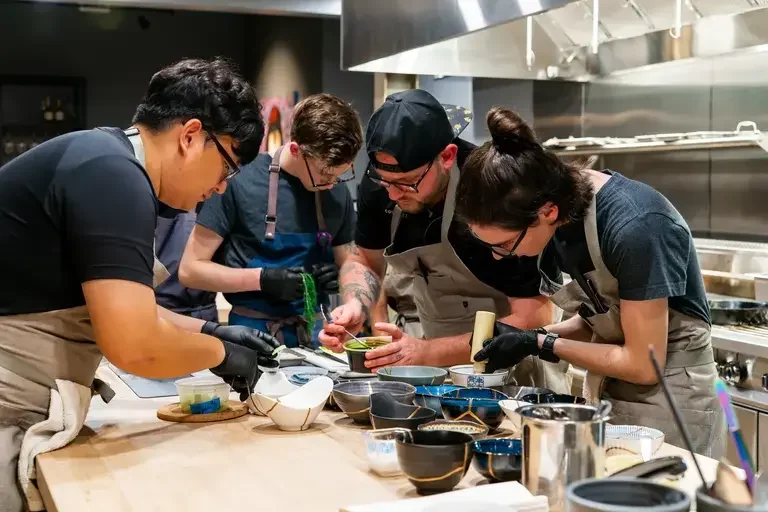
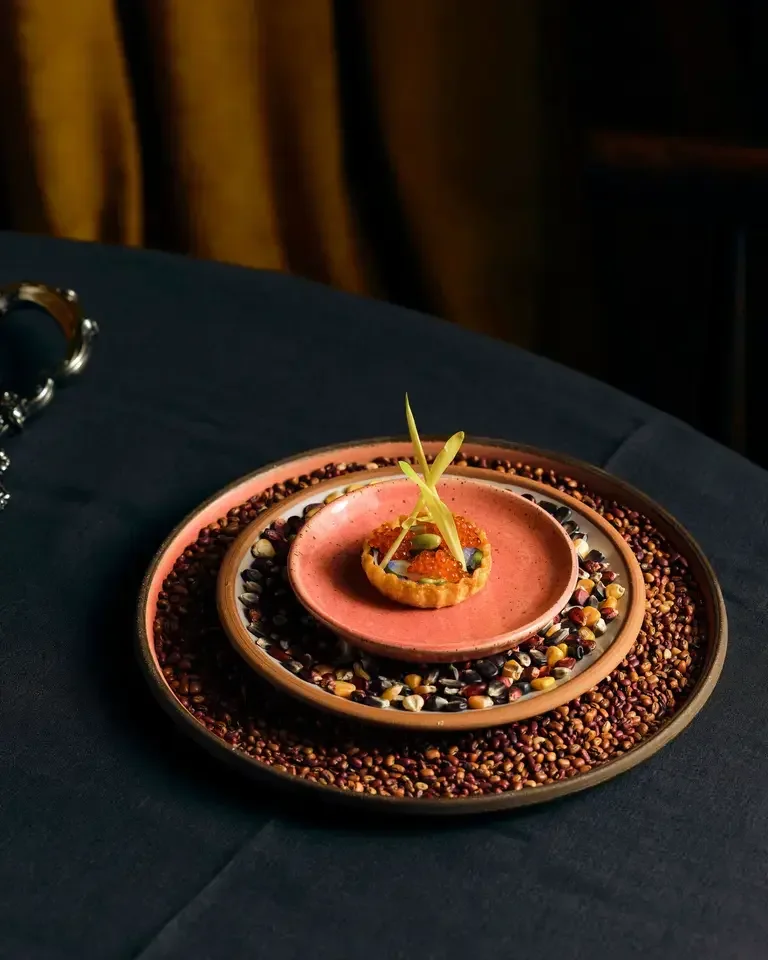
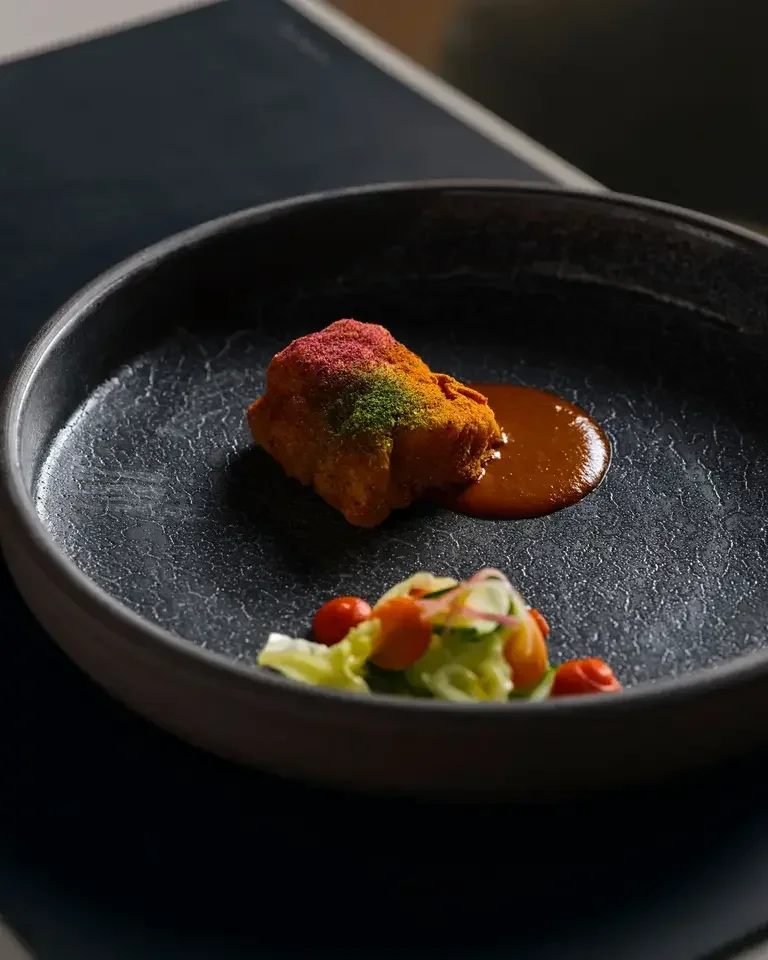
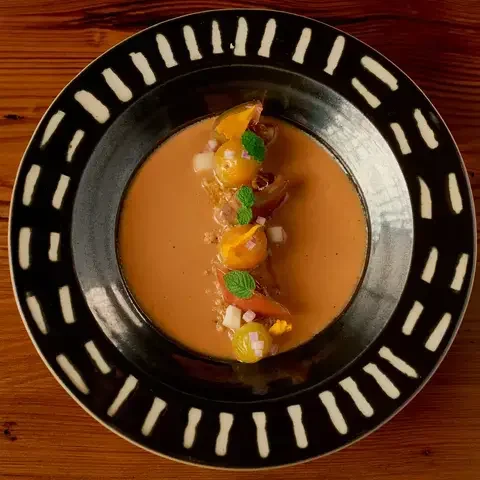
At Counter-, Hart’s ideas about endings take shape in multi-course tasting menus that are temporary by design. Past themes have explored subjects as varied as Beethoven, modern art, curry, and Carolina kaiseki. Every three months, the food, soundtrack, and visual elements give way to a new chapter, with occasional specialty menus appearing in between.
“We never really talk about how many days are left,” Hart says. “What we do talk about is how, mathematically, every single day that passes, each future day is even more rare.”