
Sorry, you need to enable JavaScript to visit this website.
Mentorship Part 1

Why the Culinary Industry Still Runs on Mentorship

15 Minute read

Where Mentorship Still Lives

Classical mentorship is increasingly confined to a handful of industries, and the kitchen trenches are one place where the institution retains many of its layered meanings, some of which have been lost elsewhere over time. In many modern professions, much of what once fell to mentors is now regimented and systematized within human resources departments, orientation programs, and buddy systems. As a result, mentorship can seem obsolete or diminished in value, a vestigial tradition of a bygone era.

But mentorship remains comparatively essential in individual pursuits. Athletes in mano-a-mano sports like tennis; freelance writers and authors; actors and other theater folk; musicians; and, yes, cooks.

Think of mentorship as the American cousin of Europe’s generations-old guild and apprenticeship systems. Those formal constructs offer(ed) regimented, on-the-job professional culinary training, of which mentorship is a component. The notion of, and need for, mentors in an industry that invites practitioners to chart their own bespoke courses proved so essential that those relationships formed outside the career frameworks some countries provide for culinarians. The organic and voluntary nature of these bonds suffuses the chef’s journey, both mentor and mentee, with mythical heft.

These remain roles in which people—often very young people—are thrust into unfamiliar lands and confronted by challenges unique to their chosen field. For instance, a cook with eyes trained on chefdom sets off on a journey, often a largely unplanned one, that will bring them into contact with angels and devils, temptations and tribulations, and may send them to foreign lands, each with its own customs and culture. The aspiring chef’s quest—their odyssey—is for the knowledge, skills, and worldliness that will enable them to someday become a chef, and a mentor’s counsel is essential to navigating those rough seas.

Does that sound a bit baroque? A bit too fantastical?

If so, well, hold your centaurs, because the word mentor hails from a character in Homer’s epic poem The Odyssey, just as paparazzi are named for the exuberantly invasive celebrity photographer Paparazzo in Federico Fellini’s roman à clef .

In other words, the very concept of mentorship plugs directly into ancient mythological tradition.

The Original Mentor

In Homer’s poem, Odysseus charges his friend Mentor with advising his son, Telemachus. The work’s narrative fuse is lit when the goddess Athena, disguised as Mentor, encourages Telemachus to venture out in search of his long-lost father. As the story unspools, Mentor (Athena) also warns Telemachus of ulteriorly motivated suitors, provides him a ship and a crew, and tips him off to a planned ambush. (Fun fact: In Christopher Nolan’s forthcoming The Odyssey, Athena, played by Zendaya, performs those services undisguised.)

Here in the mortal world, it is helpful, though not always easy, to differentiate between a good or great boss and a mentor.

A definition of a mentor in the culinary arts might include someone who:

  • takes a special interest in their mentee;
  • teaches and guides them in ways that exceed the usual parameters of on-the-job training;
  • continues to advise them after the term of employment has concluded; and
  • offers insights, introductions, and, in some cases, even investment that helps set them up for future success.

A chef-mentor, for example, might patiently demonstrate intricate knife, cooking, and plating techniques to a young charge. Or they might serve as a mentee’s unofficial career counselor, offering advice and introductions to people and opportunities. They might look over partnership or employment contracts or provide guidance on how to talk to the media, and when “no comment” will do. (If we’re being really honest, a mentor might be a detained cook’s wee-hours phone call from a police precinct, or the one who delivers them to a recovery program.) Or they might do all of those things, and more.

One of mentorship’s many charms is that it occurs organically. A chef sees something in a new hire and assumes a sort of big sibling or parental role in their life. And just as a grown person may refer to their parents as “Mom” and “Dad” deep into adulthood, a mentee often refers to their mentor as “My Chef” for the rest of their lives.

Just as Telemachus needed Mentor to navigate all aspects of his adventure, young cooks require mentorship. Who else but a mentor will tell you that, yes, so-and-so chef is tough to work for, but it is worth enduring their gruffness for a year or two because you will move on with an enviable skill set? Or that if you want to learn pasta, they will set you up with a fabled nonna in the foothills of Tuscany? Or that they will be sure you are looked after on an eating tour of Thailand, a country whose food resonates with you and which you think may someday figure prominently in your own?

When Mentorship Changes a Life

The late, great chef David Bouley flourished under the mentorship of nouvelle cuisine titan Roger Vergé, who found the young American to be the hardest-working cook he had ever seen.

That observation led Vergé to personally school Bouley, even in such fundamental tasks as the proper way to simmer carrots to prepare a sublime purée. In time, Vergé began dispatching his young charge to other restaurants in other cities and countries, curating an employment curriculum of sorts that included stints with Paul Bocuse and Frédy Girardet.

“Vergé was the person who really rolled out my future,” Bouley once said. Not only did the French chef arrange jobs for Bouley with other European chefs, but he also personally drove him to the airport, told him what to expect in each gig, and then appointed him chef of a San Francisco project to which he consulted, Sutter 500.

The mythical edge of mentorship was casually underscored about 15 years ago, during Season 2 of Bravo’s Top Chef Masters, when Jonathan Waxman, the legendary California chef best known today as the honcho of New York City’s Barbuto, was nicknamed Obi-Wan after the elder Jedi in the Star Wars films. Star Wars creator George Lucas, as any film geek could tell you, was heavily influenced by Joseph Campbell’s examination of narrative conventions in The Power of Myth, neatly stitching these threads together.

I find it not just appropriate, but helpful, to consider culinary mentorship against outsized examples from narrative storytelling, because the exaggerated nature of mythological elders makes manifest the deep formative impact of a mentor. It is the tough-love instruction of Pai Mei, the kung fu master who schools Beatrix “The Bride” Kiddo in Kill Bill: Vol. 2, that empowers our heroine to break out of a buried coffin, pluck out Elle Driver’s remaining eye, and defeat Bill himself with a nifty exploding heart technique. It is Vito Corleone’s final admonition to Michael that saves him from a set-up after the don suffers a fatal heart attack. And it is the lessons Andy learns from Miranda in The Devil Wears Prada that prepare her for the career landmines ahead.

And so, this is the first of a three-part paean to mentorship, the deeply human, strictly voluntary, always uncompensated, generations-old, and often unnamed tradition that helps make the culinary world go round.

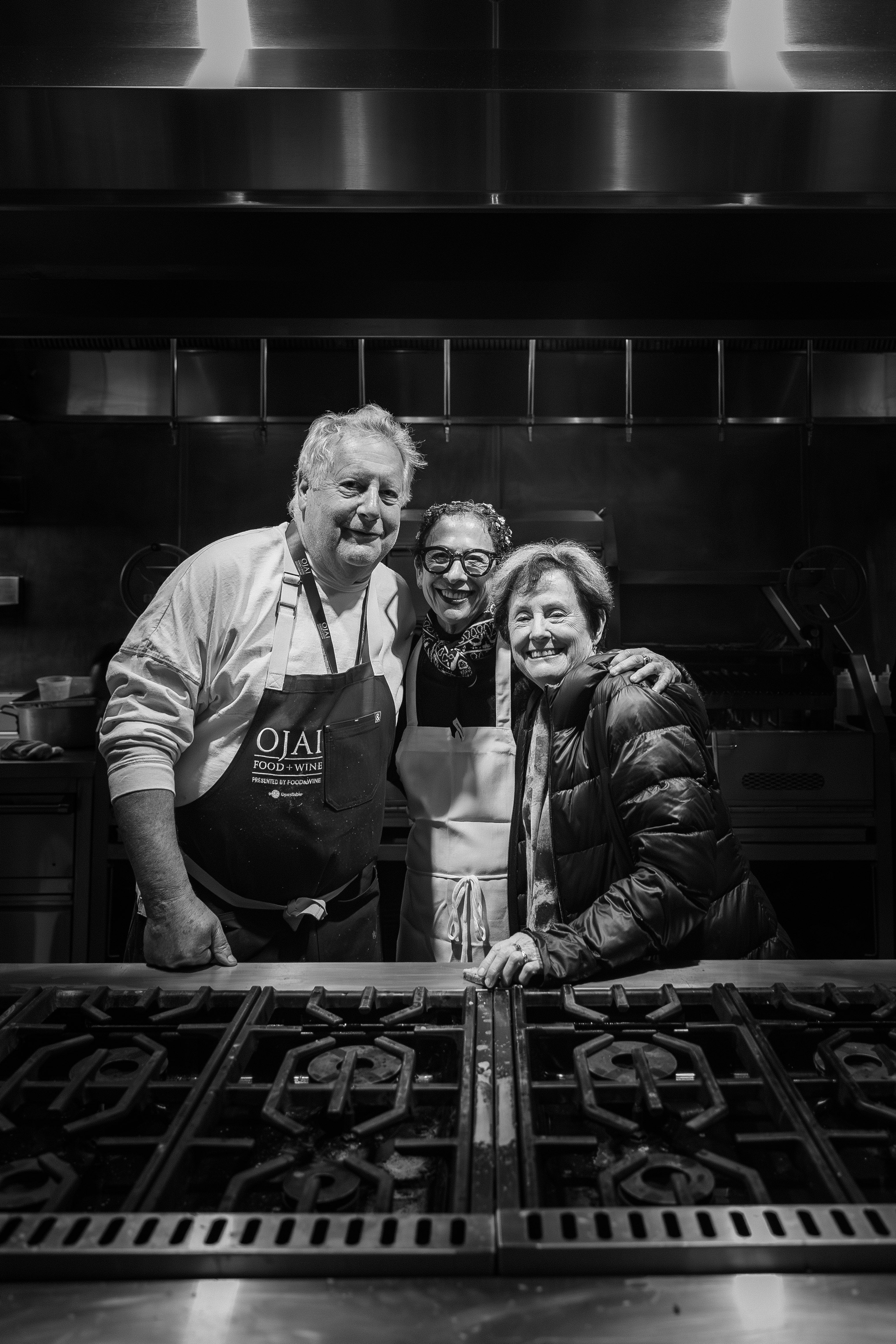
Jonathan Waxman with Nancy Silverton and Alice Waters

Jonathan Waxman with Nancy Silverton and Alice Waters. Credit: John Troxell

There Is No Single Path

Professional cooking has no official governing body. There is no single, correct path to chefdom. To the contrary, it is a sprawling, global hodgepodge of businesses, large and small, that range from casual neighborhood spots to chain eateries to chef-driven one-offs to fine-dining stars and wannabes. Staggeringly, these genres, and the many in between, are interconnected. A teenager whose first whiff of kitchen life occurs in a high school dishwashing job at a fast-casual location might soon embark on a climb to the Michelin mountaintop. A chef who enjoyed years of success in a major metropolis might fade into a corporate role or the relaxed pace of a more casual restaurant far from the city lights.

In the earliest days of the profession, and through its mid-20th century upgrade to respectability, the industry, and the world, were a bit closer to the mythological era than we are today, and the need for a mentor was therefore more obvious and pronounced.

With no internet, scant newspaper and magazine coverage at best, and primitive communication methods, any young person lighting out on a chefly mission would require a mentor.

Consider the case of Jonathan Waxman. In 1975, the future chef was a young knockabout who enrolled in a San Francisco cooking class. One day, the instructor took him aside and suggested that he consider becoming a chef.

Waxman had never even considered it, but he followed his avocation to La Varenne culinary school in Paris, where it quickly became a vocation. After graduating, he cooked for Alice Waters at Chez Panisse, became chef at Michael’s Santa Monica, and then opened his own restaurant, Jams, in New York City.

In Manhattan, he occasionally visited André Soltner, the great French chef whose Lutèce was among the most lauded restaurants in the United States at the time. The two would sit over coffee and discuss the quirks of their chosen field.

In their own ways, both figures may be said to have been mentors to Waxman. His instructor’s special interest in him, and her help getting him into a French cooking school, nudged the trajectory of his life in a new direction. Spending time in the company of Soltner, hearing about the old days in France, and soaking up kitchen wisdom offered priceless context for what was happening in American restaurants of the day.

Information Isn’t Guidance

Today, young chefs can access nearly any information they crave, from the technical to the fiscal, through books, search engines, including AI summaries, YouTube, and other physical and digital sources. But cobbling together a course to chefdom from those sources, and plotting it out in tandem with a caring mentor, can make the difference between being book-smart and street-smart.

Once a young person decides on cooking as a pursuit, the need for a mentor is almost immediate. What early jobs offer the best training? Should culinary school be considered? Which positions will best prepare an aspiring chef for the style of cuisine they hope to one day explore in their own food? How long should one stay in a job? If adventuring overseas, which country should they go to, and who might serve as an on-the-ground guide?

The answers to these and other questions are often provided, optimally, by mentors.

Mentors are the feature missing from the orientation booklet. You will not find them described in any textbook, nor listed in the curriculum at major culinary institutes.

But mentors are as central to a cook’s career as knife skills, a discerning palate, and grace under pressure.

For these and other reasons, mentorship remains a key feature of the culinary trade today, and will likely continue to be for generations to come.

In Part Two, we will take a look at the various types of individual and collective mentorship.

In Part Three, we will examine when the time is right for a chef to begin serving as a mentor themselves.

Spread the flavor - share this story.

Join the community
Badge
Join us for unlimited access to the very best of Fine Dining Lovers
Unlock all our articles
Badge
Continue reading and access all our exclusive stories by registering now.

Already a member? LOG IN