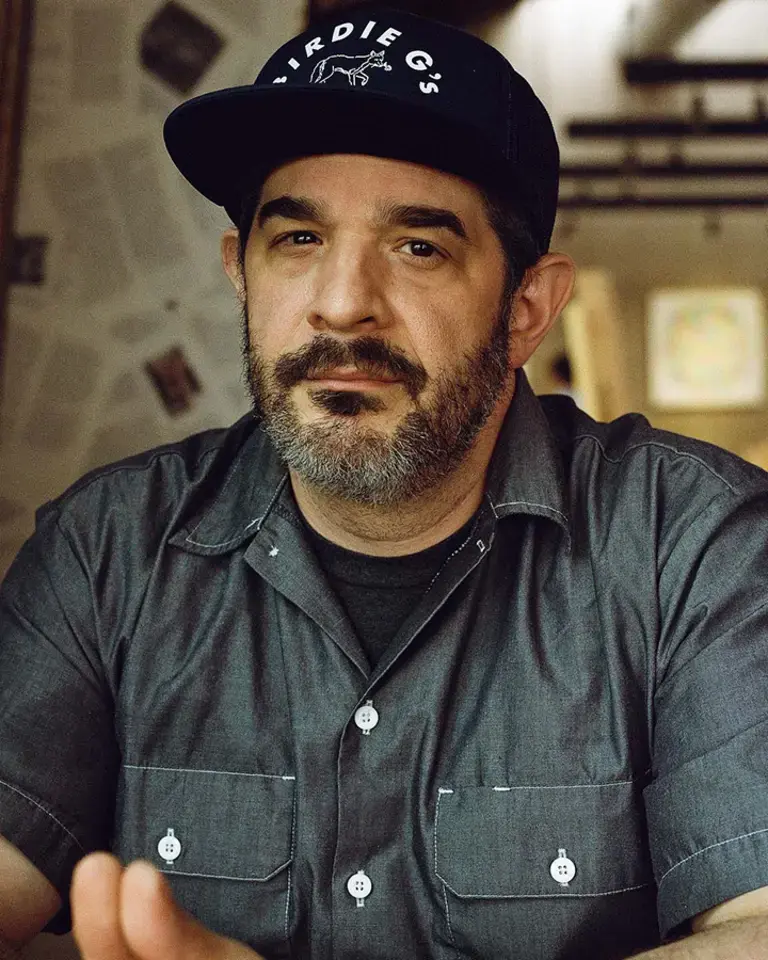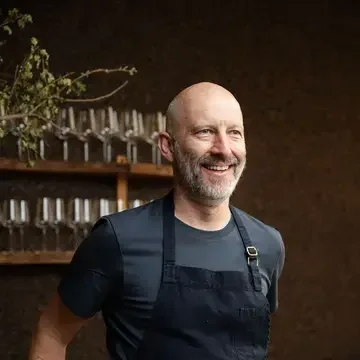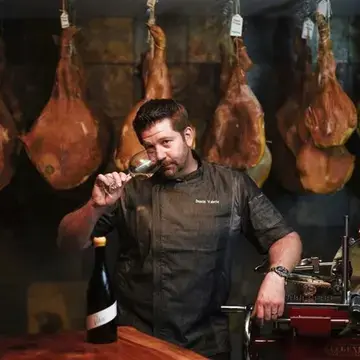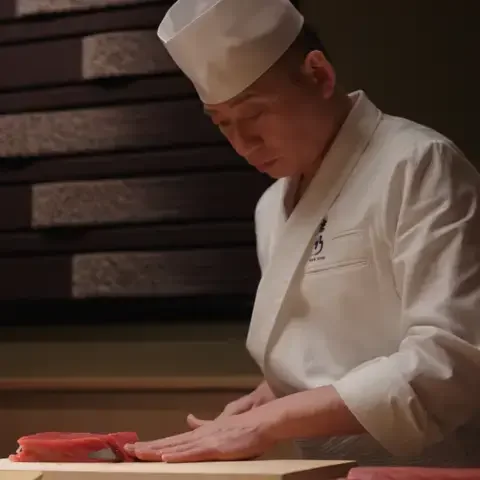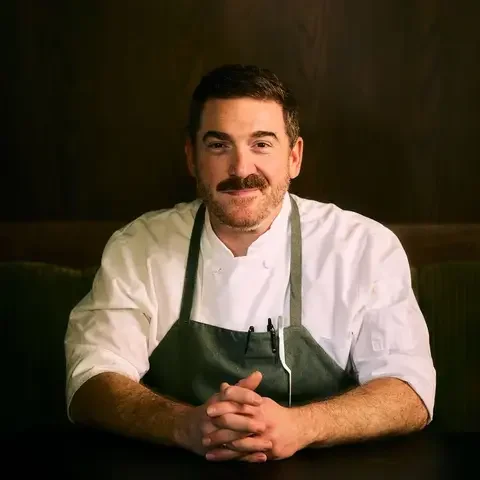
When Jeremy Fox says he’s “always wrestling,” he doesn’t mean it in a self-deprecating way; it’s just how his mind works. “I wrestle with everything on a daily basis,” he told me. “Every day I’m caught up in push-pull with what I want, what I want to be, what I am. And I’m usually at odds with that.”
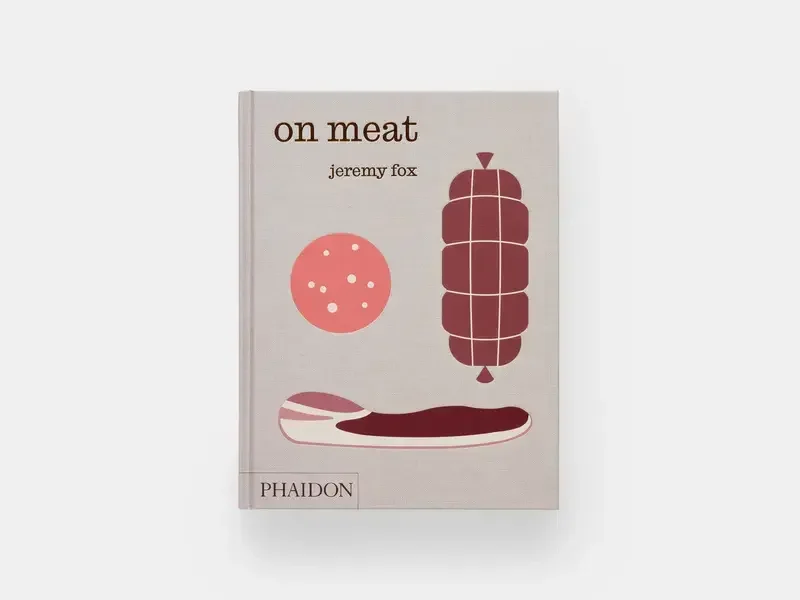
That tension, between aspiration and reality, refinement and rawness, has defined Fox’s cooking for nearly two decades. His first book, On Vegetables, published in 2017, made him the unlikely poster child for vegetable-forward cuisine, born from his days as the chef of Ubuntu in Napa. Now, with On Meat (Phaidon, 2025), Fox revisits the other side of the kitchen. But rather than a reversal, the new book feels like a continuation of the same conversation—an evolution from seed to stock to nose to tail.
“It started as a joke,” Fox said, laughing. “The Birdie G’s cookbook was supposed to be next. But after COVID hit, I didn’t know if that restaurant was even going to exist anymore. So I thought, what if I do On Meat? That was always the book I wanted to make.”
The idea stuck. And, as he puts it, “eventually it started to become a reality.”
A Study in Dualities
Fox’s contradictions are baked into his DNA as a chef. He’s both obsessive and self-effacing, cerebral and impulsive, the kind of perfectionist who still insists on making salt from seawater but shrugs off acclaim as if it arrived by accident. The recipes in On Meat reflect that same duality: comforting but exacting, rooted in nostalgia yet fiercely technical.
“My relationship with meat is awesome,” he said. “I think the reason my vegetable cooking at Ubuntu was maybe noticed was because it was from the viewpoint of a meat eater. I looked at vegetables the way I cooked meat, using every part of it.”
That approach—his “seed to stock” philosophy—was Fox’s plant-based translation of nose-to-tail cookery. It’s also what earned him the right to make a second book at all. “The reason I got to make On Vegetables was because I cooked vegetables like meat,” he said. “And that’s why I got to make On Meat too.”
Paul Bertolli, who wrote the book’s foreword, describes Fox as a “thinking chef” whose appetite fuels both creativity and craft. “Throughout his about-face in On Meat, he shares the details that matter,” Bertolli writes. “Although he describes himself as more of a thinking chef than a skilled practitioner, his recipes clearly reflect the practice of lighting up all his senses when he cooks.”