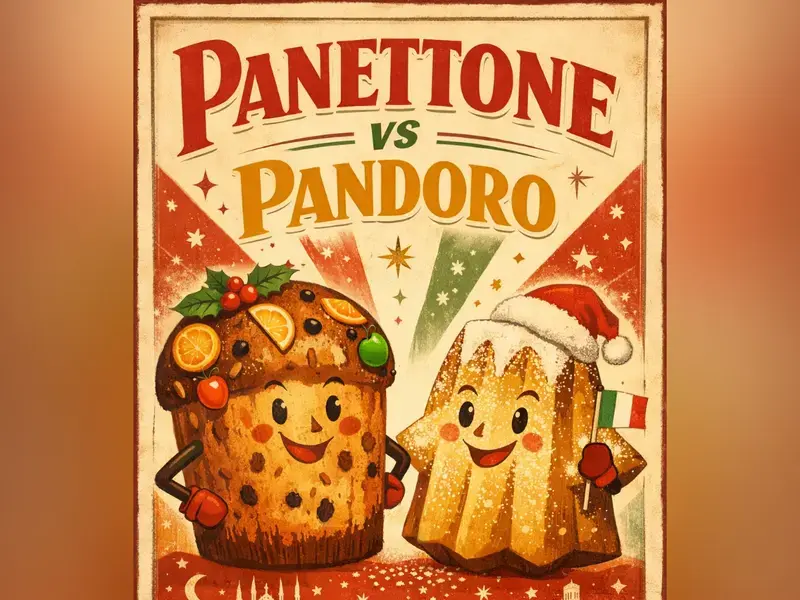
When Christmas rolls around in Italy, two sweet breads dominate the dessert table: panettone and pandoro. Both are deeply rooted in Italian culinary culture and now enjoyed around the world, yet they are distinct in history, structure, and flavor. Whether you lean toward fruity richness or buttery simplicity, understanding what makes each unique helps you appreciate not just the taste but the tradition behind these iconic holiday treats.
What Is Panettone?
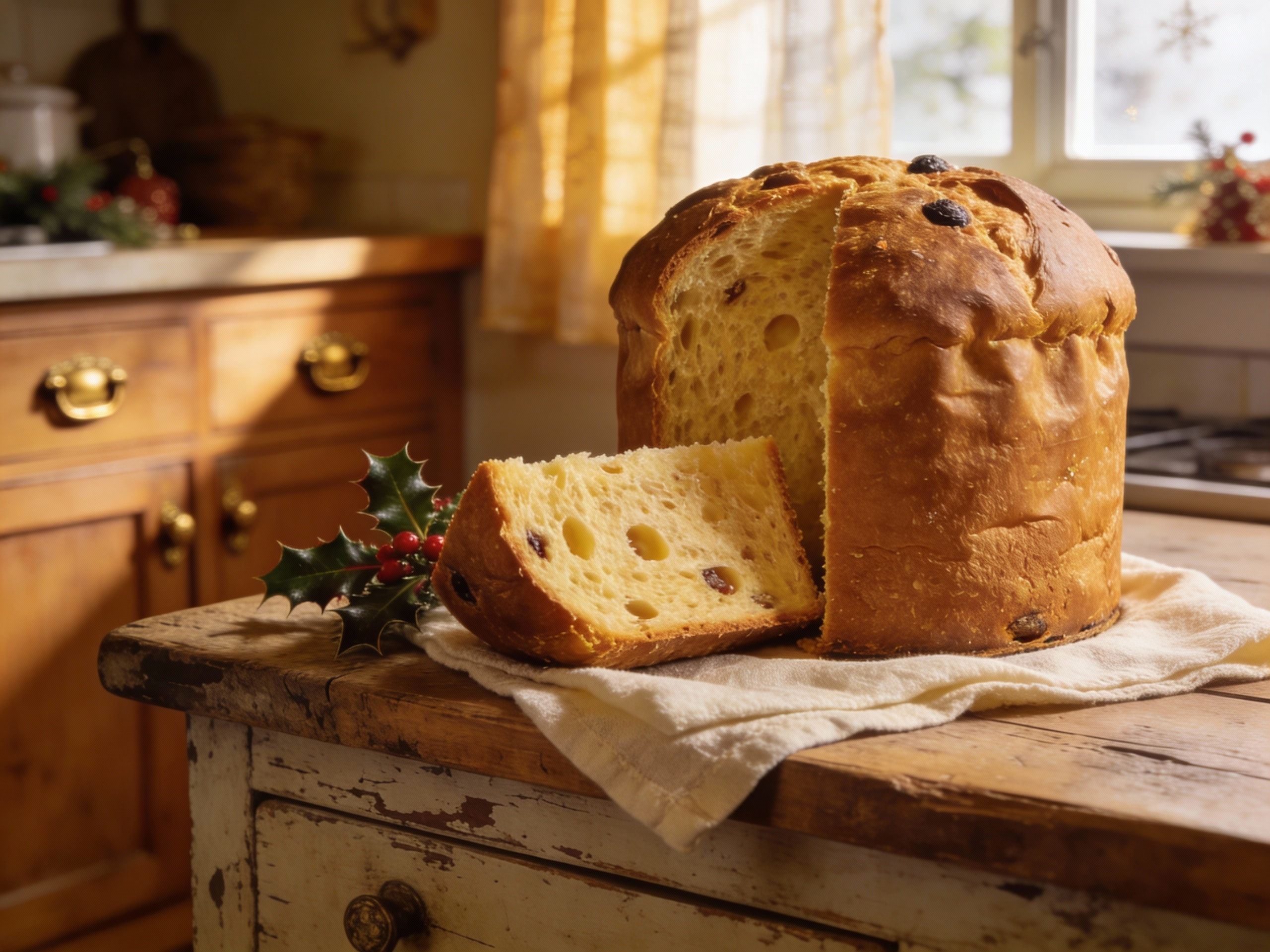
Panettone is a classic Italian yeast-leavened sweet bread traditionally enjoyed at Christmas and New Year. It originated in Milan, where it has been associated with the holiday season for centuries. The name comes from the Italian panetto (small loaf) with the augmentative one, meaning “large bread.”
Its dough is rich and complex, typically made with flour, eggs, sugar, butter, and natural yeast, and can be studded with raisins and/or candied citrus such as orange and citron. The dough undergoes a long fermentation process over multiple rises, which gives panettone its distinctive airy but structured crumb and tall domed shape.
Panettone has collected legends around its origin. One popular story holds that a baker named Toni improvised the bread to save a festive dinner, leading to the name pan di Toni. Regardless of the legends, by the 19th century panettone was firmly established as Milan’s festive sweet.
Today panettone is celebrated across Italy and beyond, often served in vertical wedges with sweet wine, hot beverages, or mascarpone cream.