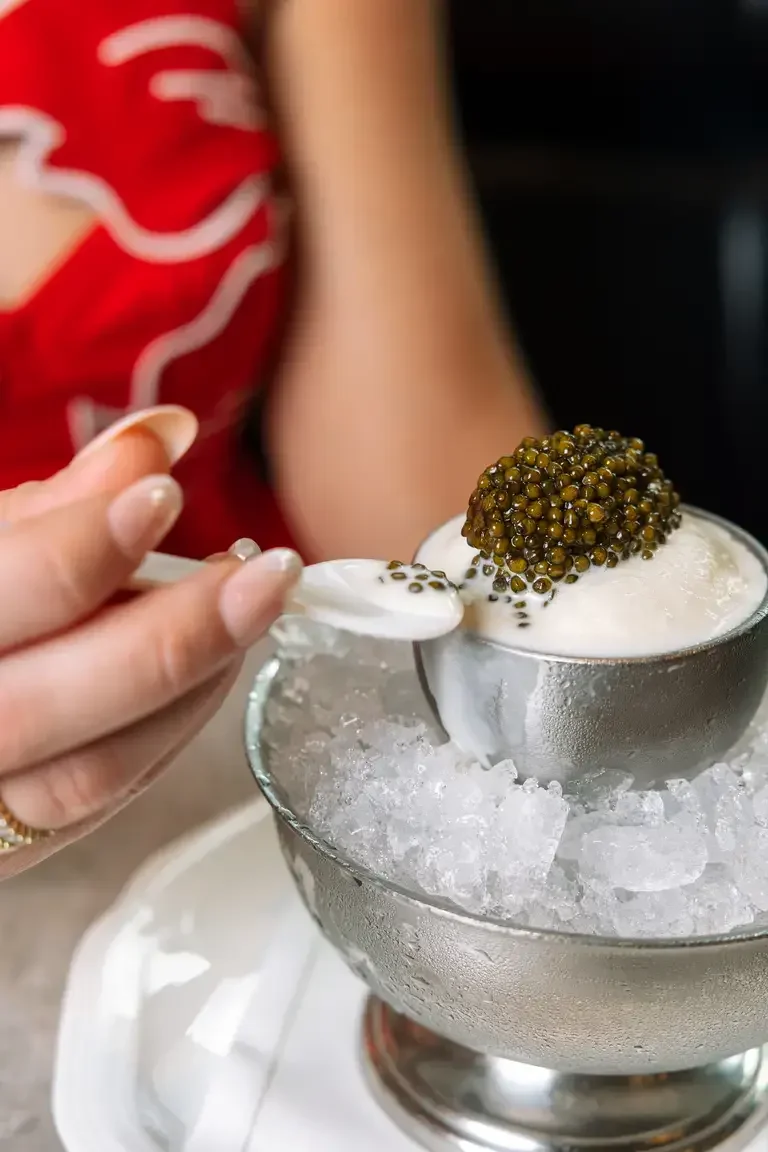
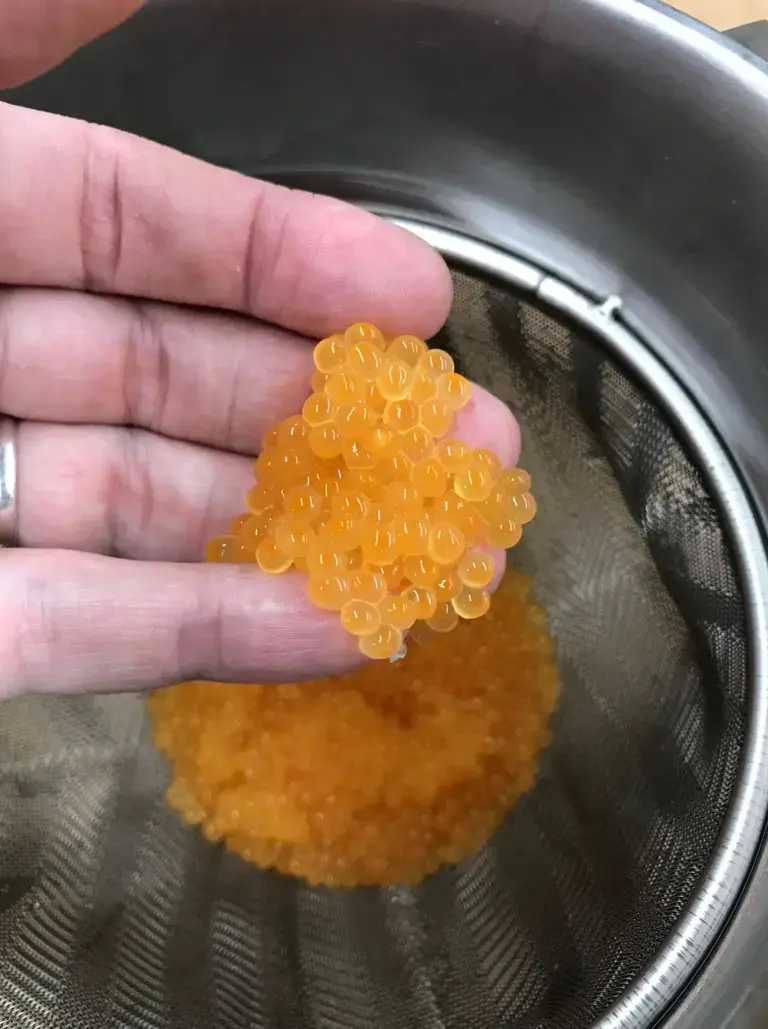
Using roe from other fish also raises questions about what may be sold as caviar and how consumers can know what they are buying. Unlike names such as Champagne and Parmigiano Reggiano, which are protected in many markets by rules governing geographic origin and production, caviar is not tied to a specific place. But the term is not entirely unrestricted. In the United States, FDA guidance says “caviar” on its own should refer only to salt-cured sturgeon roe. Products made from the roe of other fish should identify the species, as in “whitefish caviar” or “trout caviar.”
Umansky argues that the meaning of caviar became muddled as sturgeon populations collapsed and producers misrepresented the origins of their roe. “At one time, it was that way. The industry used to use a royal symbol and caviar label for caviar,” says Umansky. “Where there is fresh water, there are different sturgeon species. We came to the point, historically, where not all of them, but the majority, were used for caviar production. But we lost them all. The Russians overfished and screwed up their population and then came for ours and still labeled it caviar from St. Petersburg, even though they were our eggs. There was so much adulteration that the ability to keep those standards was lost.”
That history also informs Umansky’s concerns about how caviar is processed and labeled today. “Adulteration in markets outside of North America is a very real thing, and it isn't always a nefarious thing,” says Umansky. “Sometimes it's as simple as someone trying to extend their caviar shelf life so they don't lose money. The number one culprit has been borax. People use it to wash the caviar and get rid of fishy odors, and also to plump the eggs. You also see dyeing of eggs to market it as a different species of sturgeon so they can command a higher price.”
Borax is authorized in the European Union as a caviar preservative, though it is not permitted in food in the United States. Its presence alone is therefore not evidence of adulteration. Species mislabeling, however, is well documented: one 2023 study found that one-third of the commercial caviar samples it tested were labeled as the wrong sturgeon species.
To reduce those risks, Umansky recommends buying directly from farms or choosing caviar from countries with strong labeling, traceability, and animal welfare standards.
For Umansky, making caviar more accessible also means challenging how consumers assign value to food. “The most mundane and common ingredients can have the most incredible and delicious experiences attached to them,” says Umansky. “Caviar, because of its perceived exclusivity, is a prime food for disruption and destruction of this perception of what gives value to food.”
Because Umansky’s Lake Caviar comes from whitefish and other regional fish rather than lake sturgeon, it does not recreate the caviar that once made the Great Lakes a major exporter. Instead, it offers diners a $5 to $7 regional alternative to traditional sturgeon caviar. His project may make that experience more accessible, but it also asks diners to decide how much of caviar’s value resides in the sturgeon egg and how much resides in the name.