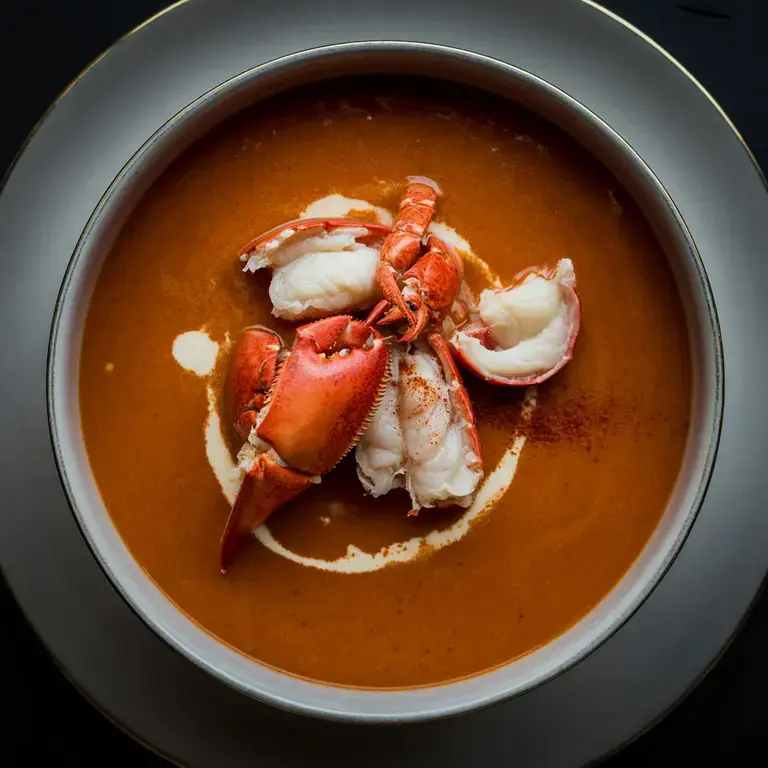

A classic lobster bisque recipe will always recommend using the lobster shells to intensify the flavor of the stock. Some chefs will actually roast the shells first to caramelize them, adding even greater depth of flavor to the bisque.
For more advice on how to eat lobster and extract the meat take a look at our article demystifying the process. Or, learn how to boil a lobster, to try using this special seafood ingredient in other dishes.
Tomato paste or purée adds color and balances the richness of the bisque. For an authentic lobster bisque recipe, you only need one tablespoon of tomato purée to boost the umami flavors to pair with the slight sweetness of the lobster meat.
Lobster bisque is known for its smooth texture, but for an extra creamy lobster bisque recipe, you can add heavy cream to the dish for a luxurious finish.
What Makes a Bisque Different from Other Soups
Bisques are distinct from other soups as they are traditionally made with shellfish and completely smooth in texture, whereas soups can be chunky or smooth. General soup recipes are also not limited to shellfish or seafood ingredients, and can be made using a variety of meat or vegetarian-based elements. Clam chowder is a classic East Coast soup, with variations depending on whether it’s made in New England or Manhattan.
How to Serve Lobster Bisque
Lobster bisque should be served gently warmed through. The typical serving presentation is with chunks of lobster meat elegantly placed on the top of the smooth bisque. A drizzle of heavy cream and sprinkle of fresh parsley creates an elegant finishing touch.
For more lobster-based recipe inspiration try your hand at making a creamy lobster risotto, filling lobster linguine or iconic lobster roll, to explore using this ingredient in a variety of dishes.