
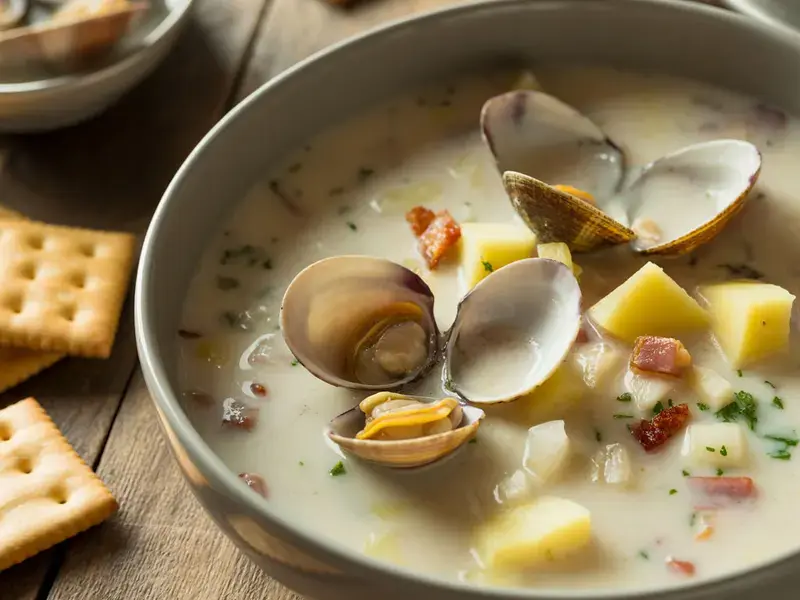
The question of New England vs Manhattan clam chowder has divided soup lovers for generations, with each camp fiercely defending its preferred style. One is creamy, rich, and comforting; the other is brothy, tomato-based, and filled with vegetables. Both claim the title of authentic American clam chowder, yet they could hardly be more different in appearance, flavor, and texture. Understanding the distinctions between these two regional classics, including their histories, ingredients, and the philosophies behind them, reveals how geography, immigration, and local ingredients shaped two entirely different approaches to the same dish.
Whether you are planning to make clam chowder at home, searching for the best New England clam chowder in Boston, or simply trying to settle the debate once and for all, this guide explores everything that separates these delicious soups.
What Is New England Clam Chowder?
New England clam chowder is the creamy, ivory-colored soup that most Americans picture when they hear the word “chowder.” Originating in the coastal communities of Massachusetts, Maine, and New England, this style has become synonymous with seaside comfort food and cozy winter meals.
The foundation of any New England clam chowder recipe begins with salt pork or bacon, rendered slowly to create a flavorful base. The rendered fat is used to soften onions before adding hearty chunks of potato. Clam juice provides the essential briny backbone, while heavy cream or milk transforms the broth into something luxuriously rich and velvety. Fresh clams, traditionally quahogs, the large hard-shell clams native to the Atlantic coast, are added near the end of cooking to prevent them from becoming rubbery.
The result is a thick, satisfying soup with a pale color and subtle sweetness from the cream. The texture should be substantial but not gluey. Properly made New England clam chowder coats the spoon without feeling heavy or overly starchy. Black pepper and fresh thyme are common seasonings, though the best versions let the clams shine without excessive spicing.
What Is Manhattan Clam Chowder?
Manhattan clam chowder takes a different approach, substituting tomatoes for cream to create a lighter, brighter, more vegetable-forward soup. The broth is red rather than white, and the flavor emphasizes acidity and herbs over richness.
A traditional Manhattan clam chowder recipe starts similarly to its New England counterpart with salt pork or bacon rendered with onions, but quickly diverges. Crushed tomatoes or tomato purée now join the pot along with celery, carrots, and sometimes bell peppers. The presence of vegetables is more pronounced, creating a soup closer in character to a hearty vegetable stew than to a cream-based bisque. Potatoes still provide body and starch, while clam juice and fresh clams contribute the essential seafood flavor.
Thyme, oregano, and bay leaves season Manhattan clam chowder, giving it a herby quality that complements the tomatoes' brightness. Some recipes include a splash of Worcestershire sauce or hot sauce for additional depth. The finished chowder is thinner than New England style, more like a soup, with a clear broth tinted red and studded with colorful vegetables and tender clam pieces.
New England vs Manhattan Clam Chowder: Key Differences
When comparing New England clam chowder vs Manhattan clam chowder, the differences go beyond just cream versus tomatoes.
- Base and color: New England chowder relies on cream or milk for its characteristic white color and rich body. Manhattan chowder uses tomatoes, producing a red or orange-hued broth that is thinner and more transparent.
- Texture: New England style is thick, creamy, and coating. Manhattan style is more broth, with distinct pieces of vegetables visible throughout.
- Vegetable content: New England chowder typically contains few vegetables. Manhattan chowder embraces celery, carrots, and sometimes peppers.
- Flavor profile: New England chowder emphasizes richness, subtle sweetness, and the pure flavor of clams softened by dairy. Manhattan chowder offers brightness, acidity, and herbal notes against the clams' brininess.
- Serving tradition: New England chowder pairs with oyster crackers and feels like cold-weather comfort food. Manhattan chowder often accompanies crusty bread and feels lighter, suitable for warmer days or as a starter.
The History and Origins
The history of American clam chowder stretches back to the early 18th century. The word “chowder” likely derives from the French “chaudière”, a type of cooking pot, suggesting French or French-Canadian influence on early American coastal cooking.
New England clam chowder developed first, emerging from the fishing communities of Massachusetts and Maine, where clams were abundant, and dairy was readily available. Early recipes from the 1700s describe simple preparations of clams, pork, onions, and ship's biscuits or crackers, with cream or milk appearing in later versions as the dish evolved.
Manhattan clam chowder arrived later, developing in the mid-to-late 1800s among Italian and Portuguese immigrant communities in New York and Rhode Island. These communities brought Mediterranean traditions that favored tomatoes over dairy in seafood preparations, adapting chowder to their culinary preferences.
Rhode Island Clam Chowder: The Third Style
Often overlooked in the New England vs Manhattan clam chowder debate is a third regional style. Rhode Island clam chowder takes yet another approach, omitting both cream and tomatoes in favor of a clear, briny broth with a seafood focus.
This style focuses entirely on the clams, allowing their natural flavor to dominate without the masking effects of dairy richness or tomato acidity. The preparation begins with rendered salt pork, onions, and potatoes, but the liquid comes exclusively from clam juice, sometimes with the addition of fish stock. The result is a thin, almost translucent soup with an intense shellfish flavor and clean finish.
For those seeking to understand American clam chowder in its full regional diversity, Rhode Island style completes the picture, proving that the simple combination of clams, pork, and potatoes can be interpreted in remarkably different ways depending on where you stand along the Atlantic coast.