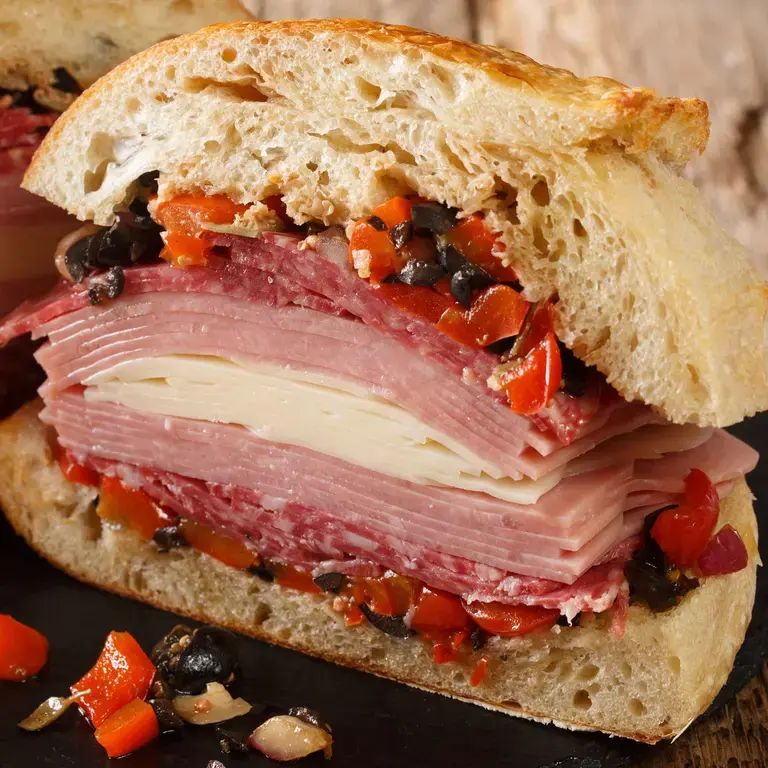

The best Italian muffuletta sandwich recipe is all about finding balance between the flavors, starting with the right selection of bread. An Italian loaf is a key component of the recipe, with a firm crust and soft interior. You can also remove some of the inside of the loaf to create more room for the fillings without overstuffing the bread. Too soft a style of bread will turn soggy with the olive salad, so it’s better to opt for a loaf with more structure.
In this recipe we’ve shared a quick method for making the olive salad, but if you have the time you can create the salad the day before and let it sit overnight in the fridge to allow the flavors to develop. Some chefs will add ingredients, such as roasted red peppers, garlic, capers, and parsley to the olives, along with a splash of lemon juice for brightness. A dash of giardiniera is often featured in muffuletta recipes and brings a tangy complexity.
Adding Parmesan cheese to each side of the bread helps to act as a barrier to prevent the bread from becoming soggy once the olive salad has been added. After the sandwich has been fully assembled, allowing time for it to rest in the fridge helps the flavors to meld together.
For more lunchtime inspiration take a look at our selection of 10 of the top sandwich recipes, including a pastrami sandwich and filling falafel sandwich, along with tips and tricks on how to make gourmet sandwiches for an elevated dish. Or, for a lighter meal, try making a no bread sandwich, such as a paleo hamburger or chicken burger without bread.
The Origins of the Muffuletta Sandwich
The classic Italian muffuletta sandwich recipe has its roots in New Orleans. It was created in the early 1900s by Sicilian immigrants in the city who worked in and around the markets in the French Quarter. Sicilian farmers and workers would come to the markets and purchase a mixture of bread, cold cuts, cheese, and olive salad. It was awkward to eat these elements separately, until the concept of the muffuletta sandwich arrived, where everything was put inside the bread to create a portable yet filling lunchtime meal.
Built for function, the sandwich was designed around practicality, as an easy recipe to feed multiple people that improves in flavor over time. Today, it’s a signature dish in New Orleans and still closely associated with the central French Quarter markets, though you will now find it on many local restaurant menus too.