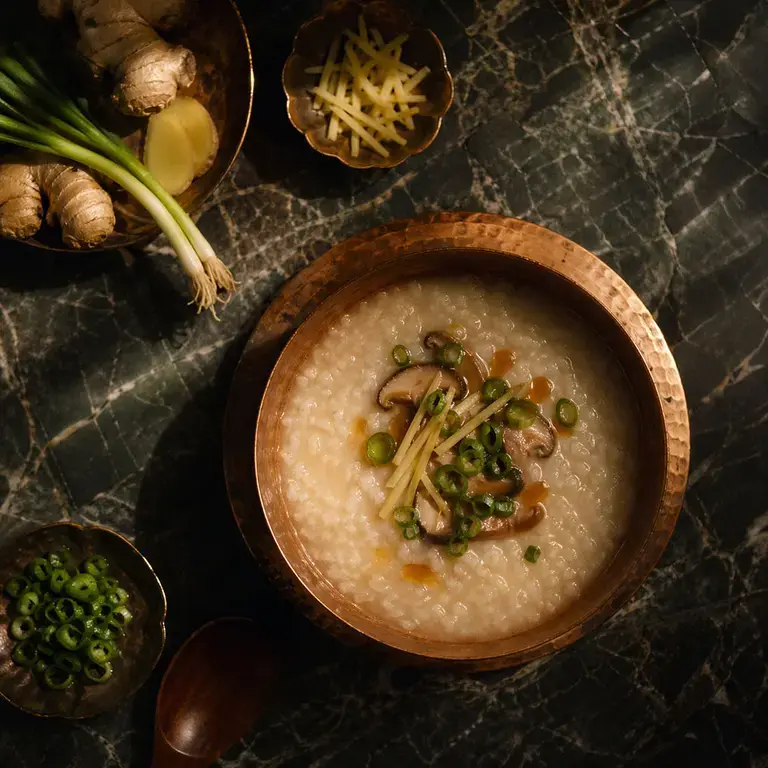

Every rice congee recipe will advise you to rinse the rice first before cooking. This helps to remove the starch on the outside of the grain. If you skip this step, it’s likely your congee will become undesirably sticky and thick. Stirring occasionally during the cooking process also helps to release the starches to create the creamy, silky texture of a congee. For more advice on how to cook rice to perfection take a look at our helpful article revealing the top way to cook rice, according to science.
You can adjust the ratio of water to rice as preferred. A common starting point is one part rice to 10 parts water, as suggested in this recipe, but you can adjust the quantity of water as needed to create a thicker or thinner congee. Some chefs will also use chicken broth, instead of water, to add depth of flavor and strong savory umami notes to the dish.
Short-grain or medium-grain rice is traditionally used for a congee as it becomes soft and starchy during cooking, creating the dish’s signature creamy texture. You could also use jasmine rice, to bring a fragrant flavor and aroma to the dish. To choose the best rice for your congee, read our round-up of the main different types of rice, detailing the differences between the three key styles of short, medium, and long-grain rice.
Popular Toppings for Congee
A congee is usually served with savory toppings and ingredients. A classic combination is eggs and pork, where these ingredients are diced and added toward the end of cooking. Aromatics, such as scallions, along with fried shallots and garlic are also commonly found in a congee. Seafood congee, using ingredients such as cod or shrimp, is also popular and ideal for a lunchtime version of this meal.
Congee can also be served sweet as a dessert-style dish. Dried fruits, such as dates or goji berries, along with a drizzle of honey are common accompaniments for a sweet congee.
When Congee Is Traditionally Served
Congee is traditionally a breakfast dish, served throughout China and in several parts of Asia, but there are other times when this rice dish is enjoyed. It’s often served as comfort food in Chinese homes when a member of the family is unwell, or as a filling lunchtime meal with steamed vegetables. It is sometimes served during festive meals, such as celebrations for the Lunar New Year, with symbolic ingredients for prosperity.
To explore more from the world of Chinese cooking, learn all about the eight key regions, including the typical flavors found in each area, along with world-famous styles such as Sichuan cuisine.