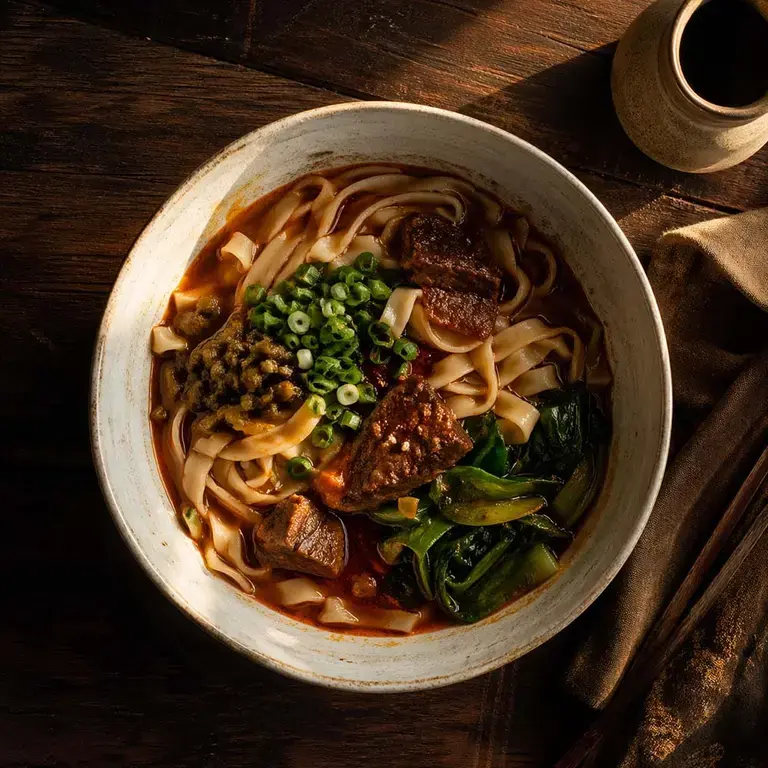

The perfect Chinese hand-pulled noodles recipe creates chewy, smooth, and elastic noodles. To achieve this texture, start by creating the ideal dough. It should be firm and pliable, but not sticky, and kneaded until very smooth and elastic. If it tears easily it hasn’t been kneaded enough. Some chefs will rest the dough for an hour or two before forming the noodles, to help relax the gluten and aid the stretching process as outlined in this recipe.
When pulling and folding the dough, keep your movements even and rhythmic. You want to work with the dough, not against it. If it snaps, you may need to rest the dough to help relax the gluten, or if it’s stiff it may be too dry. Pay close attention to the dough to make sure you can adapt and adjust the quantities of ingredients as needed. If you find the dough is sticking during the pulling process, you can dust it lightly with flour to make it easier to work with.
Once you’ve perfected your hand-pulled noodles, try making classic egg noodles with tofu and vegetables, to explore other noodle dishes from the world of Chinese cuisine.
How to Serve Hand-Pulled Noodles
Hand-pulled noodles should be served immediately as they lose their chewy texture if left for too long after cooking. Traditionally, noodles are served in a hot broth, such as a beef noodle soup. The broth should be poured over the noodles just as you’re ready to serve to guests. Alternatively, you can serve noodles with a sauce instead of a broth, such as a soy sauce, with garlic, and chili oil. Or, try mixing your hand-pulled noodles into this elegant spicy sesame sauce and peanut dukkah.
For more inspiration on how to serve your noodles, take a look at our helpful article explaining seven key styles of Chinese food, including everything from Sichuan cuisine, known for being spicy and bold, to Cantonese cuisine, renowned for its sweeter style.