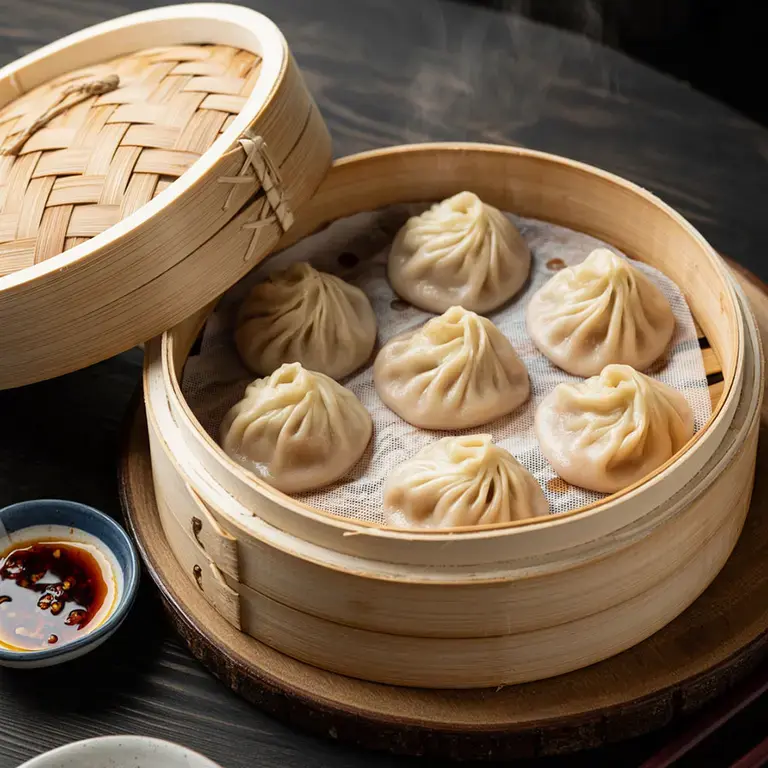

For the wrappers, roll the dough thinly. The edges should be pliable enough to create the signature pleating to seal the dumpling, with a slightly thicker center to hold the filling.
Typical fillings for this dish usually feature ground pork, ginger, scallions, soy sauce, and the gelatinized broth, but you can vary the flavors and make alternative dumplings such as chicken soup dumplings. Whichever flavors you choose, don’t overfill the wrappers as this makes it harder to seal the dough and causes leaks during cooking. The dumplings need to be sealed tightly, not perfectly, to keep the soup inside.
Lining the steamer with parchment paper, or cabbage leaves, prevents the dumplings from sticking to the pan. Using cabbage leaves imparts additional flavor to the dumplings, but parchment paper will work just as well.
What Makes Soup Dumplings Unique
Soup dumplings are special as they hold hot broth inside their wrappers, differing from most other dumplings. The soup is made as a gelatin-rich stock that sets into a gel when it’s chilled. When steamed, the soup melts into a liquid, creating a signature moment for this dish when the dumplings are eaten and burst with flavorful soup. The jelly-like broth needs ample time to chill so it doesn’t melt too early during the assembly and cooking process.
How to Eat Soup Dumplings Properly
Soup dumplings should be eaten using chopsticks to gently lift them to your mouth with a Chinese soup spoon underneath for support to catch any broth. They’re very delicate and too much pressure will burst the wrapper. Eat a tiny bit of the wrapper first, so you can sip the broth directly from the dumpling.
Typically, soup dumplings are served with vinegar or a pot of chili oil for dipping to cut through the richness of the pork. For more dumpling inspiration, try cooking deep-fried dumplings, for a crispy alternative, or veggie dumplings to cater for plant-based guests.