Once a staple in Filipino kitchens, this purple yam has found its way into pastries, ice creams, and lattes across the world—bridging tradition and innovation in equal measure.
What Is Ube and Where Does It Come From?
Ube (pronounced OO-beh) is a species of yam (Dioscorea alata) native to the Philippines and other parts of Southeast Asia. It has been cultivated for centuries as both a staple food and a festive ingredient, prized for its vibrant color and naturally sweet, nutty taste.
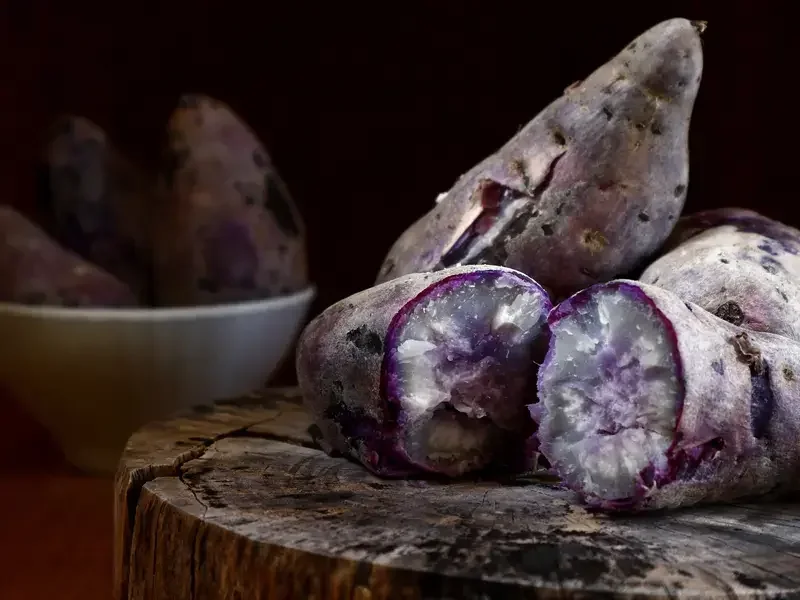
Unlike purple sweet potatoes, which belong to a different botanical family, ube is a true yam. Its intense violet flesh retains its color when cooked, making it a favorite for desserts and creative plating. Rich in antioxidants—particularly anthocyanins, the same pigments found in purple fruits and vegetables like blueberries and eggplants—ube not only delights the eye but also offers nutritional benefits.
Traditionally, ube is boiled, mashed, or grated before being transformed into confections like ube halaya, a creamy jam used as a base for many Filipino sweets. Today, it’s also available as powder, extract, or frozen purée, making it easy to incorporate into modern recipes.
What Does Ube Taste Like?
The ube flavor is delicate and multidimensional—mildly sweet with notes of vanilla, coconut, and a subtle earthiness. Unlike the caramelized sweetness of orange sweet potatoes, ube’s taste is more floral and creamy, often described as a cross between white chocolate and pistachio.
This balance of richness and restraint makes it ideal for both traditional desserts and contemporary pastry creations. Its natural sweetness allows chefs to reduce added sugar, while its velvety texture blends perfectly into sweet potato recipes, puddings, and custards.
Ube’s allure also lies in its sensory appeal: its striking purple shade enhances the visual experience of desserts like cheesecakes, donuts, and mochi, turning them into edible works of art.
Ube in Traditional and Modern Recipes
In Filipino cuisine, ube is most famously used in ube halaya, a luscious jam made from boiled and mashed ube cooked with condensed milk and butter. This preparation serves as the base for many beloved desserts, including:
- Ube ice cream, creamy and aromatic, often paired with coconut or macapuno.
- Halo-halo, a colorful layered dessert with shaved ice, fruits, and beans topped with ube halaya.
- Ube pandesal, soft bread rolls filled with ube jam or cheese—a delicious fusion of sweet and savory.
Modern pastry chefs have embraced ube flavor for its beauty and versatility, incorporating it into macarons, cakes, lattes, and even panna cotta. In the world of fine dining, it’s used to contrast neutral tones or to add a hint of sweetness to plated desserts featuring tropical fruits like mango or passion fruit.
Its compatibility with ingredients like coconut milk, white chocolate, and citrus allows for endless experimentation—transforming the humble root into a contemporary icon.
Ube vs Taro: Understanding the Difference
Though often confused, ube and taro are not the same. Both are starchy roots with similar purple tones, but they differ in species, taste, and culinary use.
- Ube (Dioscorea alata): A yam with naturally vibrant purple flesh and a sweeter, creamier flavor. It’s used mostly in desserts and sweet applications.
- Taro (Colocasia esculenta): A root with light grayish or lavender flesh and a more subtle, nutty taste. Common in savory dishes like taro chips, soups, and dumplings.
While ube provides sweetness and vivid color, taro offers earthiness and texture. Both, however, contribute to the growing appreciation for purple vegetables in contemporary cuisine—where visual appeal meets nutritional value.
How to Source and Store Ube
Finding ube outside Southeast Asia has become easier thanks to its rising popularity. It’s often available frozen, powdered, or in the form of jam in Asian grocery stores and specialty markets. Fresh ube roots are more seasonal and can sometimes be mistaken for purple sweet potatoes—look for a rougher, bark-like skin and a vibrant purple interior.
To store ube properly:
- Fresh ube: Keep it in a cool, dry place away from sunlight, similar to how you’d store sweet potatoes.
- Frozen ube purée: Store in the freezer and thaw in the refrigerator before use.
- Ube halaya or jam: Refrigerate in airtight containers and consume within a week for the best flavor.
For home bakers and chefs, ube extract or ube powder offers convenience without compromising flavor—perfect for adding a touch of color and sweetness to cakes, pancakes, and smoothies.
Beloved for its color, taste, and versatility, ube continues to inspire creativity in kitchens around the world. Whether used in traditional Filipino desserts or modern fine-dining creations, this purple yam reminds us that nature’s most vibrant ingredients often deliver the most unforgettable flavors.