
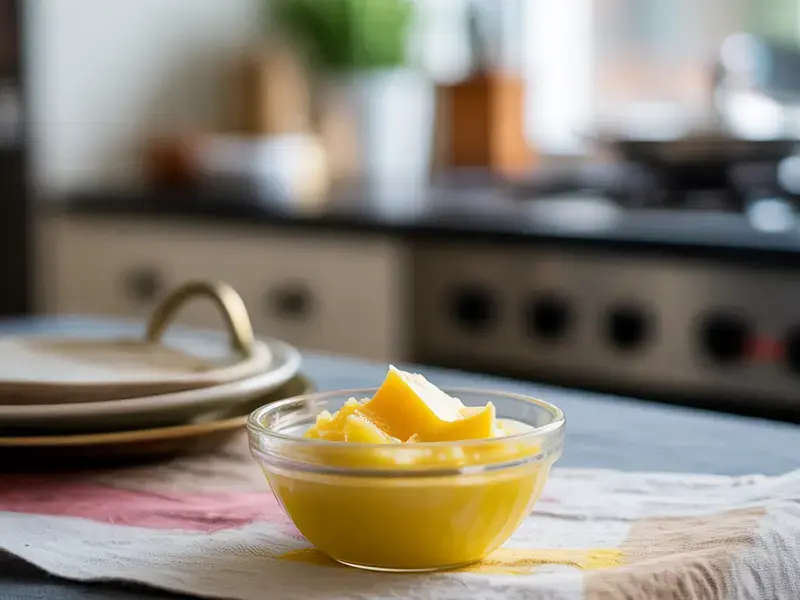
Originating in ancient India, ghee is a type of clarified butter known for its nutty aroma, high smoke point, and luxurious mouthfeel. It is produced by simmering butter to separate milk solids and water, leaving behind pure golden fat with an intense, concentrated flavor.
What Is Ghee and How Is It Made?
Ghee has deep roots in Ayurvedic and South Asian culinary traditions, symbolizing purity and used not only in cooking but also in rituals and medicine. Its preparation involves simmering unsalted butter until milk solids caramelize and water evaporates, leaving a clear, golden fat with a nutty, almost caramel-like aroma. This longer cooking process sets ghee apart from regular clarified butter, intensifying its flavor and cultural significance.
To make ghee, unsalted butter is gently simmered until the water evaporates and the milk solids sink and caramelize. The remaining clear fat is then strained. Mastering how to clarify butter is a foundational technique connected to this process and adds depth to any chef’s repertoire.
Ghee vs Butter: Taste, Texture, and Technique
While both come from cream, ghee has a more robust, nutty flavor and a higher smoke point (around 250°C or 482°F), making it ideal for high-heat cooking. In contrast, butter contains water and milk solids, limiting its stability at high temperatures. Texture-wise, ghee is silkier and remains spreadable at room temperature, whereas butter is firmer and more delicate.
Ghee is lactose-free due to the removal of milk solids, appealing to those with sensitivities. Its concentrated taste allows chefs to use less while achieving greater depth, distinguishing it from standard butter applications.
How Ghee Is Used in High-End Cooking
In fine dining, ghee is valued for its clean, rich flavor and technical versatility. It can be used to finish sauces, lending a velvety texture without the risk of splitting. When emulsified into vinaigrettes or brushed over proteins before grilling, it imparts a delicate gloss and subtle richness.
Its ability to withstand high heat makes it perfect for searing seafood and meats, creating a deeply caramelized crust without burning. In vegetable preparations, ghee’s aroma elevates simple roasted or sautéed dishes to an elegant level.
Ghee in Pastry and Searing Applications
Pastry chefs also admire ghee for its ability to produce tender, flaky textures in doughs and pastries. Incorporating ghee into tart shells or laminated dough offers subtle complexity and enhances aroma.
In searing, its stable structure ensures even browning and better control over flavor development compared to standard butter. Those looking for alternatives might consider the insights on butter substitutes and vegan options, which provide further creative flexibility.
How to Store and Select Quality Ghee
Ghee is shelf-stable due to its low moisture content and can be kept at room temperature in a tightly sealed container. However, to preserve its delicate flavors and prevent oxidation, storing it in a cool, dark place is recommended.
When selecting ghee, choose varieties made from grass-fed butter for richer nutrient content and a more complex taste. Artisanal and small-batch ghee often feature superior depth and purity, reflecting careful production.
In the hands of a skilled chef, ghee transforms from a simple fat into an ingredient that elevates dishes, offering both tradition and sophisticated culinary expression.