This humble trio of vegetables—onion, carrot, and celery—forms the foundation for countless soups, sauces, and braises. Far from being just a cooking shortcut, mirepoix represents the art of balance and the mastery of basic flavors that elevate even the simplest dish into something deeply aromatic and refined.
What Is Mirepoix?
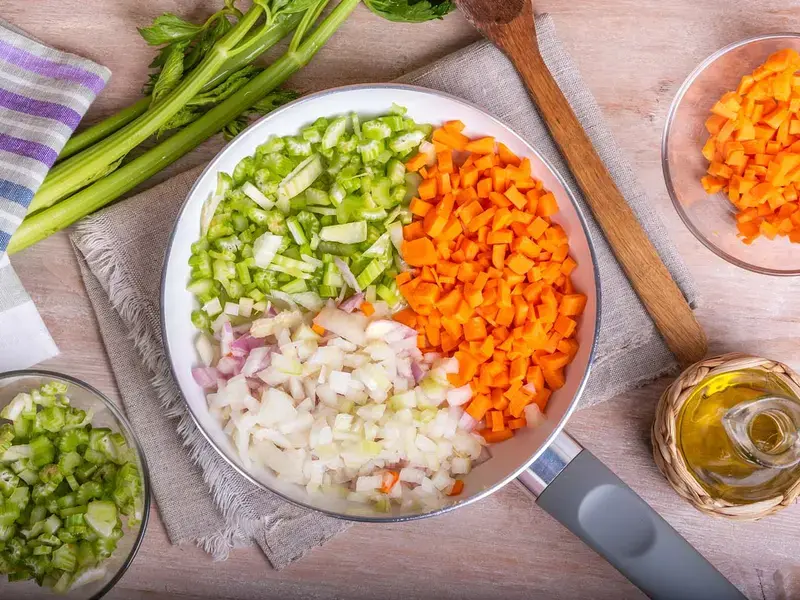
Mirepoix (pronounced meer-pwah) is a classic French flavor base made from a mixture of diced vegetables gently cooked in butter or oil to release their sweetness. Traditionally, it consists of:
- Onions (50%)
- Carrots (25%)
- Celery (25%)
This classic mirepoix ratio (2:1:1) forms the aromatic foundation of sauces, soups, and stews—from chicken stock and beef bourguignon to velvety velouté or demi-glace. Slowly cooked without browning, it imparts a subtle, rounded depth that defines much of traditional French gastronomy.
The choice of onion type can subtly alter the result: yellow onions offer balance and sweetness, while white onions create a milder, cleaner base, and red onions add gentle sharpness and color.
There’s also white mirepoix, a variation used for pale or delicate sauces and stocks. It replaces carrots with leeks or parsnips to maintain a lighter color and more refined taste—ideal for dishes like chicken velouté or cream soups where brightness and clarity matter.
How to Make a Perfect Mirepoix
Crafting a perfect mirepoix is about technique and patience. The goal is not to brown the vegetables but to gently coax out their natural sweetness and aroma.
- Dice evenly: Cut all vegetables into uniform small cubes to ensure even cooking. For soups or sauces that will be strained, a rougher chop is acceptable; for sauces or stews where the vegetables remain visible, precision matters.
- Heat fat gently: Use butter or oil over medium-low heat—just enough to coat the bottom of the pan.
- Cook slowly: Add onions first to soften, then carrots and celery. Stir occasionally, cooking for 10–15 minutes until the vegetables are tender and translucent, not browned.
- Layer flavor: Add herbs such as thyme, bay leaf, or parsley stems for a more aromatic foundation.
For professional kitchens, mirepoix is often prepared in bulk as part of mise en place, ready to become the flavor backbone of stocks, sauces, and braises throughout the day.
Mirepoix vs Other Aromatic Bases
Many cuisines share the same principle of building flavor from a slow-cooked aromatic base, though ingredients vary by region.
- Soffritto (Italy): Similar to mirepoix but typically sautéed in olive oil and may include garlic, parsley, or pancetta. It forms the essence of Italian sauces and risottos.
- Holy Trinity (Cajun and Creole cuisine): A Southern U.S. adaptation using onion, celery, and bell pepper instead of carrot, adding brightness and spice.
- Refogado (Portugal and Brazil): A mixture of onions, garlic, and tomatoes, often used for stews and seafood.
- Suppengrün (Germany): A combination of leek, carrot, and celeriac, emphasizing a fresher, herbal note.
Each of these flavor bases serves the same purpose—to create harmony between sweetness, acidity, and aroma. The difference lies in the regional interpretation of basic flavors and the fat used to carry them, whether butter, olive oil, or animal fat.
Recipes That Use Mirepoix
Once you’ve mastered mirepoix, you’ll start to notice it everywhere—often as the quiet foundation behind complex dishes. Some classic examples include:
- Soups and broths: Chicken consommé, vegetable soup, or lentil soup begin with mirepoix for depth.
- Sauces: French mother sauces like velouté, espagnole, and béchamel all rely on this aromatic base.
- Braised meats: Dishes such as coq au vin or beef bourguignon start with mirepoix to enrich the cooking liquid.
- Stocks: A roasted mirepoix (with lightly browned vegetables) enhances dark stocks for gravies and reductions.
For modern reinterpretations, chefs experiment with different types of onion or swap celery for fennel to create subtler, more aromatic versions. A touch of tomato paste can be added for color and umami in heartier recipes, while clarified butter lends polish to lighter ones.
Simple yet sophisticated, mirepoix embodies the philosophy of classical French cooking: layering flavor from the ground up. It teaches that great cuisine doesn’t depend on complexity, but on precision and respect for ingredients. Whether you’re preparing a rustic soup or an elegant sauce, mastering mirepoix means mastering the art of building flavor—one finely diced vegetable at a time.