
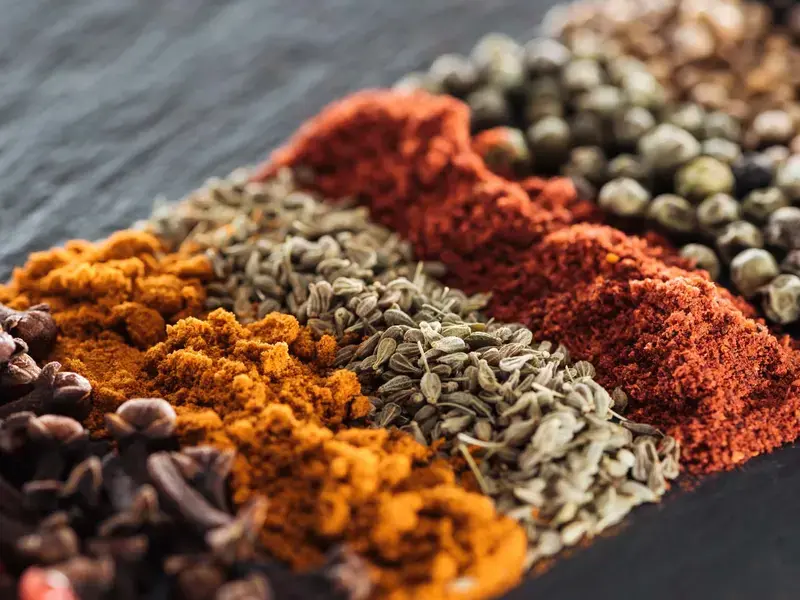
Each seed, pod, or powder adds more than flavor—it tells a story of region, season, and tradition. From the comforting warmth of garam masala to the subtle tang of mustard seeds, the spices of India are essential to creating dishes that balance heat, aroma, and depth.
Essential Indian Spices and Their Flavor
To understand Indian cooking, it helps to know the core spices that appear in countless recipes. Though India’s spice repertoire spans hundreds of varieties, these are considered the essentials:
- Cumin (Jeera): Earthy, smoky, and slightly bitter, cumin adds depth to curries, rice dishes, and lentils. Toasting the seeds releases their full aroma.
- Coriander (Dhania): Warm, citrusy, and mild, coriander balances spicier ingredients and appears in both whole and ground form.
- Turmeric (Haldi): Known for its vibrant golden hue and earthy, slightly peppery flavor, turmeric also lends subtle bitterness and is a cornerstone of health-focused cooking.
- Cardamom (Elaichi): Sweet, floral, and intensely aromatic, cardamom adds luxury to both savory curries and desserts. Green cardamom is delicate, while black cardamom brings a smoky depth.
- Cloves (Laung): Pungent and warm with sweet-spicy notes, cloves provide intensity in biryanis and masala sauces.
- Cinnamon (Dalchini): Sweet, woody, and aromatic, cinnamon offers balance in spice blends, desserts, and meat stews.
- Mustard seeds (Sarson): Tiny but powerful, they release a nutty sharpness when fried in oil—an essential step in South Indian cooking.
These seven—often referred to as the “seven Indian spices”—form the base of countless regional dishes, sometimes joined by fenugreek, fennel, or asafoetida for nuance.
How to Combine and Cook with Them
The art of using Indian cooking spices lies not just in quantity but in timing and balance. Each spice reacts differently to heat and oil, which is why traditional Indian recipes layer them with precision.
- Tempering (Tadka): Whole spices such as cumin, mustard, or fenugreek are added to hot oil at the start of cooking to release their essential oils. This infuses the base of the dish—whether lentils, vegetables, or rice—with layered aroma.
- Dry roasting: Toasting spices before grinding enhances flavor complexity and color, a step often used in creating Indian spice blends like garam masala.
- Blooming in sauce: Ground spices, when added mid-cooking, deepen the richness of curries, soups, and sauces. For example, the spices in a masala sauce are first sautéed with onion, garlic, and tomato to build flavor.
Combining spices is both technique and intuition. Coriander tempers heat, cumin grounds sweetness, and cardamom or cinnamon lift savory dishes with aromatic contrast. In fine dining, chefs often reinterpret these combinations with precision—creating deconstructed curries, spice-infused oils, or contemporary masala reductions.
Regional Blends and Uses
India’s vast geography gives rise to an incredible variety of regional spice blends, each defining its own culinary identity.
- Garam Masala (North India): A warm, aromatic mix typically including cumin, coriander, cardamom, cloves, cinnamon, and black pepper. Used to finish dishes, it enhances gravies and stews without overpowering.
- Sambar Masala (South India): A tangy, fiery blend featuring mustard seeds, curry leaves, fenugreek, and tamarind. It’s key in lentil-based stews and vegetable curries.
- Panch Phoron (East India): A mix of five whole spices—fenugreek, nigella, cumin, mustard, and fennel—tempered in oil to flavor dishes like dal or stir-fried vegetables.
- Goda Masala (Maharashtra): A mild, fragrant mix with coconut, sesame, and bay leaf, offering a sweet, roasted profile distinct from other masalas.
- Rasam Powder (Tamil Nadu): Combines black pepper, cumin, and coriander for a peppery, soup-like dish served with rice.
Some chefs are reviving India’s forgotten ingredients, rediscovering spices like long pepper (pipli), stone flower (dagad phool), or black kokum to add depth and authenticity to modern plates. These rare spices, once central to royal and temple cuisines, are making a comeback in both traditional and contemporary Indian gastronomy.
Storage and Quality Tips
Because Indian spices are rich in volatile oils, their freshness directly affects the flavor of your cooking.
- Whole spices retain potency longer than ground ones—store them in airtight glass jars away from sunlight.
- Grind fresh in small batches to preserve aroma and prevent bitterness.
- Avoid moisture: Even a hint of humidity can dull their flavor or cause clumping.
- Shelf life: Whole spices stay vibrant for up to two years, while ground blends like garam masala are best used within six months.
For chefs and home cooks alike, sourcing matters. High-quality, single-origin spices—especially those harvested in India’s spice-growing regions like Kerala, Karnataka, and Rajasthan—offer richer aroma and color, transforming even the simplest dish.
From humble kitchens to haute cuisine, Indian food spices continue to define culinary creativity through their layered complexity. Whether you’re crafting a velvety masala sauce or experimenting with rediscovered herbs and roots, these spices capture India’s essence—where memory, craft, and flavor come together in every fragrant spoonful.