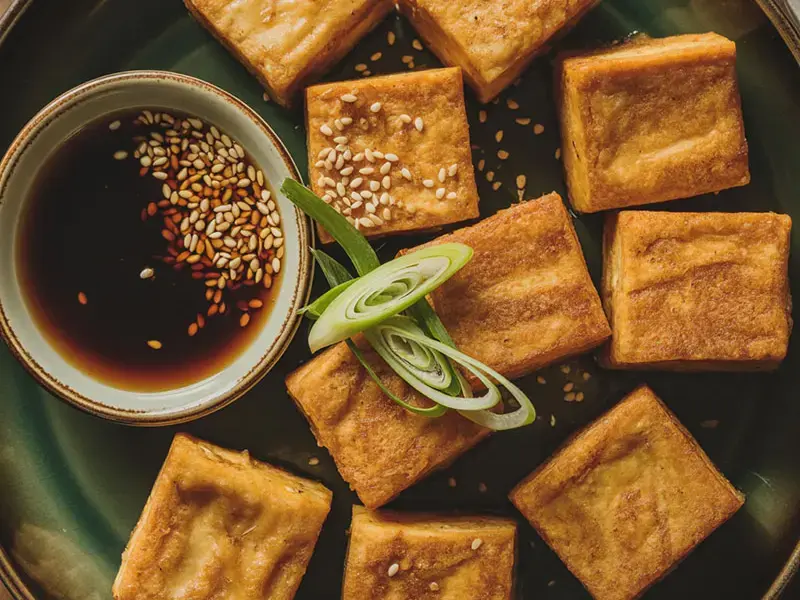
If you have ever cooked tofu and been disappointed by a soggy, bland result, the problem likely started before the pan was even hot. Tofu is packed with water, and that moisture stands between you and the golden, flavorful pieces you see in restaurant dishes. Learning how to press tofu properly helps you achieve better texture, deeper seasoning, and more satisfying cooking results.
Below is a practical guide to pressing tofu: why it matters, how long to press tofu, step-by-step methods, and when alternatives might work.
Why pressing tofu matters
There are many types of tofu, but all tofu is made by coagulating soy milk and pressing the curds into blocks. When tofu holds excess moisture, several problems arise:
- Poor browning: Water on the surface creates steam, preventing direct contact with the hot pan. The result is pale, soft tofu that never develops a crisp exterior.
- Weak flavor absorption: Marinades and seasonings cannot penetrate tofu that is already saturated with water. Pressed tofu acts like a sponge, drawing in sauces and spices far more effectively.
- Compromised texture: Unpressed tofu tends to be mushy and fragile. Removing water firms up the structure, giving you tofu that holds its shape during cooking.
Pressing tofu is not about removing all moisture. The goal is to extract enough water, so the tofu can brown properly, absorb flavor, and develop a texture that works for your recipe.
How long should tofu be pressed?
The ideal pressing time depends on your recipe, the firmness of your tofu, and how much texture change you want. For most cooking purposes, 15 to 30 minutes of pressing is sufficient. This amount of time removes enough moisture to improve browning and flavor absorption without making the tofu dry or crumbly.
If you are short on time, even 10 minutes of pressing makes a noticeable difference. The first few minutes release the most water, so a brief press is better than none at all. For recipes where you want a very firm, almost meaty texture, such as heavily marinated pieces, you can press for 45 minutes to an hour.
Firm and extra-firm tofu are the best candidates for pressing. Silken and soft tofu are too delicate for traditional pressing and will break apart under weight. These varieties are better suited for use in soups, smoothies, and desserts where their creamy texture is an asset.
How to press tofu step by step
The method for pressing tofu is straightforward, whether you use a dedicated tool or improvise with kitchen basics.
Using a tofu press
A tofu press is a simple device designed to apply even, consistent pressure. Most models consist of two flat plates with a tightening mechanism.
- Drain the tofu: Remove the block from its packaging and pour off the liquid.
- Place in the press: Set the tofu between the plates and tighten the mechanism according to the manufacturer's instructions.
- Wait and drain: Let the press work for 15 to 30 minutes. Some liquid will collect in the base or drip out. For longer pressing, empty the collected water periodically and re-tighten if the pressure loosens.
- Remove and use: Once pressed, the tofu is ready to slice, marinate, or cook.
How to press tofu without a press
When making tofu at home, you can achieve excellent pressed results without any special equipment by using common kitchen items.
- Wrap the tofu: Drain the block and wrap it in a clean kitchen towel or several layers of paper towels.
- Set up a flat surface: Place the wrapped tofu on a cutting board, baking sheet or plate.
- Add weight: Set another cutting board, plate, or baking sheet on top of the tofu. Then top with canned goods, a heavy skillet, or a stack of cookbooks. Aim for steady, even pressure rather than excessive force.
- Press and check: Leave for 15 to 30 minutes. If the towels become saturated, replace them and continue pressing.
- Unwrap and cook: Remove the weights, unwrap the tofu, and proceed with your recipe.
Alternatives to pressing tofu
Pressing is the most common approach, but it is not the only way to remove moisture from tofu.
Can you boil tofu instead of pressing it?
Boiling tofu in salted water is a technique borrowed from some Asian cuisines. Simmering tofu for 10 to 15 minutes firms the protein structure and seasons the block throughout.
Boiling does not remove water in the same way pressing does, but it changes the texture, making tofu chewier and slightly more resilient. After boiling, you can still press briefly to remove surface moisture before cooking.
Freezing and thawing tofu is another alternative. Ice crystals form within the block, and when thawed, the water drains away easily, leaving a spongy, porous texture that absorbs marinades exceptionally well. Frozen-then-thawed tofu has a chewier, almost meaty quality that some cooks prefer for grilling or hearty stir-fries.
Best uses for pressed tofu
Pressed tofu is great in any recipe where browning, texture, or flavor absorption matters.
- Stir-fries: Cubed pressed tofu develops crisp edges and holds up to high heat and tossing.
- Pan-frying and searing: Slabs of pressed tofu can be seared like a steak, forming a golden crust while staying tender inside.
- Baking and roasting: Pressed tofu crisps in the oven without releasing pools of water onto the baking sheet.
- Marinating: Pressed tofu drinks up marinades, sauces, and spice rubs far more effectively than unpressed blocks.
- Grilling: The firmer texture holds together on the grill grates and chars beautifully.
Understanding how pressing tofu affects texture, flavor, and cooking turns a frustrating ingredient into a reliable one. A few minutes of preparation make the difference between tofu that disappoints and tofu that delivers crisp, flavorful, and satisfying bites.