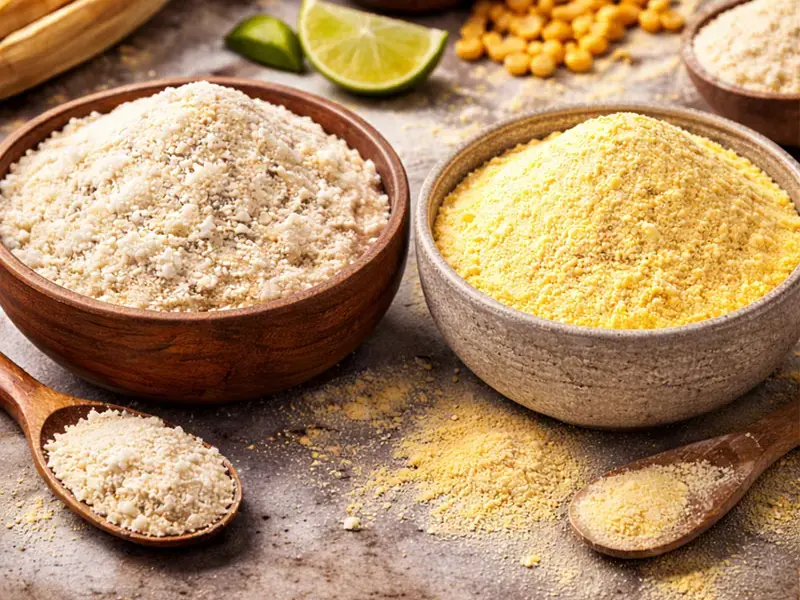
The confusion between masa harina vs corn flour trips up home cooks regularly, and the similar appearance of these two ingredients makes the mix-up understandable. In fact, this is similar to the confusion regarding the difference between polenta and cornmeal. Both masa harina and corn flour start as dried corn kernels and end as pale, powdery flours.
Below is a complete guide to masa harina vs corn flour: what makes them different, how each is produced, their culinary applications, and whether substitution is possible.
What is Masa Harina?
Masa harina is a flour made from dried corn that has undergone nixtamalization. The Spanish name translates as “dough flour”. When mixed with water, masa harina becomes masa, a pliable dough.
The flavor of masa harina is distinctive and complex. The nixtamalization process develops earthy, slightly tangy notes with a depth that plain corn flour cannot replicate. Texturally, masa harina produces doughs that are smooth, pliable, and cohesive. The treated corn absorbs water readily and forms gluten-free doughs that hold together without crumbling, making it possible to press thin tortillas or wrap tamale filling without tearing
What is Corn Flour?
Corn flour is simply dried corn ground into a fine powder without any alkaline treatment. The corn is dried, milled, and packaged in a process that preserves the kernel's natural characteristics without chemical transformation.
The flavor of corn flour is mild and straightforward, leaning toward sweet, corny, but without the complex, developed character of nixtamalized products. In terms of texture, corn flour does not form cohesive doughs when mixed with water alone. Without the structural changes that nixtamalization creates, ground corn lacks the binding properties necessary for tortilla-making.
The Key Difference: Nixtamalization
The fundamental distinction between masa harina vs corn flour comes down to one ancient process: nixtamalization. This technique, developed by Mesoamerican civilizations thousands of years ago, transforms corn both chemically and nutritionally.
Nixtamalization involves cooking dried corn kernels in water mixed with an alkaline substance, traditionally calcium hydroxide. The corn simmers in this limewater, then soaks for hours or overnight. Afterward, the kernels are rinsed to remove the loosened hulls and excess lime, then ground into masa.
This process first softens the corn's tough outer hull, making it easier to remove and grind. Second, it partially breaks down the corn's proteins and starches, creating the pliable texture that allows masa to form cohesive doughs. Third, it releases niacin (vitamin B3) that would otherwise remain chemically bound and unavailable for human absorption.
What is Masa Harina Made Of?
Understanding what is masa harina made of requires following the production process from field to package. It starts with dried field corn, typically white or yellow dent corn varieties. These are not sweet corn varieties, but field corn, which is starchier and harvested after the kernels dry on the stalk.
So, how do you make masa harina? Commercially, manufacturers cook the dried corn in water containing calcium hydroxide, maintaining specific temperatures and timings to achieve consistent results. After cooking, the corn soaks until the hulls loosen and the kernels absorb the alkaline solution. Thorough rinsing removes excess lime and the softened hulls.
To create shelf-stable masa harina, the rinsed kernels are dried and ground into flour. When home cooks add water to corn masa flour, they are essentially reconstituting it.
Masa Harina vs Corn Flour: Side-by-Side Comparison
- Masa harina undergoes nixtamalization; corn flour is simply ground dried corn without the alkaline treatment.
- Masa harina has complex, earthy, slightly tangy notes developed through nixtamalization. Corn flour tastes mildly sweet and straightforwardly corny.
- When hydrated, Masa harina forms a smooth, pliable, cohesive dough. Corn flour becomes crumbly and does not bind properly.
- Uses: Masa harina is used to make tortillas, tamales, pupusas, gorditas, and other Latin American corn-based dishes. Corn flour thickens sauces, creates coatings, and appears in baked goods like cornbread.
- Profile: Masa harina provides bioavailable niacin thanks to nixtamalization. Plain corn flour's niacin remains largely inaccessible.
- Variations: Both come in white and yellow varieties, depending on the corn used.
How to Use Masa Harina
Masa harina's primary purpose is to create masa dough for traditional Latin American preparations.
- Tortillas: Mix masa harina with warm water and a pinch of salt until a smooth, Play-Doh-like dough forms. Press into thin rounds and cook on a hot, dry griddle.
- Tamales: Masa for tamales includes fat (traditionally lard) and broth beaten into the dough until light and spreadable. This enriched masa is spread on corn husks, filled with meat, cheese, or other fillings, wrapped, and steamed.
- Pupusas: These Salvadoran stuffed corn cakes use masa shaped around fillings like cheese, beans, or pork, then griddled until crispy outside and molten within.
- Gorditas and sopes: Thicker corn cakes made from masa, cooked on a griddle, then split or topped with various fillings.
- Thickening: Masa harina can thicken soups and stews in Mexican cuisine, adding body and subtle corn flavor to dishes like pozole or chili.
How to Use Corn Flour
Corn flour serves different culinary purposes than masa harina.
- Baked goods: Cornbread, corn muffins, and corn pancakes rely on corn flour for flavor and texture. Combined with wheat flour and leavening, corn flour creates tender, crumbly baked goods with distinctive corn flavor.
- Thickening: Corn flour thickens sauces, gravies, and soups, though it requires cooking to remove raw starch flavor.
- Coating: Dredging proteins in corn flour before frying creates crispy, golden crusts with subtle sweetness.
- Polenta and porridge: Coarser grinds of corn (cornmeal) make polenta, while finer corn flour yields smoother porridge.
Can You Substitute Masa Harina for Corn Flour (or Vice Versa)?
The short answer is no. Attempting tortillas with corn flour yields a crumbly dough that does not hold together. The lack of nixtamalization means the structural transformation necessary for cohesive masa never occurred, making the corn vs flour tortilla essentially two different things. It's the same reason piadina and tortilla are different, too
Using masa harina in cornbread or as a thickener technically works, but the results differ noticeably. The distinctive nixtamalized flavor changes the character of dishes designed around plain corn flavor, and the different protein structure affects texture in baked goods.
For authentic results, use each product for its intended purpose. If a recipe calls for masa harina, seek it out rather than attempting a substitution. The unique properties developed through nixtamalization are irreplaceable, and they make all the difference in traditional corn-based cooking.