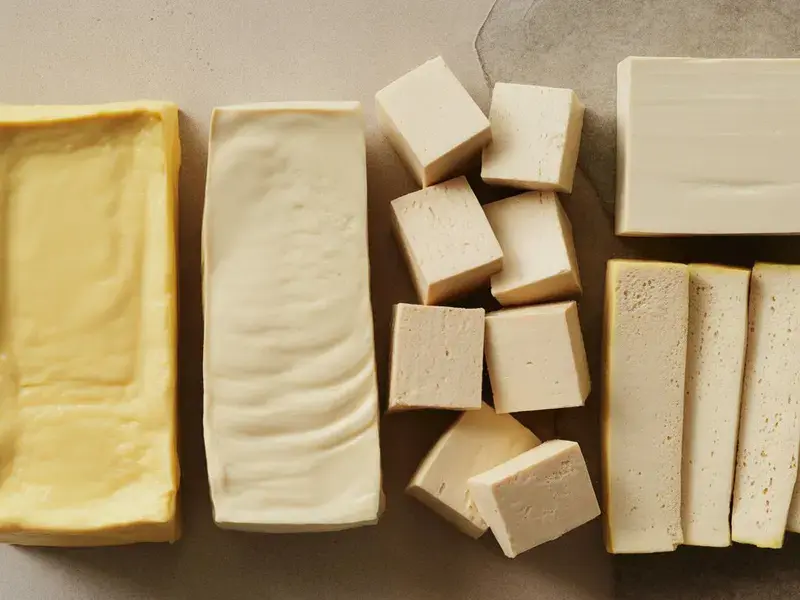
If you have ever stood in front of the refrigerated case wondering which tofu to buy, you are not alone. There are several different types of tofu, from custard-soft silken blocks to dense, grill-ready slabs, and each one behaves differently in the pan. Understanding the main tofu varieties—how they are made, how they feel, and how they cook—makes it much easier to pick the best type of tofu for miso soup, stir-fries, braises, desserts, and more.
Below is a practical guide to what tofu is, the main styles you will find in stores, and how to match each one to the right recipe.
What Is Tofu and How Is It Made?
Tofu is a fresh, plant-based protein made from soy milk that has been coagulated and set, a process that is often compared to cheesemaking.
The basic steps are:
- Soybeans are soaked, ground, and cooked.
- The mixture is strained to produce soy milk.
- A coagulant (such as nigari, gypsum, or lemon juice) is added to form curds.
- The curds are gently ladled into molds and pressed to varying degrees, depending on the style of tofu.
The firmness of tofu is largely determined by how much water is retained and how tightly the curds are pressed. Less pressing and more moisture give you silken or soft tofu; more pressing and less moisture give you firm, extra-firm, and super-firm tofu.
If you are curious about the process in more detail, there are step-by-step guides that show you how to make tofu at home, from soaking and grinding the beans to pressing the curds into a block you can slice and cook.
Fresh Tofu Varieties
Most tofu you find in the refrigerated section is “fresh” tofu, sold in water-packed blocks. These are the styles you will use most often for everyday cooking.
Silken Tofu
Silken tofu is the most delicate variety. It has a custard-like, spoonable texture and is usually sold in shelf-stable cartons or small tubs. It is not pressed in the same way as block tofu, so it contains more water and has a smooth, almost pudding-like structure.
Use silken tofu when you want:
- Smooth soups and sauces
- Desserts like puddings or mousses
- Creamy dressings and dips
- Gently set dishes like chawanmushi-style preparations
Because it breaks easily, you do not usually pan-fry silken tofu directly unless you handle it very carefully. If you want to explore what it can do beyond miso soup and simple cold dishes, look at collections of silken tofu recipes that turn it into everything from whipped toppings to chilled appetizers.
Soft Tofu
Soft tofu is slightly firmer than silken tofu but still delicate. It holds its shape better when cut but remains tender and moist inside.
Soft tofu is ideal for:
- Miso soup, especially if you like tofu pieces that are tender and gently set
- Light braises and hot pots
- Gently simmered dishes where tofu should absorb broth without crumbling completely
If you are wondering about the best type of tofu for miso soup, soft tofu is a classic choice, though some cooks prefer very tender firm tofu for a slightly more substantial bite.
Firm and Extra-Firm Tofu
Firm and extra-firm tofu are the workhorses of many savory dishes. They have been pressed to remove more water, so they hold together well when sliced, cubed, or pan-fried.
Firm or extra-firm tofu works well for:
- Stir-fries
- Pan-frying and shallow-frying
- Grilling (with proper marinating and handling)
- Baking and roasting
- Cubes added to hearty soups and stews
Firm tofu has a bit more moisture and a softer bite; extra-firm holds its shape better and is easier to crisp up in the pan.
Super-Firm / High-Protein Tofu
Super-firm or high-protein tofu is very dense and compact, with most of the water pressed out. It often comes vacuum-packed rather than in tubs of water.
This style is excellent for:
- Slicing into cutlets or steaks
- Cubes that need to hold up in aggressive stir-fries
- Dishes where you want a strongly defined, “meaty” tofu texture
Because it is so dense, it absorbs marinades a bit more slowly, but it browns beautifully and can be a good base for recipes where tofu is the central protein on the plate.
Processed and Flavored Tofu
In addition to fresh tofu, you will often find processed or pre-flavored varieties that add smoke, fermentation, or seasoning. These are useful when you want depth of flavor with less prep.
Pressed and Smoked Tofu
Pressed tofu has been squeezed beyond the typical firm stage and often contains added seasoning or smoke. Smoked tofu in particular has a chewy, almost ham-like texture and a pronounced smoky aroma.
Use pressed or smoked tofu for:
- Sandwiches and wraps
- Salads and grain bowls
- Stir-fries where you want instant flavor without marinating
- Cold platters and appetizers
Because it is already seasoned, you can often slice and eat it without additional cooking, or quickly sear it to add color and warmth.
Fermented Tofu
Fermented tofu, sometimes called “fermented bean curd” or “tofu cheese,” is tofu that has been aged in brine with seasonings. It has a strong, funky aroma and a creamy, spreadable texture.
It is typically used:
- As a condiment in small amounts
- Stirred into sauces and marinades for depth and umami
- As a flavoring for stir-fried greens and vegetables
In some regional cuisines, fermentation goes further to create stinky tofu, a strongly scented specialty that is often deep-fried and served with pickles or sauces.
How to Choose the Right Tofu for Your Recipe
Choosing among the types of tofu is mostly about matching texture and cooking method. A few rules of thumb help:
- For soups and delicate dishes: use silken or soft tofu, especially in miso soup or gentle broths where you want tender cubes.
- For stir-fries and pan-frying: choose firm, extra-firm, or super-firm tofu, which will hold their shape and brown well.
- For grilling or baking: firm through super-firm blocks are best, especially if you plan to marinate them first.
- For smooth sauces and desserts: reach for silken tofu, which blends into a velvety purée.
- For ready-to-eat or strongly flavored applications: pressed, smoked, or fermented tofu can deliver concentrated flavor with minimal prep.
When you want layers of flavor, marinating tofu before cooking is especially effective. A good marinated tofu recipe will show you how to combine soy sauce, aromatics, and acids so that tofu absorbs flavor all the way to the center instead of just tasting seasoned on the surface.
Storage, Pressing and Cooking Tips
Handling tofu well makes as much difference as choosing the right type.
Storage
- Keep unopened tofu in the refrigerator until the date on the package.
- After opening water-packed tofu, store it submerged in fresh water in the fridge and change the water daily; use within a few days.
- Silken tofu in aseptic cartons is usually shelf-stable until opened; refrigerate and use quickly once opened.
Pressing
Pressing removes excess moisture from firm and extra-firm tofu, helping it brown better and absorb marinades.
- Wrap the block in a clean towel or paper towels.
- Place on a plate and top with a flat board or another plate.
- Weigh it down with cans or a heavy pan and press for 15–30 minutes.
Super-firm tofu often needs little or no pressing, while silken and soft tofu should not be pressed at all.
Cooking
- Dry the surface well before frying or roasting so tofu can sear rather than steam.
- Do not overcrowd the pan; give pieces space to brown.
- Season generously—either by marinating or by adding sauces, spices, and aromatics during cooking—since tofu itself is mild.
- Add delicate tofu (silken or soft) toward the end of cooking soups or braises so it warms through without breaking apart.
Once you understand the main types of tofu, how they are made, and how they behave in the pan, it becomes much easier to decide what to use where. Silken in soups and desserts, soft in miso, firm and extra-firm in stir-fries and grills, super-firm when you want a dense, centerpiece protein, and processed or fermented tofu for bold, ready-made flavor—all of them have a place in a balanced, varied kitchen.