
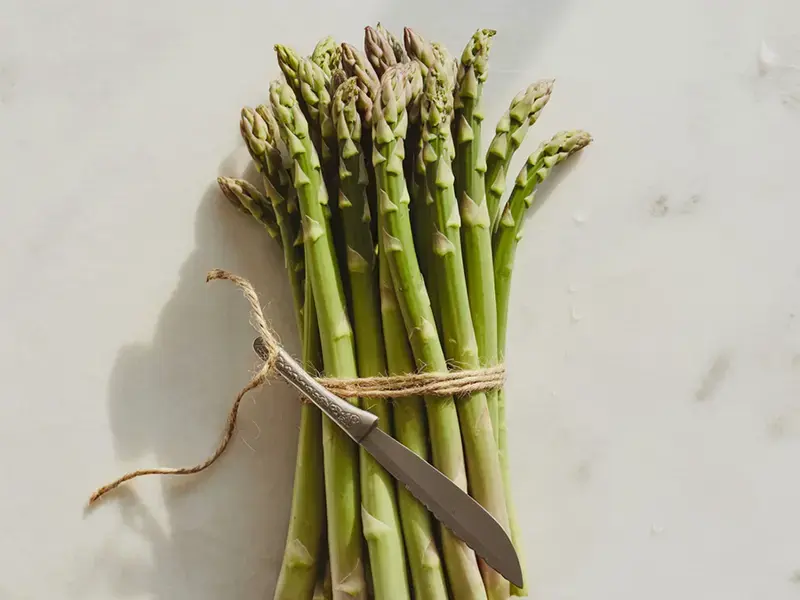
Learning how to clean asparagus is an essential kitchen skill that ensures this spring vegetable reaches your plate at its best. Proper asparagus preparation turns this seasonal favorite into something truly enjoyable. Whether you are roasting spears for a simple side dish, blanching them for a salad, or incorporating asparagus into a more complex preparation, proper cleaning establishes the foundation for success.
Below is a step-by-step guide on how to clean asparagus before cooking, with tips on selecting the freshest spears and how to store them after preparation.
Step 1: Rinse Under Cold Water
The first step in answering the common question of how do you clean asparagus, involves removing the soil and sand that cling to the stalks. Asparagus is grown in raised beds of sandy, well-drained soil, and harvesting involves cutting spears at or below ground level. This means dirt often adheres to the lower portions of the stalks and can work its way into the tightly closed tips.
Begin by placing your asparagus bunch under cold running water. Hold the spears with tips pointing down, allowing water to flow over the stalks and carry away loose dirt. Then reverse, holding the cut ends and letting water run over the tips, gently agitating them with your fingers to dislodge any particles trapped between the scales.
For particularly sandy asparagus, or when working with large quantities, fill a bowl with cold water and submerge the spears completely. Swish them gently, letting the dirt settle to the bottom, then lift the asparagus out rather than pouring off the water. Repeat if necessary until the water remains clear. After rinsing, shake off excess water and lay the asparagus on a clean kitchen towel or paper towels.
Step 2: Trim the Woody Ends
Understanding how to clean and prepare asparagus includes removing the tough, fibrous ends, which become unpleasantly chewy regardless of the cooking method or asparagus food pairings. Asparagus stalks naturally transition from tender at the tip to increasingly woody toward the base. Locating this division point ensures you serve only the enjoyable portion.
The traditional method involves holding a single spear with both hands and bending it gently until it snaps. The asparagus naturally breaks at the point where tenderness gives way to toughness, providing a built-in guide to trimming. This technique works well but produces uneven lengths and generates more waste than necessary.
A more efficient approach involves snapping one spear to identify the approximate breaking point, then using a knife to cut the remaining spears at that same level. Lay the bundle flat, align the tips, and make a single cut through all stalks at once. This ensures uniform lengths for even cooking and attractive presentation while minimizing waste. Typically, you will remove between one and two inches from the base of each spear, though this varies with their freshness and thickness.
Do not discard the trimmed ends. While too tough to eat whole, they contain flavor that's useful for vegetable stocks, asparagus soup, or purées where texture matters less than taste. Store them in a freezer bag for future use.
Step 3: Peel Thick Stems (Optional)
When learning how to clean asparagus before cooking, you will encounter differing opinions on peeling. Thin asparagus spears rarely benefit from peeling, as their skin is tender enough to eat without any fibrous quality. Thick spears, however, often improve dramatically after the removal of the outer layer of the lower portion.
To peel asparagus, lay each spear flat on a cutting board. Use a vegetable peeler to remove a thin layer of skin from just below the tip down to the trimmed end. Work around the entire circumference of the stalk, rotating it as you go. Apply gentle pressure so that you remove only the outer layer, not cut deeply into the flesh.
How to Choose Fresh Asparagus for Easy Cleaning
Selecting high-quality asparagus at the market makes cleaning easier and produces better results in the finished dish. Fresh asparagus requires less trimming, tastes sweeter, and has a more tender texture throughout.
Look for stalks that are firm and straight, with smooth skin free from wrinkles or shriveling. The tips should be tightly closed and compact. When tips begin opening or look feathery, the asparagus has passed its prime. The color should be vibrant, whether bright green, purple, or creamy white, depending on the asparagus variety.
Check the cut ends. Freshly harvested asparagus has moist, recently trimmed bases. Dry, cracked, or brown ends indicate age. While you will trim these ends anyway, their condition signals how long the asparagus has been stored and how much freshness remains.
Thickness is a matter of preference, not quality. Thickness is determined by the age and vigor of the plant's root system, not when the spear was harvested. Both thin and thick asparagus can be equally fresh and flavorful. When possible, buy asparagus during its natural season.
How to Store Asparagus After Cleaning
Asparagus is highly perishable and deteriorates quickly at room temperature, converting its natural sugars to starch and losing its sweet, delicate flavor. For short-term storage of already cleaned asparagus, wrap the trimmed spears in a damp paper towel and place them in a plastic bag or airtight container in the refrigerator. Use within one to two days for the best quality.
For uncleaned asparagus that you plan to use within a few days, treat the bunch like fresh flowers. Trim a small amount from the base, then stand the spears upright in a jar or glass filled with an inch of water. Cover loosely with a plastic bag and refrigerate. This method keeps asparagus hydrated and fresh for up to a week. If you have cleaned more asparagus than you can use immediately, blanching and freezing preserves it for longer storage.