Sorry, you need to enable JavaScript to visit this website.
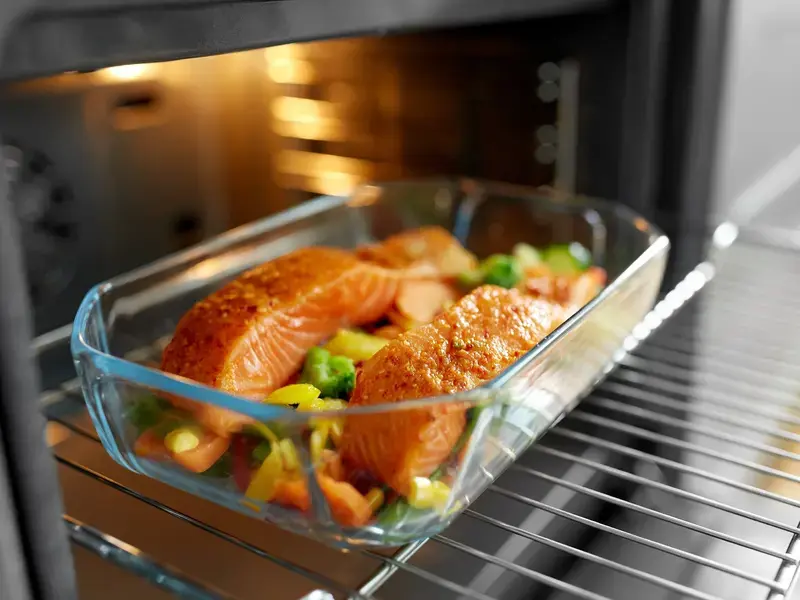
An ovenware dish containing two salmon fillets set on vegetables entering oven

Credit: iStock

Baked Salmon: How to Make it in the Oven

FDL
By
Fine Dining Lovers
Editorial Staff

Baked salmon is one of the easiest and healthiest ways to enjoy this rich, flavorful fish. Whether it’s a weeknight dinner, a summer al fresco meal, or a special occasion, salmon fillets are quick to cook, versatile, and delicious. With just a few ingredients and the right oven settings, you can achieve moist, flaky salmon every time.

Ingredients for Oven-Baked Salmon

  • Salmon fillets (6–8 oz each)
  • Olive oil or butter
  • Salt and freshly ground black pepper
  • Optional: lemon slices, herbs (dill, thyme, parsley)
  • Optional: garlic or other seasonings

How to Bake Salmon in the Oven (Step-by-Step)

Step 1: Preheat the Oven

Choose your temperature based on the result you want:

  • 350°F: Gentle cooking for flaky texture (~25 minutes).
  • 400°F: Balanced cooking for golden color and crispy skin (10–15 minutes).
  • 425°F: Hot & fast cooking for a tender and buttery texture (8–12 minutes).

Step 2: Prepare the Salmon

  1. Pat fillets dry with paper towels.
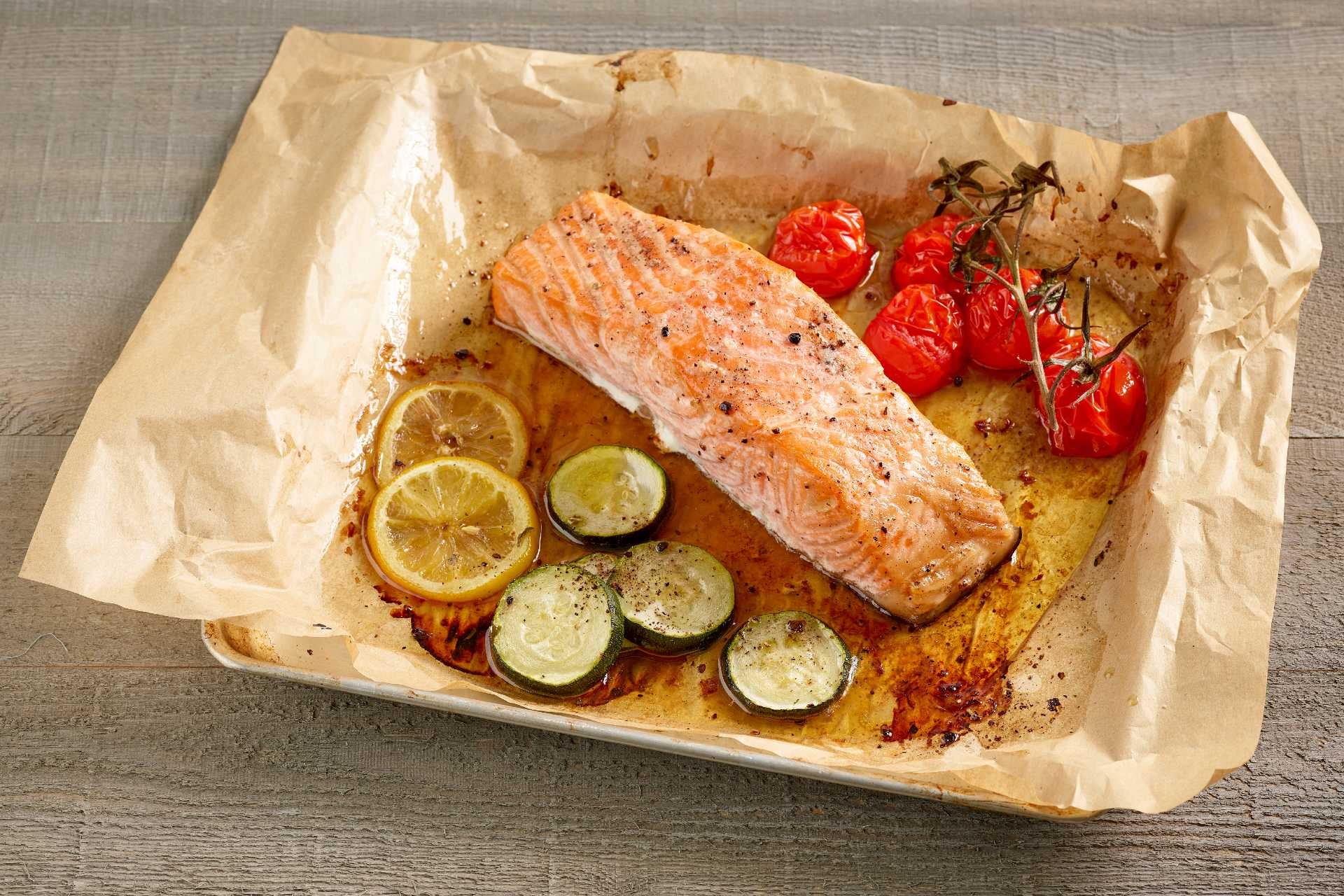
  2. Place on a lightly oiled baking sheet, in foil, or on parchment paper.
  3. Drizzle with olive oil or place a small knob of butter on top.
  4. Season with salt, pepper, and optional herbs or lemon slices.

Tip: Baking in foil or parchment traps moisture and infuses flavors, keeping the salmon tender and moist. 
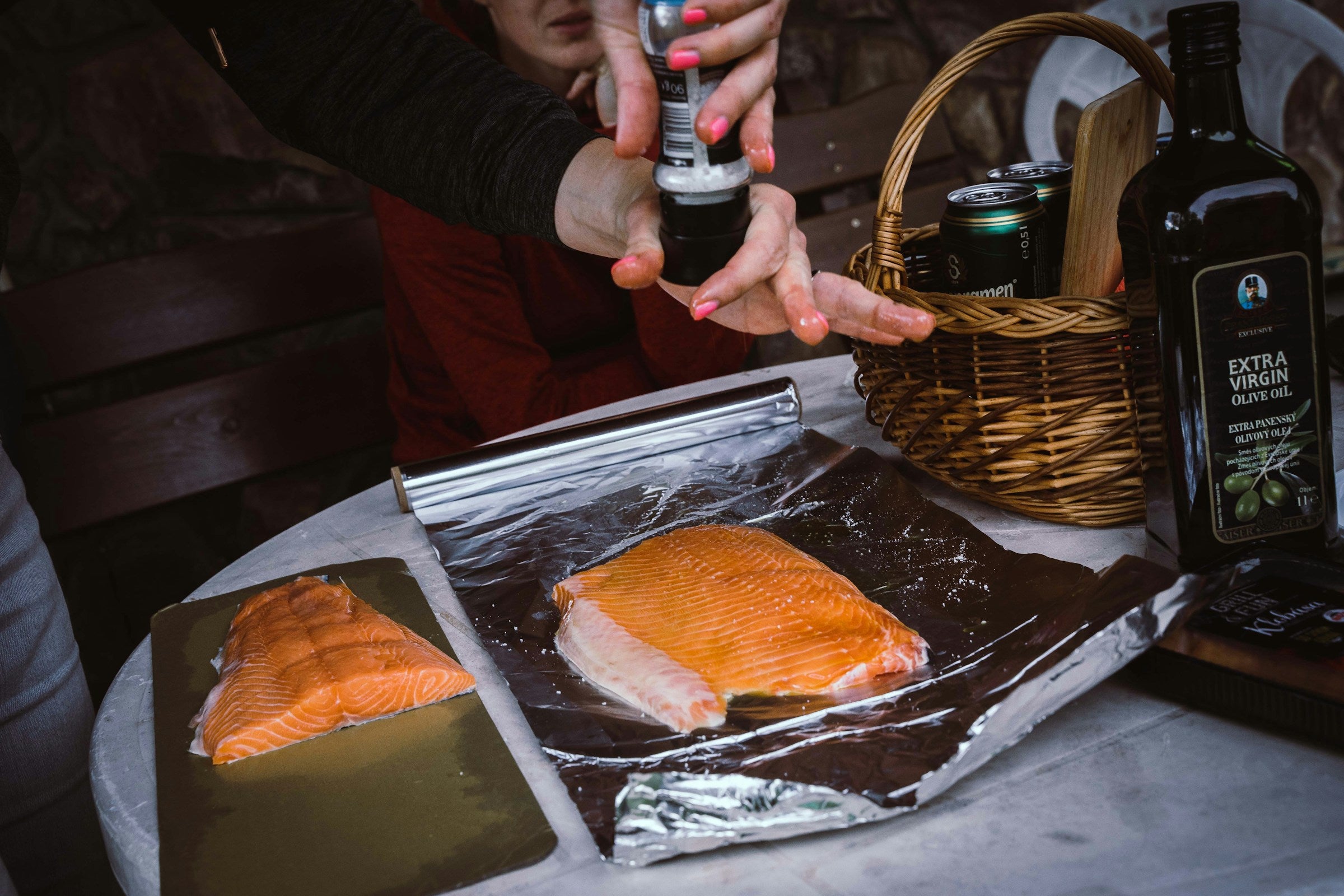
A home cook seasoning a side of salmon set on a piece of foil before baking.

Photo by Michal Balog on Unsplash

Step 3: Bake the Salmon

General rule: 10–12 minutes per inch of thickness at 425°F.

Standard fillets (~1 inch thick):

  • 350°F → ~25 min
  • 400°F → 12–15 min
  • 425°F → 10–12 min

Step 4: Check Doneness

With a thermometer:

  1. 125°F: Medium-rare (preferred by chefs).
  2. 120°F: Wild salmon (as it is leaner and more likely to dry out).
  3. 145°F: USDA-recommended safe temperature.

Without a thermometer:

  1. Flesh flakes easily with a fork.
  2. The center is just opaque but still slightly translucent.

Chef’s tip: The USDA recommends cooking fish to an internal temperature of 145°F . Many people, however, find that salmon is overcooked at that temperature. 

baked-salmon-oven-foil-or-parchment-paper

Seasoning Ideas

Salmon pairs beautifully with a wide variety of herbs and spices while baking like:

  • Classic: Olive oil, salt, pepper, squeeze of lemon
  • Herby: Dill, thyme, rosemary, parsley
  • Creative: Pesto spread, herb butter, or green onion tucked in foil
  • Spiced: Cumin, chili powder, paprika rub

Seasoning not only enhances the flavor of oily fish but also helps the flesh remain firm and preserves its vibrant pink color. 

For a simple approach, salt, pepper, and olive oil are often enough, but you can easily elevate baked salmon with fresh herbs and a squeeze of lemon just before serving. 

The foil or parchment paper method is especially versatile: swap dill for rosemary, add parsley or green onion, spread a layer of pesto, or tuck in lemon slices to infuse the fish with extra freshness.

Foil or Parchment - Which is Better?

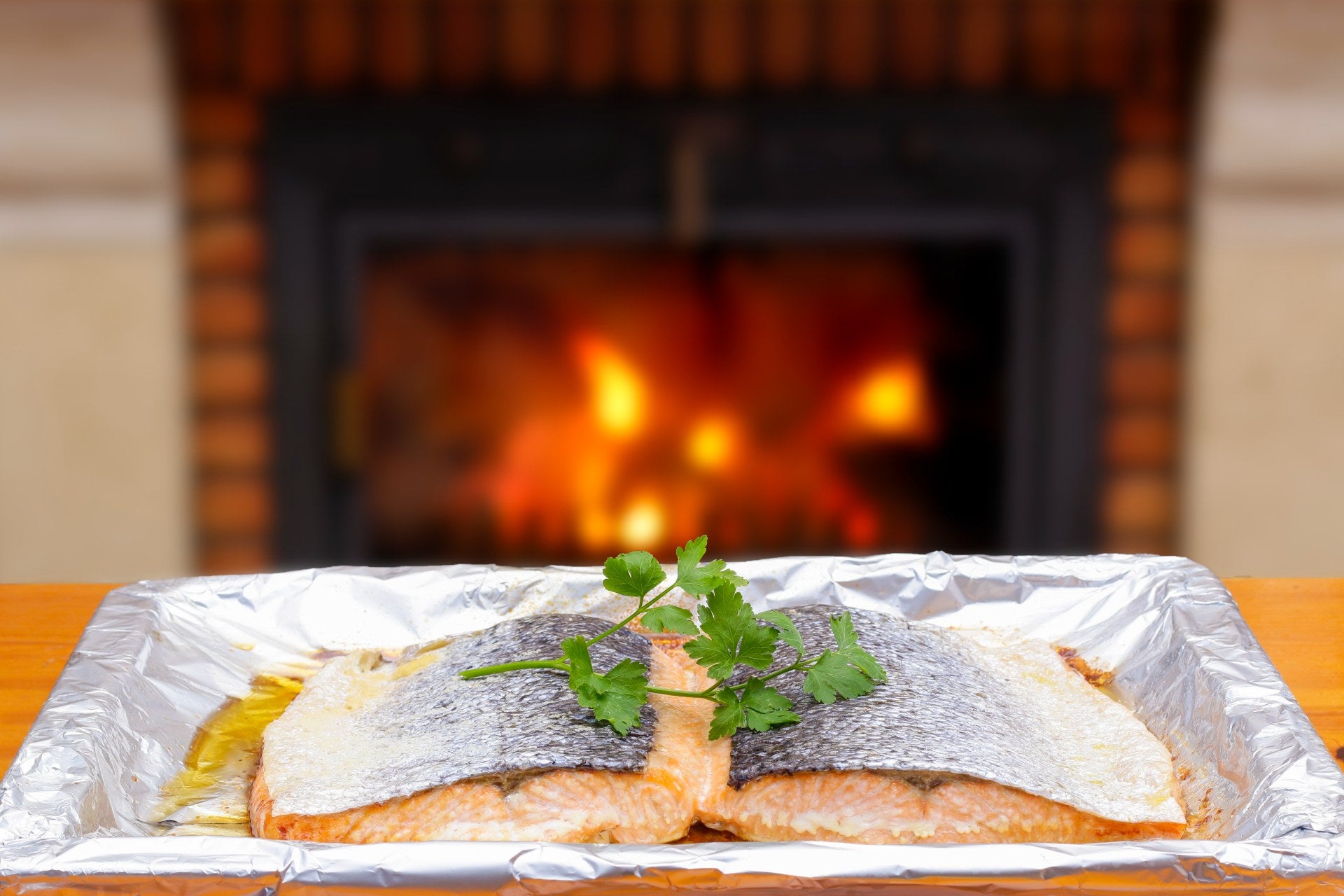
  • Foil: Locks in moisture, infuses flavor, and is easy to clean up.
  • Parchment: Health-conscious alternative (avoids aluminum contact). Simply line foil with parchment before wrapping.

Tip: A 2012 study in the International Journal of Electrochemical Science found that small amounts of aluminum may leach into food during the cooking process. Therefore, if you prefer not to bake with foil due to health concerns, parchment paper is your best option. Line the foil sheet with parchment paper. Place the salmon on the parchment paper so that it does not touch the foil. Wrap the foil packet around the parchment paper and bake according to the instructions.

baked-salmon-oven-how-long

Skin on or Off?

  • Skin on: Most chefs recommend leaving the skin on during cooking. It acts as a barrier between the delicate flesh and heat, helping to retain moisture. You can easily remove it after cooking if you don’t want to eat it.
  • Skin off: If you’re baking salmon in foil or parchment with lots of flavorings, removing the skin first can allow the seasonings to penetrate more evenly. Learn how to easily skin a fillet of salmon with our simple-to-follow technique.

Tip: For oven-baking, skin mostly serves a protective role. It is also delicious served crisp from the oven.

What to Serve with Salmon

And if you’re wondering what to serve with salmon, you have plenty of options – salmon pairs well with a variety of side dishes to make things more exciting. If you want some inspiration, here are just a few ideas:

FAQ's

How long do you bake salmon at 400°F?
About 12–15 minutes for a 1-inch fillet.

Should I bake salmon covered or uncovered?
Uncovered for crisp edges; covered in foil/parchment for extra moisture.

Is salmon better cooked with skin on?
Yes, skin helps protect the flesh. You can remove it after baking if you prefer.

What’s the safest internal temperature for salmon?
The USDA recommends 145°F, although many chefs prefer 120–125°F for optimal tenderness.

Final Takeaway:

Bake salmon 10–12 minutes per inch of thickness at 425°F (220°C) for moist, flaky, flavorful fillets.


How to Plate Salmon Like a Chef

Now you've baked the perfect salmon, learn how to plate your slices like a chef with Fine Dining Lovers' techniques, tricks, and tools that play with textures, colors, and shapes on the plate. Watch the video below.

How to Plate Salmon Like a Chef | Fine Dining Lovers

Join the community
Badge
Join us for unlimited access to the very best of Fine Dining Lovers
Unlock all our articles
Badge
Continue reading and access all our exclusive stories by registering now.

Already a member? LOG IN