
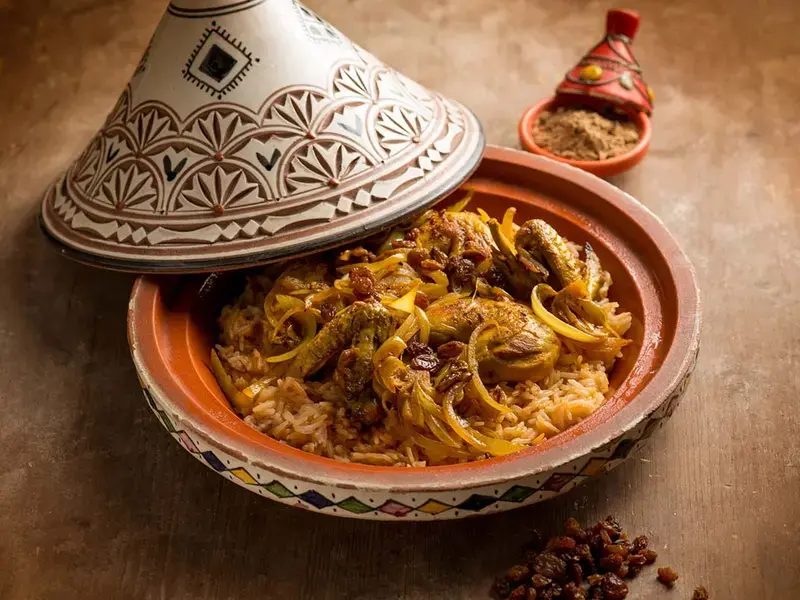
If you have ever wondered how to use a tagine, what to cook in it, or why its shape matters, the answer is that this traditional pot is designed for gentle, slow braising. The base holds meat, vegetables, spices, and a small amount of liquid, while the cone traps steam and sends it back down as condensation, basting the food as it cooks. Once you understand what a tagine is used for, how to prepare it the first time, and how to layer ingredients, you can use it for everything from classic Moroccan stews to simple vegetable dishes that almost cook themselves.
What Is a Tagine and How Does It Work?
A tagine is both a dish and the vessel it is cooked in. The vessel is traditionally made of clay or ceramic and has two main parts:
- A wide, shallow base where the ingredients sit
- A tall, conical lid that fits snugly on top
The shape of the lid is key. As the base heats gently, moisture from the ingredients turns to steam, rises into the cone, cools slightly, and then drips back down. This constant self-basting keeps the food moist and allows you to cook with relatively little added liquid.
Tagines are typically used over low, steady heat—originally over charcoal braziers, and now often on gas stoves with a heat diffuser or in the oven. They are ideal for:
- Tough cuts of meat that benefit from long, slow cooking
- Layered vegetable dishes
- Gently spiced stews that develop flavor over time
The result is a one-pot meal where meat becomes tender, vegetables soak up aromatic juices, and the sauce thickens naturally.
Preparing a Tagine for the First Time
If you are using a new tagine, especially an unglazed clay one, it often needs to be seasoned before its first use. This helps strengthen the pot, reduce the risk of cracking, and seal some of the pores. Always check the manufacturer’s instructions, but a typical process looks like this.
- Soak the tagine
- Submerge both the base and lid in water for several hours, often overnight.
- This helps hydrate the clay and prepare it for heat.
- Dry and lightly oil
- Let the pieces air-dry until they are no longer dripping.
- Rub the inside of the base and lid lightly with a neutral oil.
- Slowly bring up the heat
- Place the tagine in a cold oven and set the temperature to a moderate heat (around 300–350°F / 150–180°C).
- Bake for 1–2 hours, then turn off the oven and let the tagine cool completely inside before removing it.
- Use a diffuser on the stovetop
- When cooking on a gas burner, place a heat diffuser between the flame and the tagine base to avoid hot spots and thermal shock.
- Always start with low heat and increase gradually.
Glazed ceramic tagines may need less preparation, but the same principles apply: avoid sudden temperature changes, and treat the pot gently so it lasts for years.
How to Layer and Cook in a Tagine
Cooking in a tagine is as much about the order of ingredients as it is about time and temperature. The goal is to let everything cook together in one pot while keeping delicate ingredients from overcooking.
Basic layering
A common method for many tagine recipes follows this pattern.
- Base layer: oil and aromatics
- Drizzle a little olive oil into the base.
- Add sliced onions or leeks, garlic, and sometimes spices. This layer protects other ingredients from direct heat and builds flavor.
- Protein and sturdy vegetables
- Arrange meat (chicken pieces, lamb, beef, or fish) or plant-based protein over the aromatics.
- Nestle in firm vegetables like carrots, potatoes, turnips, or squash around and on top of the protein.
- Spices, herbs, and liquid
- Sprinkle spices (cumin, coriander, paprika, ginger, turmeric) and season with salt and pepper.
- Add a small amount of liquid: water, stock, or sometimes a mix including tomato or citrus juice. A tagine needs less liquid than a conventional stew pot because it traps steam so effectively.
- Delicate toppings
- Place more delicate additions—olives, preserved lemons, dried fruits, or fresh herbs—on top or add them partway through cooking so they keep their character.
Cooking technique
- Place the tagine over low heat (with a diffuser if on a stovetop) or in a moderate oven.
- Allow the contents to come up to a gentle simmer; you should see only occasional, lazy bubbles around the sides.
- Do not lift the lid too often; every time you do, you lose steam and heat.
- Cooking times vary from about 45 minutes for fish and quick-cooking vegetables to 1½–2 hours or more for tougher cuts of meat.
The food is ready when the meat is tender enough to pull apart easily and the vegetables are soft but not falling apart, with a sauce that has thickened slightly from natural reduction.
Classic Recipes for Meat and Vegetables
Once you know how to cook with a tagine, traditional flavor combinations give you a useful starting point. Many classic recipes rely on a balance of warm spices, sweetness, and acidity.
Chicken with preserved lemons and olives
One of the most iconic uses for a tagine is chicken braised with onions, preserved lemons, green or purple olives, and a blend of spices like ginger, turmeric, and cumin. The lemons bring intense citrus aroma and acidity, while the olives add saltiness, all wrapped in a gently spiced sauce.
Lamb or beef with dried fruits and nuts
For something richer, lamb or beef tagines often feature dried apricots, prunes, or dates, along with cinnamon and warm spices. The meat becomes meltingly tender, and the sauce takes on a sweet-savory depth that pairs beautifully with toasted almonds or sesame seeds scattered on top.
Vegetable tagines
Tagines are also excellent for layered vegetable dishes:
- Root vegetables like carrots, turnips, potatoes, and sweet potatoes
- Squash, zucchini, and peppers
- Chickpeas or lentils for extra substance
Spices and preserved lemons, olives, or a small amount of dried fruit ensure the dish feels complete even without meat.
Fish and seafood
Delicate fish fillets or pieces can be cooked in a tagine with tomatoes, peppers, olives, and spices, often with shorter cooking times. Because fish cooks quickly, it is common to partly cook the vegetables first, then nestle the fish on top and continue until just done.
If you want a direct template for your first attempt, a classic chicken tagine recipe with aromatic spices, olives, and citrus is often the easiest place to start and shows how all the layering and slow cooking come together in practice.
Tips for Cleaning and Storage
Taking care of your tagine correctly will extend its life and keep flavors clean from dish to dish.
Cleaning
- Let the tagine cool completely before washing so you do not shock the clay.
- Wash by hand with warm water and a small amount of mild soap if needed; some unglazed clay tagines are better cleaned with water only, so always check guidance for your specific pot.
- Avoid abrasive scrubbers that can damage the surface. For stuck-on bits, soak briefly in warm water and use a soft brush or cloth.
Storage
- Make sure the tagine is completely dry before storing to prevent mold.
- Store the lid slightly ajar or with a small gap so air can circulate.
- If you stack other items on top, cushion the lid and rim to avoid chips.
For more traditional pieces, it can be useful to follow detailed guidance on how to clean, season, and cook in a Moroccan tagine, which covers both maintenance and best practices across many uses.
Once you understand how to use a tagine—from seasoning and layering to slow, gentle cooking—it becomes a dependable tool for richly flavored, one-pot meals. The same basic techniques can take you from classic chicken or lamb tagines to simple vegetable braises and fish dishes, all with that distinctive aroma and texture that only a tagine can deliver.