
When choosing ingredients for this recipe, avoid selecting any turnips with brown or soft spots. The turnips need to be as fresh as possible so they’re crunchy after the pickling process. Smaller turnips are sweeter, whereas older turnips develop a bitterness, and you can use a mix in the recipe above if preferred to balance the flavors. And to explore the wider world of roots, take a look at our round-up of some of the top things to know about root vegetables from A-Z.
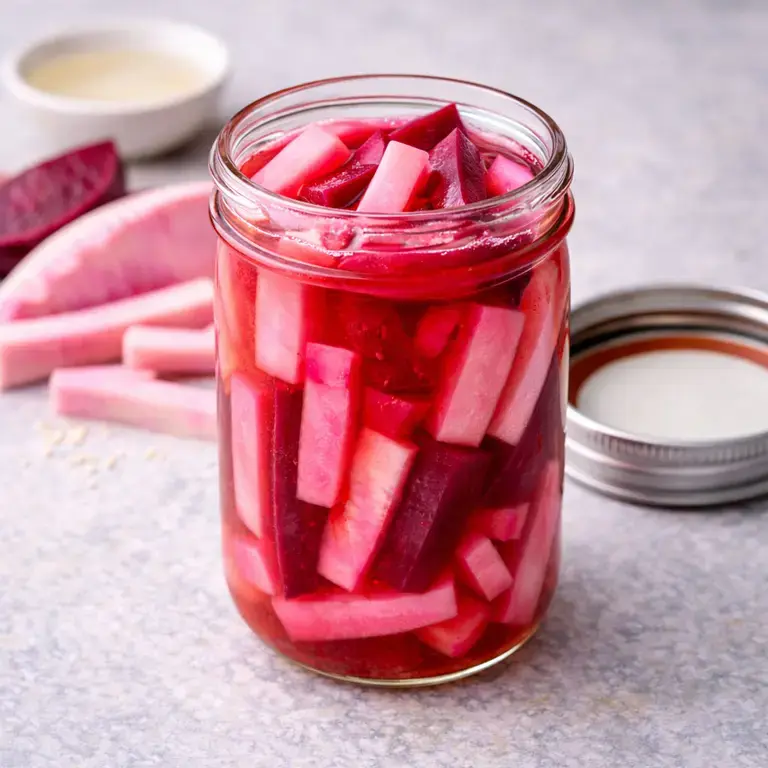
The beet is vital to include when making Middle Eastern pickled turnips, also commonly referred to as Lebanese pickled turnips. The beet gives the turnips their signature pink hue and only one small beet is needed to tint them. For any leftover turnips, try roasting them for a tender and earthy side dish that’s full of flavor.
It’s best not to use table salt for this recipe, and instead source kosher salt or pickling salt that has a cleaner flavor. Table salt can cloud the brine, and many are iodized which can interfere with the fermentation process.
Customization Options (Beets, Spices)
We’ve featured beet in the recipe above for a classic Middle Eastern pickled turnips recipe, but you can customize your turnips as preferred. Some chefs will add a mixture of garlic cloves, cilantro seeds, allspice, and peppercorns to bring a spicy aromatic kick to the turnips.
If you’d like a sweeter side to your pickled turnips, you can drizzle in honey or maple syrup to balance the tanginess of the brine.
How to Serve Pickled Turnips
Pickled turnips can be enjoyed in a variety of ways once they’ve fermented in the fridge for a few days. Add a handful to a lunchtime wrap with your favorite grilled meat, to bring a deep tanginess to the plate. They’re also well-suited to salads and grain bowls to bring a welcome crunch.
Or, simply add to a mezze or charcuterie board with olives, cheeses, and nuts to pair with the creaminess of the cheese and enhance the brine of the olives. You can also dice the pickled turnips and use as a garnish for roasted vegetables for a more complex side dish.
Fermentation and Storage Tips
When using the pickling method above, the turnips can be stored in the fridge and kept for up to one week. Make sure the turnips are fully submerged in the brine and if you notice any signs of spoilage discard them and prepare a fresh batch. Sterilized glass jars are recommended for storage to reduce the risk of bacterial contamination.