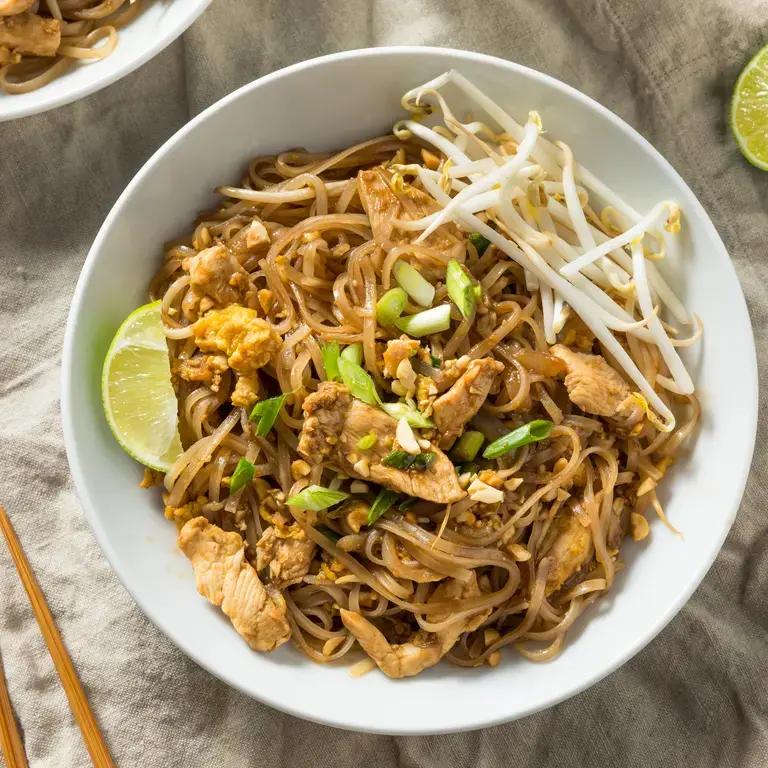

If you’re wondering what Pad Thai is, it’s a widely popular stir-fried noodle dish that’s usually made with a combination of rice noodles, eggs, tofu, shrimp, and often features peanuts, bean sprouts, and a sweet and sour sauce. If you visit Thailand, you’ll commonly find it served at street stalls. And the top tip for making the best Pad Thai is to create a balanced flavor profile, with sweet and savory notes all working in harmony.
It’s a dish that comes together very quickly so it’s advisable to prepare all of your ingredients before beginning to fry them in the skillet. If you’re making this for more than two people, it’s better to cook it in batches to make sure the ingredients cook through evenly and caramelize where needed.
Take care not to overcook the noodles, as you want the noodles to be soft, but not overly so. You only need a few minutes to soften the noodles in boiling water, before frying them later in the pan. Toss to combine the noodles with the ingredients and the sauce and check that they’re fully coated for optimal results.
Sauce Variations and Adjustments
Pad Thai sauce is a key component, adding the sweet and savory flavors the dish is renowned for. Aim to achieve a delicate balance between sweet, savory, sour, and umami notes. In classic recipes, you’ll often see tamarind paste included in the list of ingredients. Made from the pulp of the tamarind fruit, it’s commonly used in South Asian cuisine, and brings an authentic sour taste to the dish. If you can’t find this in your local grocery store, however, you can simply use lime juice as in the recipe shared above. Some recipes will suggest the inclusion of ketchup, but this isn’t how a traditional Pad Thai is made and is best left out of your dish. If you’re interested in learning more about Thai cooking, explore our guide to the top 10 ingredients you’ve never heard of from Thailand.
Protein Options and Add-Ins
The list of pad thai ingredients varies from recipe to recipe, depending on the protein options you intend to use in your dish. In the recipe above we’ve featured shrimp, but you can use a variety of different elements including chopped tofu, fried egg, and even chicken.
A classic Pad Thai recipe calls for chopped, salty peanuts to garnish the dish, but you could try incorporating other nuts as preferred. Both cashews and almonds will work well as substitutions, with creamy textures similar to those of peanuts.