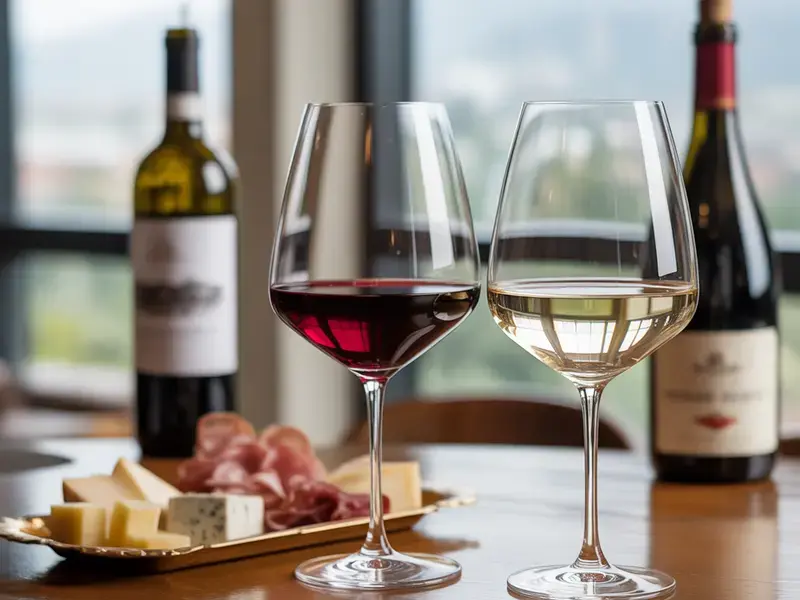
Understanding wine and food pairing is about balancing flavors, textures, and aromas to create a harmonious experience. A well-matched pairing can reveal hidden nuances in both the dish and the wine, transforming a meal into a layered, memorable moment.
How to Approach Food and Wine Pairing
When approaching food and wine pairing, it’s also worth considering regional traditions and personal preferences, which invite exploration beyond classic guidelines.
Consider weight and intensity first.
- Light dishes, such as citrusy ceviche or delicate salads, work best with bright, crisp wines.
- Heavier dishes—braised meats, rich stews, and bold sauces—pair naturally with structured, full-bodied wines.
The sauce or seasoning often dictates the match even more than the protein itself, while acidity, sweetness, and umami determine how flavors connect.
Classic Pairings Every Food Lover Should Know
Some combinations endure because they balance richness, acidity, and complexity beautifully:
- Grilled steak with Cabernet Sauvignon: tannins cut through fat, while bold fruit complements charred flavors.
- Goat cheese with Sauvignon Blanc: acidity meets creaminess in a lively interplay.
- Lamb with Syrah or Rioja: earthy depth matches the gamey meat.
- Oysters with Muscadet or Champagne: minerality and bubbles emphasize oceanic freshness.
- Foie gras with Sauternes: sweet wine balances rich, fatty texture.
- Dark chocolate desserts with vintage Port: powerful, layered flavors echo each other.
Explore more about popular types of red wine to refine your red selections.
Balancing Acidity, Tannins, and Texture
Acidity acts as a brightener, refreshing the palate much like a squeeze of lemon. Fatty dishes benefit from high-acid wines, helping to cleanse and reset after each bite.
Tannins soften when paired with protein, resulting in a smoother mouthfeel. When considering texture, a silky Chardonnay supports the sweetness of lobster, while a sharp Vermentino can slice through fried seafood beautifully. Deciding between a lighter Pinot Noir or a denser Amarone can also come down to understanding wine body and structure.
Unexpected Pairings That Work
Curiosity leads to unforgettable discoveries:
- Indian curries with off-dry Gewürztraminer, balancing spice and heat.
- Pizza with Lambrusco, where the gentle bubbles refresh each bite.
- Fried chicken with Champagne, an indulgent play on texture and acidity.
- Mushroom risotto with aged Nebbiolo, amplifying umami and earthy tones.
These unexpected pairings encourage exploration beyond classic rules.
Wine Pairing Tips from Sommeliers
Sommelier philosophy is centered around intuition and experimentation rather than rigid rules. They encourage matching intensity and considering regional pairings; Tuscan wines, for example, naturally enhance Bistecca alla Fiorentina. Chilling certain reds in warmer months brings freshness to heavier meals.
Decanting transforms a wine’s structure and opens up delicate aromas, much like the thoughtful use of a wine decanter in fine dining.
Choosing the right cooking wine shapes the depth of sauces and integrates seamlessly with the wine on the table.
A perfect pairing elevates both elements, sparking conversation and making every meal feel more considered and complete. It’s an invitation to explore, to question, and to savor each note along the way.