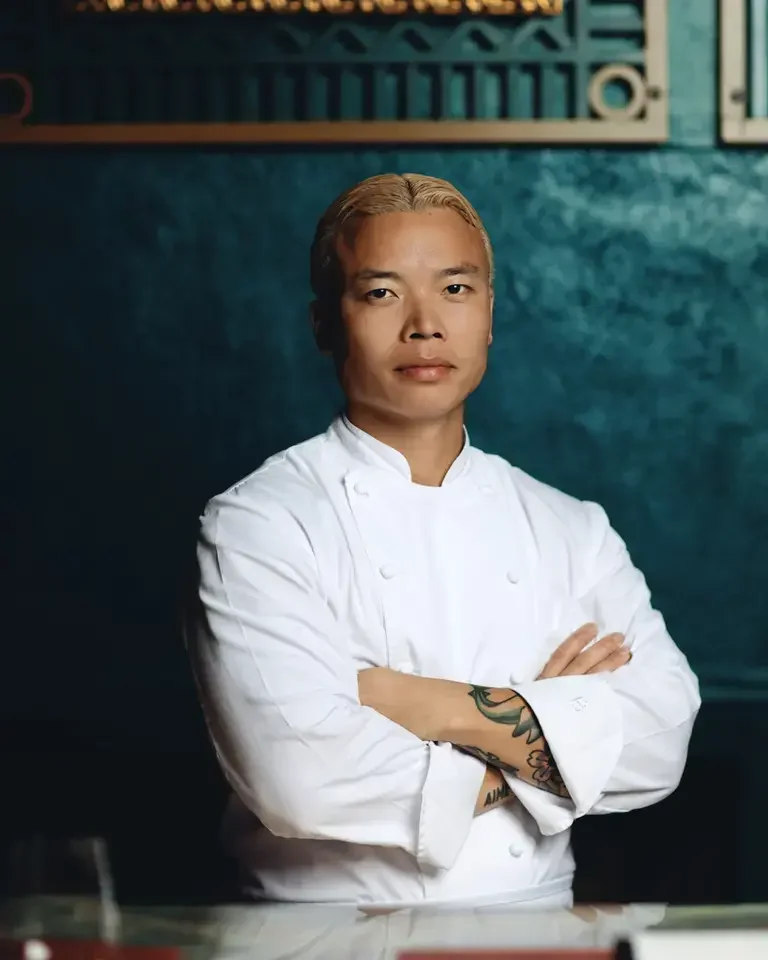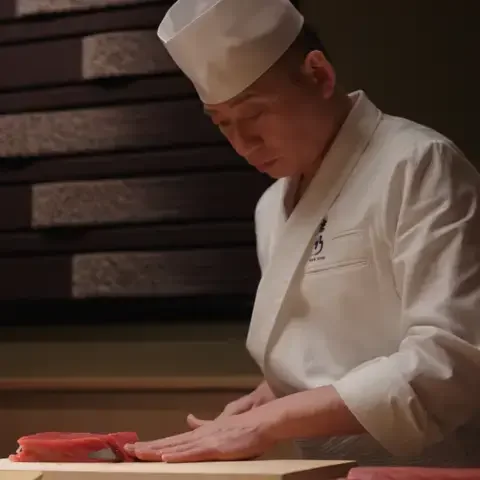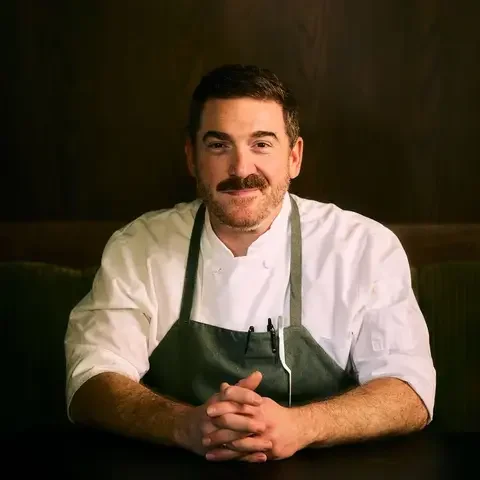
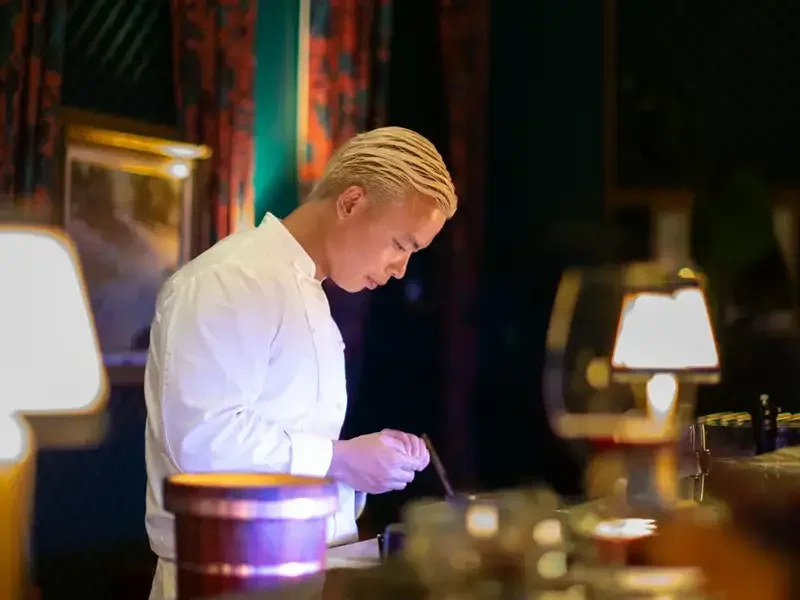
At Omawei, chef Wei Chen transforms omakase into something deeply personal. It is an experience that is as much about storytelling and emotion as it is about flavor. Inside the historic Bath Club on Miami Beach, the 10-seat marble counter glows in soft light as Chen prepares each dish with quiet focus. His omakase is not traditional, nor does he want it to be. “I’m not ethnically Japanese and I have this imposter syndrome that made me feel like I had to mimic the most traditional dishes,” he says. “Once I realized that my unique perspective allowed me to create something personal and interesting to me, I took off with it.”
The Omakase That Breaks from Tradition
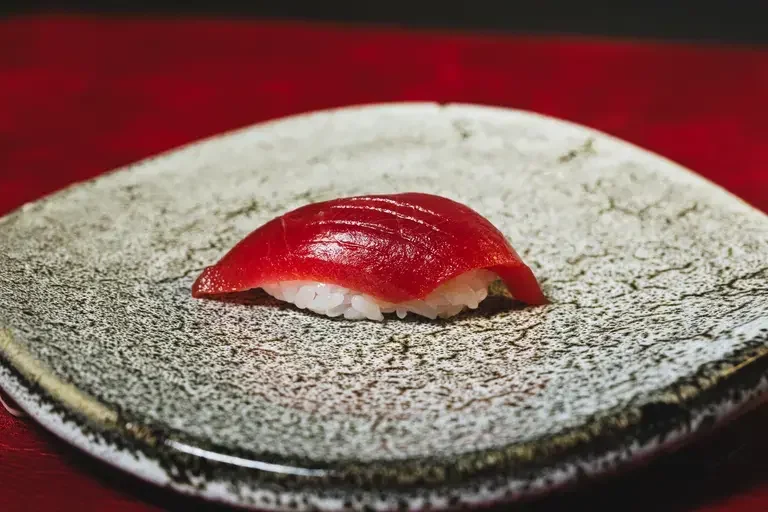
That freedom is evident from the start of his menu. Chen’s omakase opens not with the usual progression of sashimi or nigiri, but with Toro Caviar, a composition of bluefin tuna, potato pavé, and golden Ossetra caviar. It is rich, layered, and texturally surprising, a dish that blurs the boundaries between Japanese minimalism and French opulence. “It’s about balance,” says Chen. Each element has its purpose. The potato brings structure, the caviar adds salinity, and the tuna gives body. For him, it is like a dialogue on the plate.
Next comes Alaskan king crab salad, a mix of Persian cucumber, mitsuba, and tosazu. The dish is cool, crisp, and bright, inviting diners to slow down and notice the subtleties. Chen often talks about rhythm and intention in his menus and how the sequence of flavors should guide you, not overwhelm you. “The meal should have highs and lows, tempo shifts that make you pay attention,” he says.
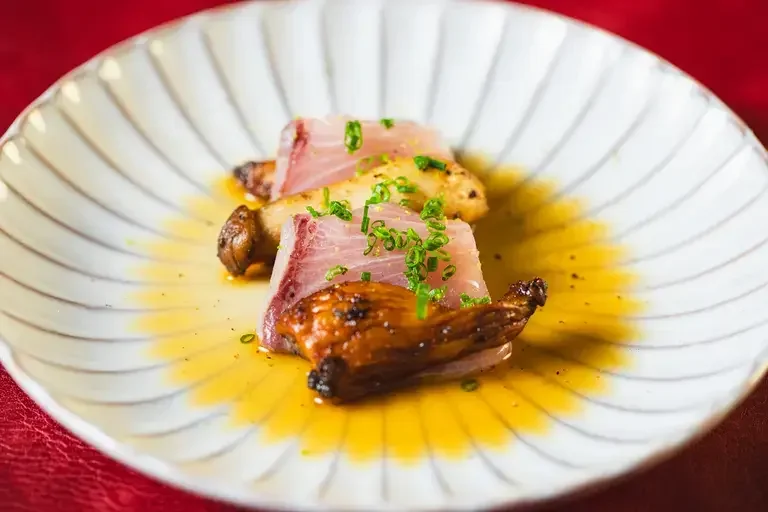
With yellowtail sashimi, Chen explores texture and acidity, pairing the fish with king trumpet mushroom, his favorite mushroom, and yuzu balsamic. The interplay is elegant and balanced, a reminder that simplicity can be as surprising as complexity.
Then comes one of Chen’s most personal dishes: Bottarga Veneta, his udon cacio e pepe reimagined through Japanese and Italian technique. “What I’m trying to showcase is not the quality of the noodle, but actually the quality of the bottarga,” he says. “The first taste is super high salinity, cheesy, umami flavor, and then the noodle is the textural aspect.” It is a dish that captures his philosophy of respecting ingredients, celebrating restraint, and finding balance.
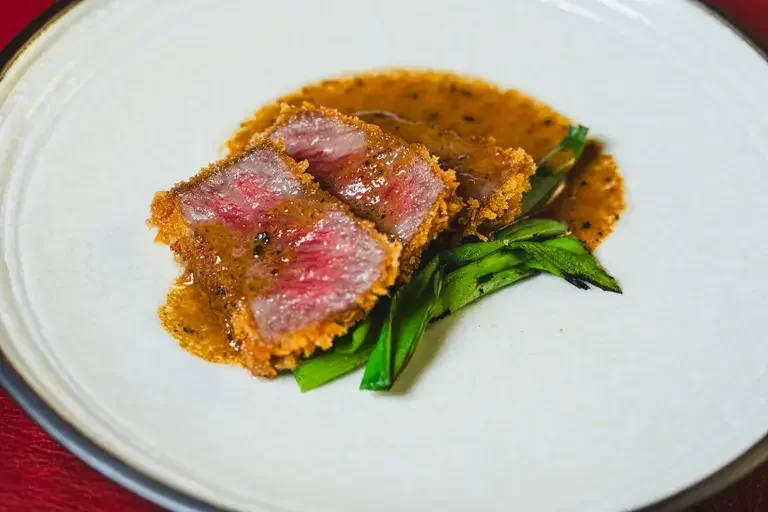
The fifth course, Wagyu katsu with negi and peppercorn sauce, delivers a focused moment of richness. It is crisp and juicy and is followed by kinutamaki, a bite of madai wrapped in shiso and myoga. The clean, precise flavor is a natural transition after the wagyu.