If you have ever sat down at an Indian restaurant, opened a lengthy menu, and felt uncertain of where to begin, you're not alone. Indian cuisine is rich, varied, and layered with regional traditions. This can make ordering feel like guesswork when the dishes are unfamiliar. Learning what to order at an Indian restaurant helps you build a satisfying meal with complementary flavors, textures, and spice levels. And, it opens the door to one of the world's most rewarding culinary traditions.
Below is a practical guide to the best dishes to order at an Indian restaurant: how menus are typically structured, which starters and mains to try first, how breads and sides complete a meal, and what to drink alongside your food.
How an Indian menu is structured
Most Indian restaurant menus follow a logical flow that mirrors how a traditional meal comes together. Understanding this structure makes ordering far less intimidating.
Menus typically begin with starters, often listed as appetizers or snacks. These are small, boldly flavored dishes designed to spark the appetite. They include fried bites, grilled skewers, and crispy pakoras and samosas. Next come the main dishes, usually organized by protein (chicken, lamb, seafood, vegetarian), and sometimes by cooking style or regional origin. Main dishes are often curries or sauced preparations, though you will also find dry-cooked items and rice-based dishes like biryani.
Breads and rice appear either in their own section or alongside the mains. In Indian dining, bread and rice are not afterthoughts. Instead, they are essential vehicles for sauces and gravies. Finally, you will find accompaniments like raita (a cooling yogurt side), pickles, chutneys, and lentil dishes such as dal.
When ordering, think of your meal as having a starter to share, one or two main dishes with contrasting flavors, a bread or rice, and perhaps a cooling side. This approach ensures variety without overwhelming the table.
Popular Indian starters to try
Indian starters tend to be crisp, savory, and full of spice. They set the tone for the meal and pair well with dipping chutneys, typically tamarind, mint, mango, or coriander-based.
Vegetable samosas
Samosas are triangular pastries with a thin, flaky crust and a warmly spiced filling. The classic version contains potatoes, peas, cumin, coriander, and green chilies, all wrapped in a dough that fries to a golden, crisp shell. Served hot, samosas offer a satisfying contrast of textures, with the crackling exterior giving way to a soft, aromatic interior.
Samosas are an ideal starter for sharing. They are substantial enough to take the edge off hunger while leaving room for the main course. They're best dipped in tangy tamarind chutney or bright green mint sauce to balance the richness.
Vegetable pakoras
Pakoras are Indian fritters made by coating vegetables in a spiced chickpea flour batter and deep-frying until crisp. Onion pakoras (or onion bhajis) are the most common, but you will also find versions with spinach, potato, cauliflower, or mixed vegetables.
The batter is light and crunchy, while the vegetables inside soften just enough to stay flavorful without turning mushy. Pakoras are best eaten immediately, when the exterior is still crisp to the touch. Like samosas, they pair naturally with chutneys and make an easy, shareable start to the meal.
Classic Indian main dishes
Main dishes are the heart of the meal. Indian mains range from mild and creamy to intensely spiced, so knowing a few benchmark dishes helps you order with confidence.
Chicken tikka masala
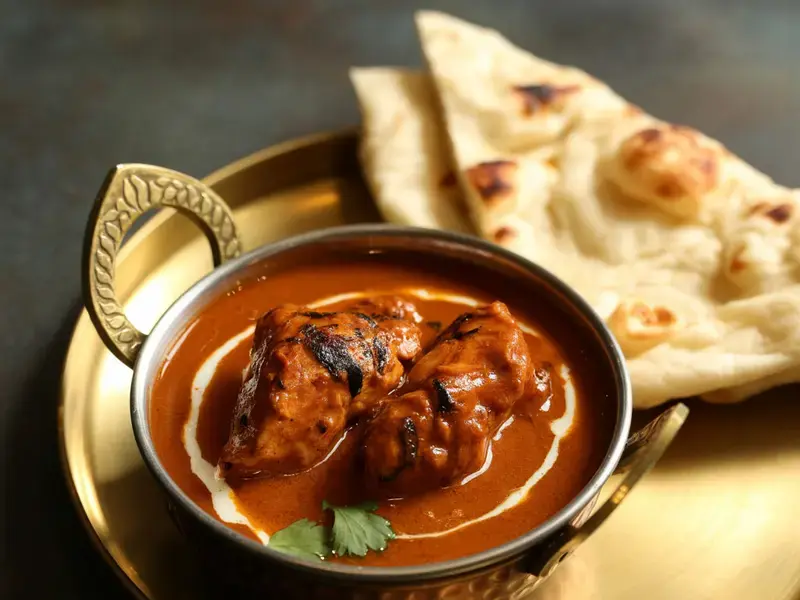
Chicken tikka masala is one of the most recognized Indian dishes worldwide. Pieces of marinated, charred chicken (tikka) are simmered in a rich, tomato-based sauce enriched with cream, butter, and a blend of spices including cumin, coriander, garam masala, and fenugreek.
The result is a sauce that is mildly spiced, slightly sweet, and very savory. It is an approachable entry point for those new to Indian food, and it pairs beautifully with naan bread to scoop up the velvety gravy.
Lamb korma
Korma is a Mughal-style dish known for its mild, aromatic sauce. Lamb korma features tender pieces of lamb braised in a sauce made from yogurt, cream, ground almonds or cashews, and fragrant spices like cardamom, cinnamon, and cloves.
The texture is silky, and the flavor is gentle rather than fiery. Korma is an excellent choice if you prefer richness without heat, and it showcases the more subtle, perfumed side of Indian cooking that doesn't overwhelm the palate.
Palak paneer
For a vegetarian main, palak paneer is a reliable classic. Cubes of paneer, a firm, mild Indian cheese, are simmered in a vibrant sauce made from puréed spinach, onions, garlic, ginger, and green chilies.
The dish is earthy, slightly bitter from the greens, and balanced by the creamy paneer. It is hearty enough to anchor a vegetarian meal and pairs well with a lentil side or another vegetable dish.
Chicken biryani
Biryani is a fragrant, layered rice dish and one of India's most celebrated one-pot meals. Chicken biryani combines basmati rice with marinated chicken, fried onions, saffron, and whole spices such as bay leaves, cardamom, and cinnamon. The dish is assembled in layers and cooked slowly, so the flavors meld together.
Unlike curry-and-rice combinations, biryani is a complete dish in itself. It's aromatic, complex, and satisfying. It often comes with a side of raita to cool the palate between bites.
Indian breads and sides
Breads and sides are essential to the Indian dining experience. They complement curries, add texture, and help balance richness and spice.
Naan bread
Naan is a soft, leavened flatbread baked in a tandoor oven, which gives it a slightly charred, pillowy texture. Plain naan is the classic choice, but you will also find garlic naan, butter naan, and stuffed versions with cheese or minced lamb, as well as the sweeter coconut-filled peshawari.
It is the most versatile item on the menu and works with nearly every main dish. Tear pieces of naan to scoop up sauces.
Rice dishes and dal
Steamed basmati rice serves as a neutral backdrop for curries, allowing the spices and sauces to take center stage. Pilau rice, cooked with whole spices like cumin and cardamom, adds an extra layer of fragrance.
Dal, a comforting dish of spiced lentils, is both a side and a meal component. Varieties range from mild yellow dal to richer, slow-cooked black dal. A small bowl of dal alongside rice and bread rounds out the meal with protein and earthy depth.
Drinks to pair with Indian food
What you drink with Indian food matters. The right beverage cools the palate, complements the spices, and refreshes between bites.
Masala chai
Masala chai is a spiced tea made by simmering black tea with milk, sugar, and warming spices such as cardamom, cinnamon, ginger, and cloves. It is traditionally served at the end of a meal, offering a sweet, aromatic finish as a warming, comforting choice that aids digestion.
Mango lassi
Hailing from the Punjabi region, lassi or buttermilk is churned milk. It can be served savory or sweet. Mango lassi is a yoghurt drink blended with ripe mango and a touch of sugar. Thick, creamy, and refreshing, mango lassi is one of the best ways to temper spice and cleanse the palate during a meal.
The cooling effect of yoghurt makes lassi a natural partner for richly spiced dishes. If you prefer something less sweet, a plain salted lassi offers the same soothing quality with a savory edge.
Understanding what to order at an Indian food restaurant transforms an overwhelming menu into a roadmap for a memorable meal. With a few well-chosen starters, a main or two with contrasting flavors, warm bread, and a cooling drink, you have the foundation for a balanced, satisfying, and flavorful experience.