A trip to New Orleans without serious eating is a trip wasted. This city built its identity around the table, drawing from French, Spanish, African, Caribbean, and Southern influences to create cuisines found nowhere else. Understanding what to eat in New Orleans means exploring dishes that tell stories of immigration, adaptation, and celebration. Whether you are seeking the best food in New Orleans at historic restaurants or discovering neighborhood spots where locals gather, knowing what food to eat in New Orleans transforms casual dining into cultural immersion.
Cajun vs Creole: Understanding New Orleans Cuisine
Creole cuisine developed in New Orleans itself, shaped by the city's position as a major port where French, Spanish, African, Caribbean, and Native American influences converged. The best Creole food in New Orleans incorporates tomatoes and reflects the multicultural sophistication of urban cooking. Creole dishes often feature butter, cream, and complex sauces that reveal a French fine-dining influence.
Cajun cooking originated in rural southwestern Louisiana among Acadian exiles who settled the bayous and prairies. The Cajun food in New Orleans restaurants that's served today is heartier, spicier, and more rustic than Creole preparations. Cajun cooking emphasizes one-pot meals, dark roux, and bold seasoning that elevates basic ingredients.
Beignets
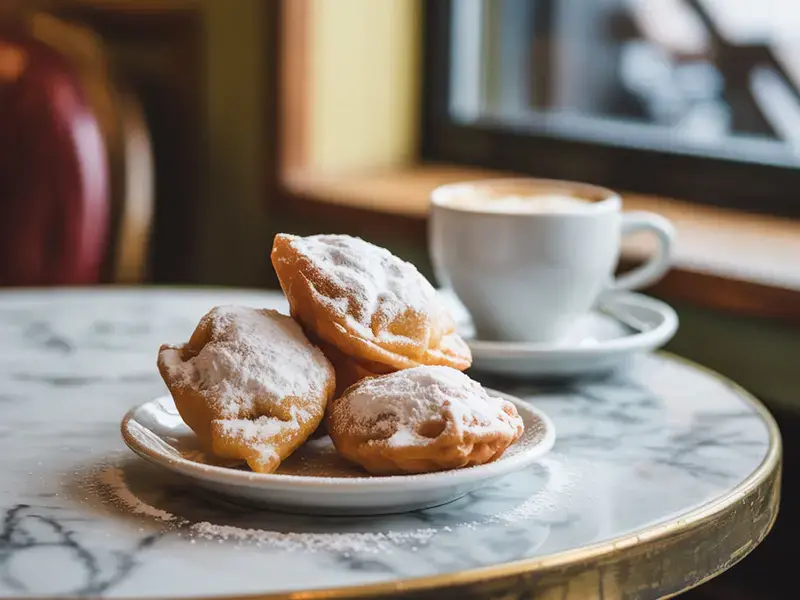
No discussion of what to eat in New Orleans begins anywhere other than the beignet. These pillowy, deep-fried dough squares buried under powdered sugar have become the city's most photographed food.
Beignets arrived with French colonists and became part of New Orleans' breakfast culture. The dough is allowed to rise before being cut into squares and fried until golden and impossibly light. Emerging from the oil puffed and hollow, they are immediately dusted with powdered sugar.
Gumbo
Gumbo is perhaps the most iconic representation of New Orleans food. It's a complex stew that embodies the city's multicultural heritage. African, French, Spanish, and Native American influences combine in a dish that varies from cook to cook while maintaining its essential character.
The foundation of gumbo is roux. This cooked flour provides thickening and contributes a deep, nutty flavor that defines the dish. Proteins vary but include chicken and andouille sausage, seafood combinations, or duck and game in Cajun preparations. Gumbo arrives in shallow bowls over mounded rice, often finished with filé powder (ground sassafras leaves) that adds earthy thickness and a subtle, distinctive flavor.
Jambalaya
Jambalaya offers the best food in New Orleans in rice form. It's a one-pot dish that combines protein, vegetables, and rice, cooked together until every grain absorbs the surrounding flavors. The dish reflects Spanish paella influence filtered through Louisiana ingredients and Cajun and Creole traditions.
Creole jambalaya, sometimes called “red jambalaya”, includes tomatoes that contribute color, acidity, and sweetness. Cajun jambalaya omits the tomatoes, developing a brown color from caramelized proteins, in what locals call “brown jambalaya”. Both versions feature andouille sausage and typically chicken, shrimp, or a combination.
Po'Boy Sandwich
The po'boy, representing some of New Orleans famous food, is a sandwich created from a labor dispute. It has evolved into an iconic local institution available everywhere from corner delis to upscale restaurants.
The original po'boy featured gravy-soaked roast beef on French bread. Traditional fillings include fried shrimp, fried oysters, roast beef with gravy, and soft-shell crab, though modern variations extend to almost anything. The bread matters, and should have a crispy crust, a soft interior, and a distinctive character developed by local water and baking traditions.
Crawfish Boil
While technically a preparation method rather than a dish, the crawfish boil represents essential eating when exploring the best food in New Orleans during crawfish season.
Crawfish boils are communal events where pounds of live crawfish cook in massive pots of heavily seasoned water alongside corn, potatoes, sausage, and, sometimes, artichokes, mushrooms, or garlic. The seasoning infuses everything with heat, salt, and complex spice. The eating is hands-on and messy. Crawfish are twisted to separate tails from heads, tails are peeled, and the meat is consumed along with spice-coated vegetables.
Muffuletta
The muffuletta emerged from New Orleans' Italian immigrant community, specifically in the French Quarter, where this sandwich has been served since 1906. This massive construction layers Italian cold cuts and cheese on distinctive round sesame bread. But it's the olive salad topping that elevates it from an ordinary deli sandwich to New Orleans famous food.
The olive salad combines olives, giardiniera vegetables, capers, garlic, and olive oil into a briny, tangy, intensely flavorful relish that soaks into the bread and cuts through the richness of the meats. The sandwich typically includes Genoa salami, ham, mortadella, provolone, and mozzarella, though variations exist. Muffulettas are enormous, and a quarter satisfies lighter appetites. The bread, with its soft interior and sesame-studded crust, provides the essential vehicle.
Oysters Rockefeller
Created at Antoine's Restaurant in 1899, Oysters Rockefeller represents the best of Creole cuisine in New Orleans and an optimal way to eat oysters. The dish consists of oysters on the half shell, topped with a rich green sauce, and baked until bubbling.
The original recipe remains a closely guarded secret, though the sauce typically contains butter, breadcrumbs, and a green component that most assume is spinach. The name references John D. Rockefeller, then the wealthiest American, suggesting the dish's exceptional richness.
Oysters Rockefeller exemplifies the French fine-dining influence on Creole cuisine, transforming shellfish into an elegant first course through technique and quality ingredients.
Shrimp Creole
Shrimp Creole showcases what to eat in New Orleans for those seeking the best Creole food in New Orleans. The dish features shrimp simmered in a tomato-based sauce with onion, celery, and bell peppers, served over rice.
The sauce development matters more than simple sautéing. Proper shrimp Creole builds flavor through cooking down tomatoes with onion, celery, and bell pepper until they achieve concentrated richness. Shrimp are added near the end, cooking just until pink to maintain tender texture.
Crawfish Étouffée
Étouffée means “smothered” in French, and crawfish étouffée delivers exactly that. Crawfish tails are smothered in a rich, roux-based sauce served over rice. This dish represents the way Cajun food New Orleans has been embraced as enthusiastically as any Creole preparation.
The sauce begins with a butter-based roux cooked to a light brown color. Then it is combined with the bell peppers, celery, onion, stock, and seasonings. Crawfish tails and their fat join near the end, contributing sweetness and richness that define the dish. The texture should be thick enough to coat the rice but not gluey.
Sazerac Cocktail
No New Orleans food guide is complete without the city's signature cocktail, officially designated as New Orleans' native drink. The Sazerac combines rye whiskey, sugar, Peychaud's bitters, and an absinthe rinse in a preparation that dates to the mid-1800s.
The technique takes a rocks glass coated with absinthe, excess discarded. Rye whiskey, sugar, and bitters are stirred with ice in a separate glass until cold, then strained into the prepared glass. A lemon peel is expressed over the surface and discarded. The result is a cocktail that pairs beautifully with New Orleans' rich, flavorful cuisine. For those completing their exploration of what to eat in New Orleans, a properly made Sazerac provides the ideal conclusion.