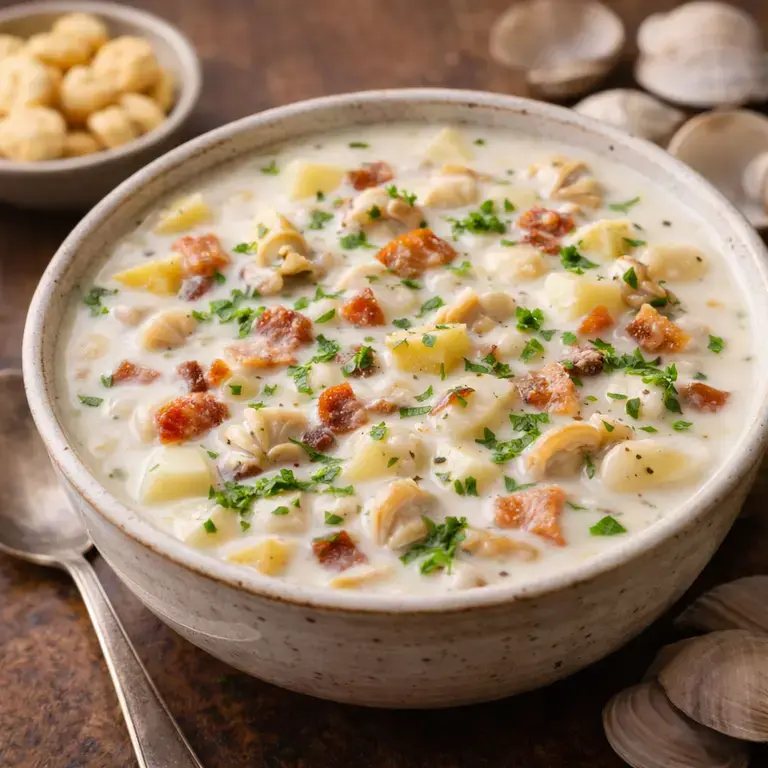

For the best clam chowder, retain the clam juice during the cooking process to enhance the final flavor of the dish. The juice adds complexity and depth that will be lacking if you only use plain water in your recipe.
It’s key to add the heavy cream at the end of cooking. If the heavy cream is added too early over too high a heat, it’s likely to curdle and cause an unwanted lumpy texture in the chowder.
To ensure the potatoes cook at the same rate in the Dutch oven, it’s recommended to dice them into even shapes and sizes. Varieties such as Yukon Gold or russets are ideal for this recipe as they hold their texture in the final dish.
New England vs. Manhattan Clam Chowder
When it comes to the styles of chowder, there are some key differences between the
clam chowder ingredients used depending on where you are in America. The clam chowder recipe shared above is a classic New England interpretation of the dish that’s creamy, rich, and made with milk or cream, potatoes, onions, and clams.
In Manhattan, a variation on the recipe features a tomato-based broth, and a lighter flavor that doesn’t include the creamy indulgence of dairy. It’s a brighter and more acidic chowder that offers a very different flavor profile from the New England style.
Chowders are known for being thick and creamy, in contrast to soup which is a broader category of liquid-based dishes. You can find out more about the key differences between chowder and soup in our detailed guide.
Choosing Clams and Seafood
Fresh clams are best for a chowder, and you can use a variety of different styles. In the recipe above we’ve suggested using littlenecks, which should be easy to source at your local grocery store’s fish counter. Other varieties, such as cherrystones or quahogs, also work well in this recipe and are some of the larger clams you’ll find on the market.
Whichever variety you choose, make sure the clam shells are firmly shut, clean, and intact to select the freshest ingredients for your chowder. The clams shouldn’t smell sour, but instead have a clean and briny aroma.
If you can’t find fresh clams, you can use canned clams as needed, but avoid using pre-cooked frozen clams as these can become tough during cooking. If clams really aren’t to your liking, however, you can adapt this chowder recipe using salmon, for a seafood alternative.
How to Store and Reheat Clam Chowder
Leftover clam chowder can be stored in the refrigerator for up to three days in an airtight container. It can be easily reheated on the stovetop over low heat. Don’t use a microwave to reheat the chowder as this can cause the components of the soup to separate.