Understanding what to eat in New York means navigating a culinary landscape shaped by waves of immigration, neighborhood pride, and fierce competition that has elevated certain dishes to perfection. From Jewish deli traditions to Italian bakeries, from street cart innovations to formal dining rooms, the best food in New York tells the story of generations who brought their culinary heritage and turned it into something distinctly local.
New York-Style Pizza
No discussion of what to eat in New York City begins anywhere other than pizza. The thin-crusted, foldable slices that have become synonymous with the city itself. New York-style pizza represents fast food elevated to an art form, and is available on virtually every block for just a few dollars.
The defining characteristics are specific: a large, wide slice with a thin, pliable crust that is crisp yet chewy. The base carries a simple tomato sauce and low-moisture mozzarella that stretches with every bite. The crust's edge should be slightly puffy and blistered from the intense heat of a deck oven. Proper New York pizza folds in half lengthwise without cracking, a feature that allows eating while walking, the quintessential New York mode of dining.
Pastrami Sandwich
The pastrami sandwich represents the best food in New York in its most maximalist form. It's hand-sliced, peppery, smoky meat piled absurdly high between slices of rye bread, served with spicy brown mustard and perhaps a pickle on the side. This Jewish deli creation has achieved legendary status through institutions that have served the same recipe for over a century.
Proper pastrami begins with beef navel or brisket, cured in a spice mixture featuring black pepper and coriander, then smoked and finally steamed until juicy and tender. Slicing matters, as hand-carved pastrami offers textures and thickness that mechanical slicing cannot match. The meat should be warm, almost falling apart, with fat rendered to silky softness.
Reuben Sandwich
Next, it's the pastrami vs corned beef sandwich debate. The Reuben sandwich, which is corned beef, Swiss cheese, sauerkraut, and Russian dressing grilled between slices of rye bread, claims New York origins and has become an essential New York food. This marriage of savory meat, tangy fermented cabbage, creamy dressing, and melted cheese satisfies in ways that simpler sandwiches cannot.
The key to an exceptional Reuben lies in balance. The corned beef should be generous but not overwhelming; the sauerkraut adds acidity without sogginess; the Russian dressing provides creaminess without drowning the other components; and the Swiss cheese melts into everything, binding the sandwich together. The rye bread must be sturdy enough to contain the filling while crisping on the griddle.
New York Cheesecake
New York cheesecake distinguishes itself from other styles through density, richness, and unapologetic decadence. Where Italian cheesecakes are light and Japanese versions are fluffy, New York cheesecake is a solid block of sweetened cream cheese that's smooth, heavy, and intensely satisfying.
The defining characteristics include a graham cracker crust, a filling made primarily from cream cheese, eggs, and heavy cream, and a top that may crack slightly during baking (an indicator of authenticity rather than a flaw). The texture should be creamy but firm enough to slice cleanly, the flavor a balance of sweet and tangy that showcases the cream cheese rather than hiding it.
Bagel with Lox and Cream Cheese
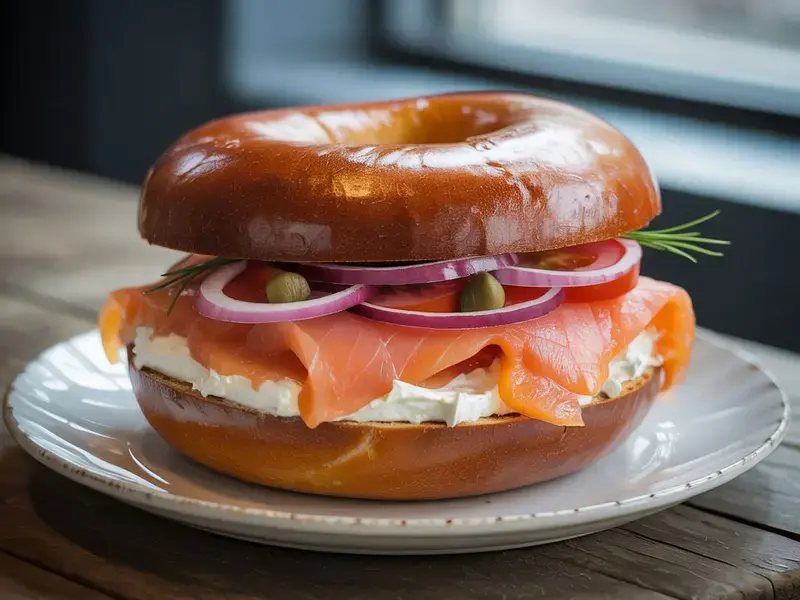
The bagel with lox and cream cheese has achieved iconic status as a quintessential New York City breakfast or brunch staple, showcasing three elements: bagel, spread, and cured fish.
New York bagels differ from versions elsewhere in that they're denser and chewier, with a shiny crust that results from boiling before baking. The cream cheese should be plain and fresh, spread generously across both halves. Lox — silky, salt-cured salmon — goes across the cream cheese, followed by traditional garnishes. These include thin-sliced red onion, capers, and often tomato. The combination offers richness, brininess, crunch, and the substantial satisfaction of the bagel itself.
Chopped Cheese
The chopped cheese represents New York food at its most democratic. It's a bodega sandwich born in Harlem and the Bronx that has achieved citywide recognition as essential street-level eating. This sandwich has gone beyond its origins, appearing on restaurant menus while remaining available at corner stores for a few dollars.
Construction is straightforward but specific. Ground beef is chopped and cooked on a flat-top griddle with onions, seasoned generously, then topped with melted American cheese. The mixture is loaded onto a hero roll with lettuce, tomato, and condiments (typically ketchup and mayonnaise). The result is greater than its simple components suggest.
Eggs Benedict
While not exclusively a New York invention, Eggs Benedict achieved its classic form in the city's grand hotels. It has remained a brunch staple that embodies New York food culture's embrace of elegance and indulgence.
The dish consists of toasted English muffin halves topped with Canadian bacon (or ham), poached eggs, and hollandaise sauce. Properly executed, the egg yolk breaks, mingling with the buttery hollandaise and creating richness that the English muffin absorbs. The construction requires skill, including poaching eggs consistently and keeping hollandaise from breaking, which demands kitchen competence.
New York Street Food
The category of New York street food encompasses multiple traditions, each representing different immigrant communities and neighborhood cultures. Understanding what to eat in New York means experiencing these sidewalk offerings that have fed the city for generations.
Hot dog carts remain iconic with the dogs in their warm water baths, served with yellow mustard, sauerkraut, and onion sauce in the specific New York style. Halal carts have become equally noteworthy, with their chicken-and-lamb-over-rice platters sustaining Midtown lunch crowds. Food trucks offer everything from Korean tacos to gourmet grilled cheese, representing the contemporary evolution of street food culture.
Pretzels, roasted chestnuts in winter, Italian ices in summer, and countless ethnic specialties appear on sidewalks throughout the city. The informal nature of New York street food, eaten while standing or walking and requiring no reservation, reflects the city's casual approach to eating well.
Manhattan Clam Chowder
Manhattan clam chowder offers a tomato-based alternative to New England's cream version, representing a distinctly New York approach to this classic soup. The brothy, vegetable-rich preparation reflects the city's Italian and Portuguese influences and provides a lighter option for seafood lovers.
Unlike its creamy New England counterpart, Manhattan clam chowder features a clear tomato broth filled with clams, potatoes, celery, carrots, and herbs. The acidity of tomatoes brightens the clam flavor rather than enriching it, and the presence of the vegetable creates a more complex bowl.
Cronuts
The cronut (a croissant-doughnut hybrid) created by Dominique Ansel in 2013 represents New York food culture's capacity for innovation and its ability to transform novelties into traditions. What began as a single bakery's creation became a global phenomenon, with lines stretching around the block.
The cronut layers croissant dough that is fried like a doughnut, filled with cream, and topped with glaze and sugar. The texture combines croissant flakiness with doughnut satisfaction, while flavors rotate monthly to maintain excitement. The creation demonstrates pastry technique at its most ambitious.