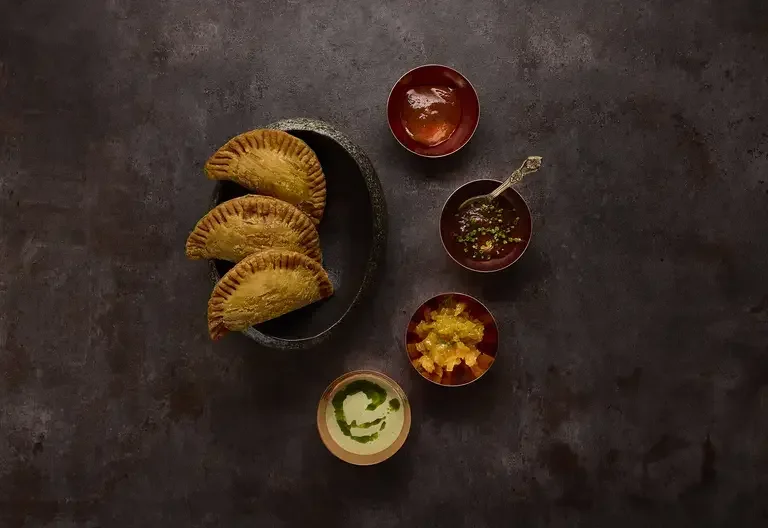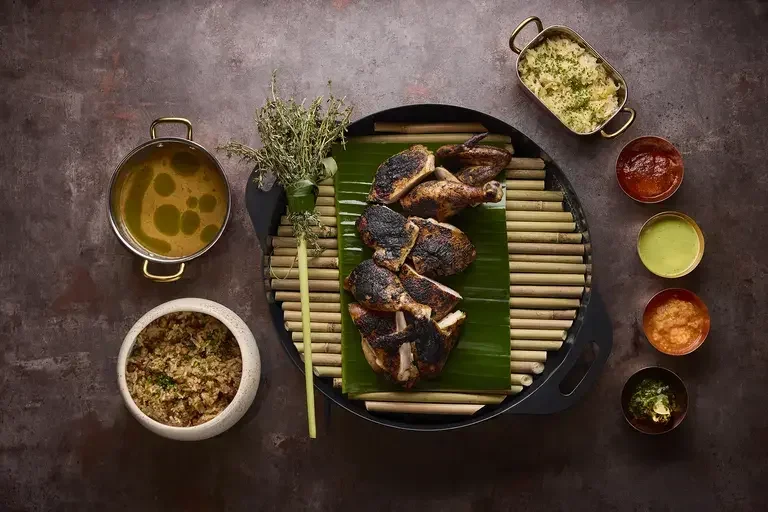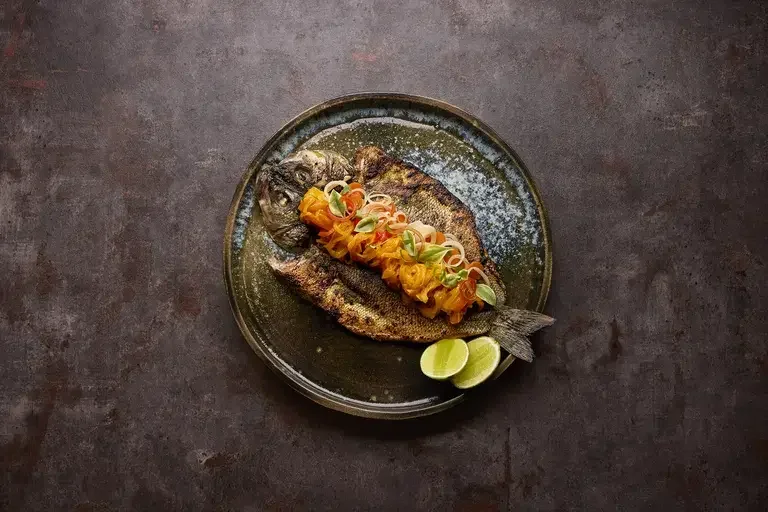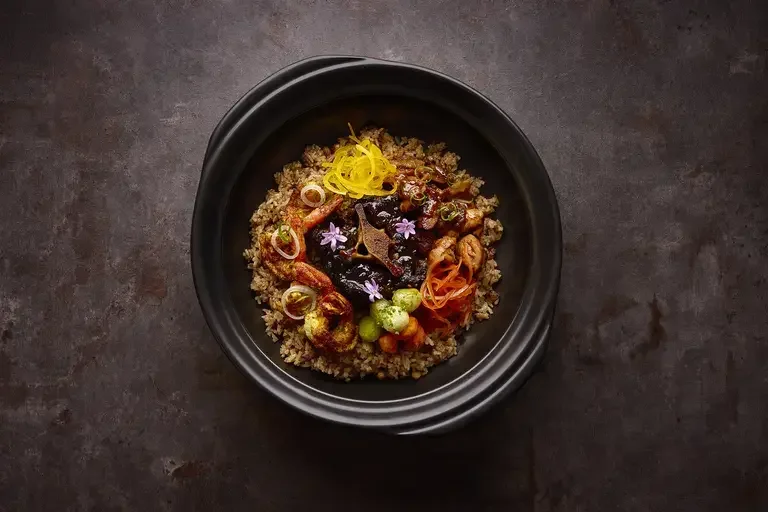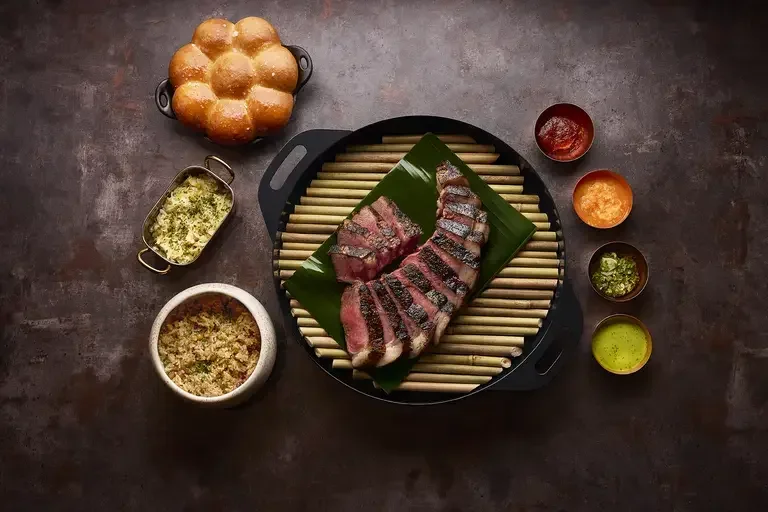

At Tatiana in New York, Kwame Onwuachi built one of America's most sought-after reservations by filtering the Bronx through Afro-Caribbean flavors, halal cart nostalgia, chopped cheese sandwiches, and suya-spiced pastrami. At Dōgon in Washington, D.C., he turned toward history, drawing inspiration from Benjamin Banneker and the African diaspora's influence on American cuisine. At Maroon inside Sahara Las Vegas, those ideas converge in a Caribbean steakhouse shaped by heritage, migration, and personal experience.
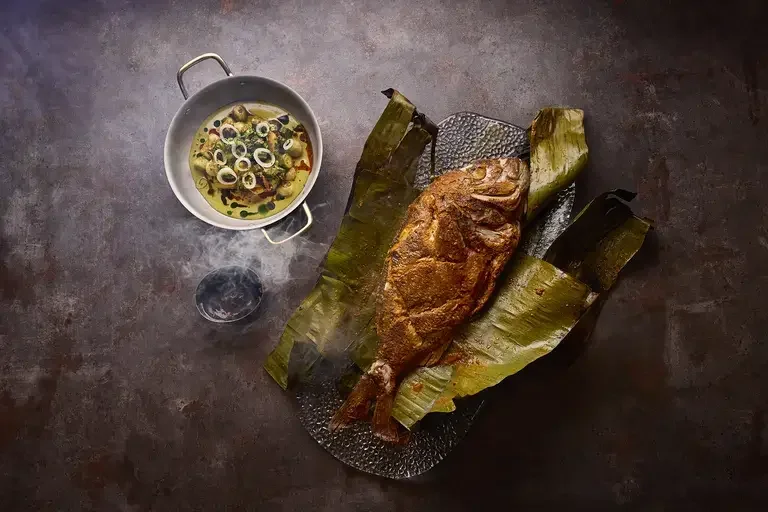
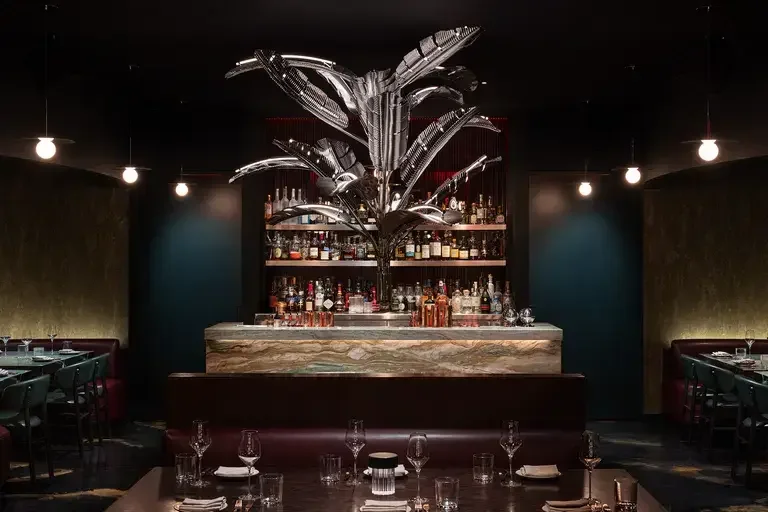
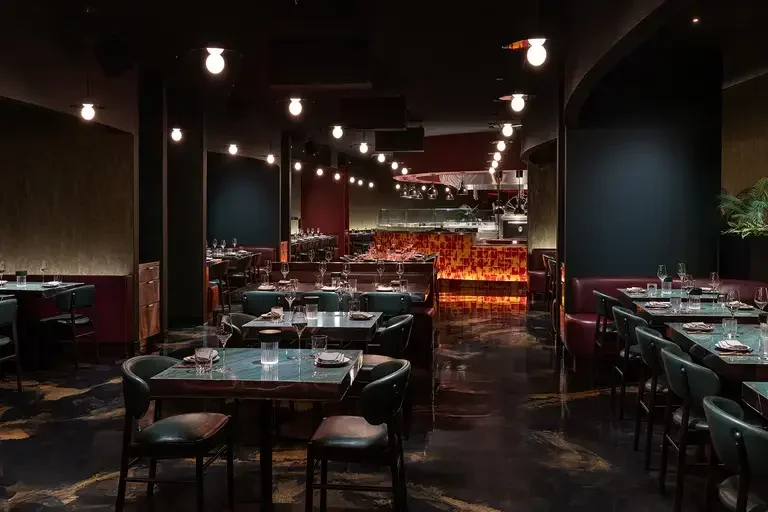
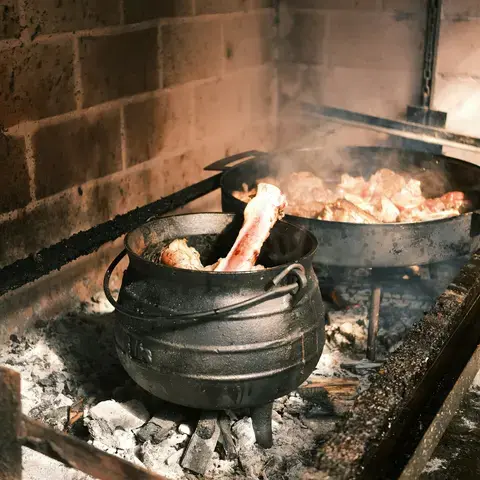
Guests enter Maroon through a curving mirrored corridor before the space opens into the bar and dining room beyond. Smoke from the restaurant's live-fire jerk pit hangs lightly in the air, a reminder that much of the menu revolves around fire, smoke, and the traditions behind Caribbean jerk cooking. Inside, the atmosphere is more relaxed than the entrance might suggest. During a packed weekend coinciding with EDC, when many locals avoid the Strip entirely, the room remained full deep into the evening. Onwuachi estimated roughly 80 percent of diners that night were Las Vegas residents.
Servers greeted guests with "welcome home." Tables shared dishes communally and lingered well beyond dinner. Diners stopped to greet friends across the room, while others pulled Onwuachi aside as he moved between tables. Earlier, he had pointed out a small detail built into the dining room's tables: hidden drawers on either side that guests can pull open for extra utensils. The feature was designed to reinforce the feeling that diners were not visiting a restaurant so much as being welcomed into someone's home.
A year before Maroon opened, Onwuachi described the project not as an attempt to give Las Vegas another flashy celebrity restaurant, but something he believed the city genuinely lacked. "I think it's the right concept for Vegas because it's what Vegas needs and not what Vegas wants," he says. "Vegas always gets what it wants."